How to grow cantaloupe with soilless cultivation? Detailed explanation of methods and technical key points
In recent years, the area of off-season cultivation of cantaloupe using economical greenhouses in Hainan has gradually expanded. Compared with open-field cultivation, it is a high-input, high-output cash crop. Cantaloupe seeds are expensive, and seedling-stage diseases are relatively serious. The causes of cantaloupe seedling death are described separately below, and control methods are proposed....
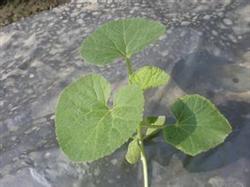 In 1993, the Agricultural Science Research Institute of Bao'an District, Shenzhen, self-selected the project of soilless cultivation of cantaloupe, and in 1995 it was officially established as a project by the Science and Technology Bureau of Bao'an District, Shenzhen. After two years of preliminary trials and three years of greenhouse trials, the planned technical indicators were fairly well completed, comprehensive scientific research measures were implemented, and scientific data were complete. The main results obtained by the project are as follows:
A nutrient formula suitable for the growth and development of cantaloupe was selected, maintaining the excellent quality of cantaloupe and ensuring the success of the trial planting. A complete set of scientific management techniques suitable for soilless cultivation of cantaloupe in the Shenzhen area was proposed. In particular, the use of shallow water cultivation to lower the water level to control the occurrence and spread of the devastating muskmelon gummy stem blight is the key to success and a breakthrough technique. At the same time, applying nutrient solution circulation to increase the oxygen supply so that the plants absorb evenly, grow vigorously, enhance resistance, and reduce disease occurrence is also one of the successful experiences and is worth promoting and applying. A netted red variety suitable for growing in this area was selected. The product quality is good and the yield is high. The average yield per mu in the greenhouse (1/15 hectare) reached 2313 kg, with the highest reaching 2934 kg. The sweetness of the melon (central refractive sugar %) is generally around 14 degrees, with the highest reaching 17.5 degrees, obtaining good economic benefits.