-
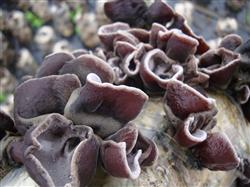
Detailed Explanation of Earless-Base Cultivation Techniques for Yellow-Back Wood Ear
Yellow-back wood ear (Auricularia auricula-judae) is a popular edible mushroom, characterized by ease of cultivation, strong disease resistance, high economic yield and a short production cycle. Annual cultivation nationwide has remained stable at around 500 million bags. As cultivation scale expands, not only do yields vary widely, but quality differences are also great. The author, in the main production areas of yellow-back wood ear in Sichuan Province...
-

Detailed Explanation of Key Techniques for Summer Cultivation of Golden Blessing Mushroom
Golden Blessing Mushroom (Tricholoma lobayense) is a large rare fungus of tropical regions. Its summer cultivation techniques are described below: 1. Choose the right production period. Golden Blessing Mushroom is a high-temperature type fungus; the mycelial growth temperature is 15-36°C, with 25-30°C being optimal: the fruiting body formation temperature is 15-33°C, with 23-28°C being optimal. In spring, inoculate in March-April when the temperature is not lower than 15°C; June-September is the peak growth period of Golden Blessing Mushroom. 2. Select raw materials. The cultivation raw materials for Golden Blessing Mushroom must be rich in fiber
-
How to case Golden Blessing mushroom for high yields? Practical techniques explained in detail
After the Golden Blessing mushroom spawn has fully colonized the bags, they can be buried in soil for fruiting after 3-5 days. Cut away the entire spawn bag or cut off a section about 10 cm wide across the cross-section, bury 5-8 cm deep, place the bags horizontally, facing each other in pairs, with 5 cm between bags, 4 bags per row, 40 per group, then apply casing soil, covering the bags with 3 cm of soil. The casing soil should be granular, not too fine. The day before casing, it is best to adjust the soil to semi-dry and semi-moist. Adjust the moisture of the casing soil over two days, moistening all the soil thoroughly, and carry out the watering under ventilated conditions in the mushroom house. Do not spray water with the house closed. Casing soil moisture adjustment
-
Golden Blessing Mushroom has good market prospects and great development potential
On the morning of July 31, the Hangzhou Academy of Agricultural Sciences, the Municipal Agriculture Bureau and the Hangtou Town Government held an on-site exchange meeting on new varieties and new technologies of rare edible fungi at the Huangmugang vegetable base in Hangtou Town. Leaders and experts from the Hangzhou Academy of Agricultural Sciences, the Agriculture Bureau, the Science and Technology Bureau and the Association for Science and Technology, as well as agricultural science and technology personnel from the counties, cities and districts of the Hangzhou area, inspected the experimental greenhouse for the rare edible fungus Golden Blessing Mushroom at the vegetable base. According to Zhou Zufa, head of the Hangzhou Edible Fungus Spawn Station, the Golden Blessing Mushroom is a high-temperature mushroom that can fruit at temperatures of 28°C to 35°C
-
What kind of edible mushroom is the golden blessing mushroom?
The golden blessing mushroom, scientific name Tricholoma Lobayense Heim, belongs to the order Agaricales, family Tricholomataceae, genus Tricholoma, and is a rare edible mushroom still under development. In China, its commercial names include Lobay tricholoma, Loba tricholoma, large tricholoma, and so on. The fruiting bodies of the golden blessing mushroom grow in clusters or groups, are large in size, with white or creamy-white flesh, a flat, smooth, hemispherical cap, and a stipe that is narrow at the top and wide at the bottom, shaped like a long club. The golden blessing mushroom was first discovered in Africa by the French mycologist Heim, and was named in 1970. In
条件筛选