-
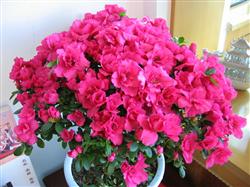
A Detailed Guide to Soilless Cultivation Methods and Key Techniques for Azaleas
How do you grow azaleas without soil? Please give guidance. The soilless cultivation method for azaleas can refer to the following methods: 1. Preparation of the substrate. Azalea roots are very fine and require a loose substrate to facilitate aeration and drainage. Use 1 part vermiculite, 1 part perlite sand, 1 part river sand, and 1 part coal cinder, mixed in proportion. After mixing, the substrate...
-
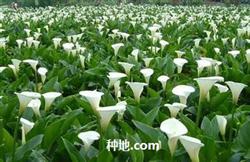
Where can I find soilless cultivation techniques for calla lilies?
How do you force calla lilies to bloom when growing them? Are there any tips? Calla lilies are not very cold-tolerant, so potted plants should be kept warm in winter. The suitable temperature is 15-25°C, 13-17°C in winter, and the minimum temperature must not be lower than 5°C. At home, you can put a double-layer plastic cover over them, place them on the balcony to get sunlight during the day, and move them indoors at night. If the temperature cannot reach...
-
Control methods and technical key points for Lily symptomless virus
Lilies originate in China. They are distributed across the southeast and southwest, as well as Henan, Hebei, Shaanxi and Gansu, with wild and cultivated forms found in various places, mainly used as cut flowers and for garden planting as potted ornamentals. The bulbs are used for food and medicine, the fresh flowers contain aromatic oil used as a fragrance, and the fruits are eaten. A cold-hardy, autumn-planted scaly bulbous herbaceous flower. There are quite many cultivated varieties; besides white, the flowers also come in yellow, red, pale red, variegated and other colors.
-

The plane tree fluff problem is expected to be solved: Huazhong Agricultural University has cultivated hairless plane trees
It was learned from Huazhong Agricultural University that the university has cultivated hairless plane trees, which is expected to solve the problem of plane tree fluff pollution. The scientific name of the French plane tree is "Platanus", and it has advantages such as fast growth and a large, dense canopy, and is known as one of the "world's five major street trees." But from April to June each year, the seed balls of Platanus scatter and the pappus flies about, not only polluting the environment but also affecting people's health. For this flying fluff pollution, chemical pruning is mostly used in China, that is, spraying chemical agents to promote early shedding of the seed balls. But this method is labor-intensive and time-consuming, and is not easy to promote on a large scale.
-
How to grow azaleas with soilless culture? Master these key technical points
1. Preparation of the substrate. Azalea roots are very fine and require a loose substrate to facilitate aeration and drainage. Mix 1 part vermiculite, 1 part perlite sand, 1 part river sand, and 1 part coal cinder in proportion. After mixing the substrate, sterilize it with a 0.1% carbendazim solution, stir it evenly into the substrate, and cover with plastic film for 1 day. Then rinse it multiple times with clean water, and after air-drying, mix it evenly with a 0.4% agricultural compound fertilizer solution, then cover with plastic film for one month, after which it can be used for potting. 2. Preparation of the nutrient solution. Azaleas have relatively strict fertilizer requirements. During the growing period, apply light fertilizer frequently.
-
Soilless Cultivation Management Methods and Technical Key Points for Phalaenopsis
1. Temperature. During the vegetative growth period, the temperature is generally controlled at 20-35°C. The temperature required for vernalization of large seedlings is 15-18°C. The temperature requirements from spike emergence to flowering are 18-20°C at night and 25-30°C during the day. The best ornamental temperature during the flowering period is preferably controlled at 15-20°C. The day-night temperature difference is generally greater than 10°C, and a negative day-night temperature difference should especially be avoided. 2. Light. For small seedlings (from removal from the flask to 6 months of age), the light intensity is controlled at 5000-8000 lux; for medium seedlings (6 months to
-
What are the advantages of soilless cultivation for bonsai
Bonsai, especially trunk bonsai, are living sculptural works of art. Only through years of care and management can they achieve deep green leaves, branches full of flowers and fruit, elegant posture and charm, and full vitality, and only then can their ideal ornamental and decorative effect be realized and maintained. If care and management cannot keep up, or are done poorly, even the best trunk bonsai will wither and die due to mistakes in care and management, and their artistic life will come to an end. Therefore, care and management are a long-term and complicated task in the process of creating and maintaining trunk bonsai. Traditional bonsai plants usually
-
Soilless Cultivation Methods and Techniques for Miniature Ficus Bonsai
Ficus is native to China, India and other places, and is commonly cultivated in Guangdong, Fujian and other areas of China. Ficus is very easy to propagate by cuttings. During the growing season, in combination with shaping, cut off a portion of a branch, disinfect it with plant ash, and after the sap has drained, insert the cutting into sand; after one and a half months it will survive and take root. Once the root system grows normally, it can be potted for cultivation and care. After potting, with careful management, after one year of growth the tree shape will be full with luxuriant branches and leaves. In the spring of the second year, soilless cultivation can be carried out to cultivate a miniature bonsai. First, the soil
-
Soilless Cultivation Methods and Key Technical Points for Azaleas
The characteristic of soilless cultivation is the replacement of soil with an artificially made substrate. Summer azaleas grown soilless have a compact crown structure and abundant flowering; large flower diameter and few pests and diseases. It not only improves flower quality but also greatly reduces heavy physical labor, making it a cultivation method worth vigorously promoting. 1. Preparation of the substrate. Azalea roots are very fine, requiring a loose substrate to facilitate aeration and drainage. Use 1 part vermiculite, 1 part perlite, 1 part river sand, and 1 part coal cinder mixed in proportion. After mixing the substrate, use 0.1% car
-
Soilless Propagation Methods and Key Management Techniques for Azaleas
Propagation Methods Azaleas can be propagated by cuttings, grafting, layering and sowing, among which cuttings and grafting are more commonly used and can maintain the excellent characteristics of the variety. The sowing method is mainly used for cross-breeding and selecting superior individual plants. Cuttings mostly use semi-lignified branches and can be carried out from May to August. River sand, perlite plus peat are often used as the substrate. After inserting, cover the flower pot with a plastic bag and place it in a semi-shaded spot. Within 1 week, spray water once each morning and evening, and thereafter keep the potting soil moist regularly. At a temperature of 20-25°C, most varieties take about 4
条件筛选