What are the cultivation methods for Ruby Seedless grapes?
How do you grow Ruby Seedless grapes? What cultivation method is best? Ruby Seedless grapes have a high fruit-setting rate and a high berry-set rate, uniform berries, easy coloring, firm and crisp flesh, good flavor, early maturity and high yield, and strong adaptability. 1. Basic situation. The planting trial plot was set up in the vineyard of Huiguokou Village in our district. The local frost-free period is 232 days, annual rainfall 650 mm, average annual temperature 13.1°C, flat terrain, slightly alkaline soil, deep and fertile soil layer. In spring 2000, the vineyard was established directly with cuttings, with a plant spacing of 1 m x 1 m.
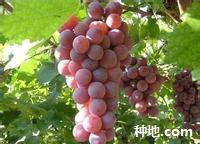
How do you grow Ruby Seedless grapes? What cultivation method is best?
Ruby Seedless grapes have a high fruit-setting rate and a high berry-set rate, uniform berries, easy coloring, firm and crisp flesh, good flavor, early maturity and high yield, and strong adaptability.
1. Basic situation
The planting trial plot was set up in the vineyard of Huiguokou Village in our district. The local frost-free period is 232 days, annual rainfall 650 mm, average annual temperature 13.1°C, flat terrain, slightly alkaline soil, deep and fertile soil layer. In spring 2000, the vineyard was established directly with cuttings, with a plant spacing of 1 m x 1 m.
2. Greenhouse structure
The greenhouse runs east-west, 50 m long, 7.5 m wide, 3.3 m ridge height, 1 m front foot height. At the front bottom corner, a 50 cm wide cold-proof trench is dug, filled with straw or wheat straw. The east and west walls and the back wall are 50 cm hollow walls filled with perlite. Inside the shed, one row of concrete columns is set, 2.4 m high. On top are iron arch frames, covered with green drip-free film, with insulating cattail grass mats. Inside the shed, simple flue coal stove heating equipment is installed.
3. Cultivation techniques
1. Planting and fertilizer and water management. Before planting, dig 30-40 cm planting holes, apply 5000 kg organic fertilizer, 50 kg diammonium phosphate and 10 kg potassium sulfate per mu, mix evenly with soil and fill into the planting holes, then plant the seedlings. After planting, water thoroughly and cover with film to preserve moisture. From bud break to before flowering, apply 50 g compound fertilizer per plant; when the new shoots grow to 40 cm, apply another 100 g compound fertilizer; when 1 m high, spray 400 times paclobutrazol; stop fertilizer and water in mid-July; from fruit set to berry coloring, spray 0.3% monopotassium phosphate; after harvest, continue applying 5000 kg organic decomposed chicken manure.
In early October, irrigate thoroughly; in late November, close the shed to raise the temperature and irrigate to promote bud break.
2. Training and pruning. After the seedlings are planted, use single-cordon pruning. Each plant has one main vine, on which 4-6 fruiting shoots are retained, and no fruiting shoot groups are kept. When they grow to 30 cm, set up a trellis and tie them up, and remove the secondary shoots in the leaf axils. On the main vine, when the new shoots grow to 1 m, spray paclobutrazol; when they grow to 2.5 m, pinch the tips, leaving 2-3 secondary shoots at the top, and pinch each shoot promptly after leaving 2-3 leaves.
Before closing the shed, cut back leaving 60-80 cm. After raising the temperature, keep 5 of the sprouted new shoots per plant and remove all the rest. When a new shoot first grows to 20 cm, twist the shoot to control growth; after 10-15 days, when the later shoot grows to 20 cm, pinch the tip. When it grows to 30-40 cm, use string to pull the vigorously growing new shoots to areas with fewer branches and vines, so that the fruiting shoots are evenly distributed. For the secondary shoots about to emerge, keep only 1-2 at the top, with 2-4 leaves per shoot.
3. Temperature and humidity control. Cover with film on October 19-20. During the day, cover with grass mats so that no light enters the shed; at night, open the vents for ventilation to lower the temperature to the outdoor air temperature, and pre-cool for 30 days. Use calcium cyanamide solution to wipe the mother branches so that they break dormancy earlier. In mid-to-late November, uncover the mats during the day to raise the temperature. From bud break to before flowering, maintain 18°C at night and 25-28°C during the day; during the flowering period, control it at 15-18°C at night, and it must not exceed 30°C during the day. The suitable temperature is 25-28°C. During the young fruit swelling stage, the night temperature is 20°C, later controlled at 18-20°C, with 25-28°C during the day; during the coloring stage, 25-28°C during the day and 16-18°C at night. Always pay attention to the temperature inside the shed; when it is too low, turn on the heating equipment to maintain the temperature inside the shed.
During the bud break stage, the humidity can be higher, with relative humidity at 85-90%; before flowering, control it at 60-70%; during flowering, 60%; during the fruit swelling stage, 50-60%; during the coloring stage, 60-70%. Uncover the grass mats early and cover them late to increase lighting time. On cloudy and snowy days, use lights for supplementary lighting, and hang reflective curtains inside. Always remove dust and debris from the shed film to increase light. When the carbon dioxide content decreases, apply solid carbon dioxide fertilizer.
4. Flower and fruit management. Do not keep clusters on weak shoots; keep one cluster on strong shoots, remove secondary clusters, pinch off the cluster tips, keep 5 clusters per plant, and thin out small berries and densely packed berries. Spray 0.3% monopotassium phosphate during berry coloring.
5. Pest and disease control. Before closing the shed, spray 5 degrees Baumé lime sulfur mixture. In the early stage of new shoot growth, which is the period with the lowest temperature of the year, it is prone to gray mold and downy mildew. Ecological methods and variable temperature management should be used, and regulation should be done well according to the temperature and humidity requirements of each stage. For chemical control, use smoke method and dust method in rotation, once a week. Pay attention to the control of whitefly; 25% lambda-cyhalothrin emulsifiable concentrate can be sprayed. During fruit growth, prevent downy mildew and powdery mildew, which are diseases very likely to occur in sheds; chlorothalonil smoke fumigant and 16% dimethomorph dust can be used, fumigating once every 7-10 days. 46% fosetyl-aluminum plus 15% triadimefon 2000 times solution can also be used. After harvest, spray double-strength Bordeaux mixture 200 times, once every half month, to protect the leaves.
Click to see more grape cultivation techniques
Click to see more fruit cultivation techniques