-

Detailed Introduction to the Ningmai 11 Wheat Variety
Ningmai 11 (NB-3) is a weak-springness, early-to-mid-maturing new wheat variety developed by the Grain Crops Research Institute of the Jiangsu Academy of Agricultural Sciences through systematic selection from a variant strain of Ningmai 8. This variety has upright seedlings, dark green leaves, relatively strong tillering ability, a compact plant type, and an even spike layer. The plant height is 85 cm, the spike is oval-shaped, with long awns, white glumes, and white kernels. It has relatively good seed-setting ability, vitreous kernels, and good plumpness. The number of spikes per mu is 350,000, the number of filled grains per spike is 33, and the 1,000-grain weight is nearly 40 g. It is moderately susceptible to Fusarium head blight, susceptible to wheat spindle streak mosaic virus disease, and has relatively good tolerance to fertilizer and resistance to lodging. Quality test results
-
What are the commonly used drugs for fish? A detailed introduction
At present, there are many kinds of drugs commonly used in fish farming on the market. Because fish drug production is not yet standardized, some products from various manufacturers do not indicate their active ingredients, and the trade names of some similar finished drugs are not consistent with their corresponding chemical names. This is not conducive to our understanding of the active ingredients of drugs and also creates certain difficulties for scientific and rational medication. In order to popularize fish disease prevention and treatment technology, we will successively introduce knowledge about drugs commonly used in fish farming. This is expected to improve our understanding and awareness of commonly used drugs so that drugs can be used scientifically and rationally in production.
-
Introduction to Common Fish Medications, Part 3
II. Nitrofurans Nitrofurans are a class of synthetic broad-spectrum antibacterial drugs with many varieties, but only 3 to 4 are used for aquatic disease prevention and treatment. The basic structure of nitrofuran drugs is a furan ring with a nitro group attached at the fifth carbon atom. They have strong antibacterial effects; at low concentrations, they can inhibit the reproduction of many Gram-positive and Gram-negative bacteria; at high concentrations, they have bactericidal effects. Generally, bacteria do not easily develop resistance to nitrofuran drugs. Even bacteria resistant to sulfonamides and antibiotics remain relatively sensitive to nitrofuran drugs. However, nitrofuran drugs are poorly absorbed in the body and are easily and rapidly destroyed after absorption, often failing to reach effective blood antibacterial concentrations in the blood. Only in the intestinal tract can they maintain effective action, so they have a good effect in preventing and treating bacterial intestinal infections in fish. In addition, according to recent reports, nitrofuran drugs have carcinogenic effects, so their use has been restricted. At the same time, long-term use of these drugs can cause liver and kidney damage in fish.
-
Detailed Introduction to Immunization Methods for Various Pig Diseases
I. Immunization Methods for Rotavirus Infection 1. Attenuated vaccine. A porcine-derived attenuated strain, developed in China, attenuated through cell passaging; the diarrhea incidence rate of piglets born to immunized sows can be reduced by more than 60 percent. 2. Inactivated vaccine. Developed in China, this vaccine provides a protection rate of more than 90 percent in immunized piglets. II. Immunization Methods for Swine Vesicular Disease Developed in China, including attenuated live vaccines and inactivated vaccines. In recent years, inactivated vaccines have been mainly promoted and applied. 1. Attenuated live vaccine. Mouse-attenuated swine vesicular disease vaccine
-
Introduction and Characteristics of the Hysex Chicken Breed
Brown-shell commercial day-old chicks introduced from the Dutch company Euribrid can be sexed by color: Hen colors - all reddish-brown, accounting for 90%; predominantly brown over the body but with white stripes on the back, 8%; predominantly white over the body but with a red or brown head, 2%. Rooster colors - all: yellow, accounting for 90%; white over the body but with brown stripes on the back, 8%. White over the body, but with four narrow brown stripes on the back, the narrow stripes sometimes clear and sometimes not. Production performance: reaches 50% laying rate at 158 days of age, 2
-
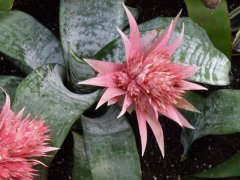
What Are Bromeliad Flowers? Introduction to Pink Pineapple, Guzmania, and Neoregelia
Below we introduce several different bromeliad flowers. Which one will you like? There is also growing information, so take a look as well. Whichever one you like, you can also grow it. Pink pineapple, this is the most popular among bromeliad flowers, especially Aechmea fascia
-
-
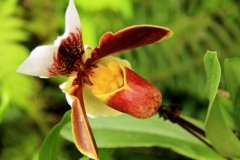
Are slipper orchids easy to grow? An introduction to slipper orchid cultivation methods
There are many kinds of orchids, did you know? And do you know about the slipper orchid? How do you grow and cultivate it? Want to know? Let's find out together. The slipper orchid is popular because its flowers are charming, and its place of origin is southern Asia and Southeast Asia
-
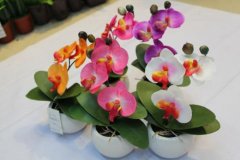
A Detailed Guide to Planting and Growing Phalaenopsis Orchids
How do you plant a Phalaenopsis orchid? What issues should you watch out for when planting, and what common pests and diseases generally appear during the growing process? Let's take a look together. The Phalaenopsis orchid originates mostly in the warm tropical rainforests of Asia, and is named for its butterfly-like shape. It is currently
-
Introduction to the Characteristics of the Zaobaijian Tea Tree Cultivar
It belongs to the sexually propagated group. Also known as Zaobaidian. It is a national-level improved cultivar. It originated in Junlian County, Sichuan Province. Morphological characteristics: shrub type, medium-leaf, early-budding cultivar. The tree posture is open and spreading. Spring tea buds around mid-March, and each year around March 20 in the local area, one bud with two or three leaves can be picked. The buds and leaves are light green and hairy, with a 100-bud weight of 33.5 grams. It has strong tenderness retention and is suitable for making the famous green tea "Maojian"; the appearance is elegant, the tender down is visible, the aroma is fresh and clear, and the taste is fresh and mellow. Quality characteristics of fresh leaves of one bud and two leaves of spring tea: tea polyphenols 27.3%, amino acids 2.3%, caffeine 4.5%, catechin
条件筛选