What Are Bromeliad Flowers? Introduction to Pink Pineapple, Guzmania, and Neoregelia
Below we introduce several different bromeliad flowers. Which one will you like? There is also growing information, so take a look as well. Whichever one you like, you can also grow it.
Pink pineapple, this is the most popular among bromeliad flowers, especially Aechmea fasciata. This type is called pink pineapple because the pink flower is very large, and a single flower keeps blooming for a long time, up to three months. Actually the pink flower is the bract, and the very small blue flower clusters inside are the real flowers. The leaves of the pink pineapple are very hard, with a gray, scale-like powdery substance on them, through which it absorbs moisture from the air.
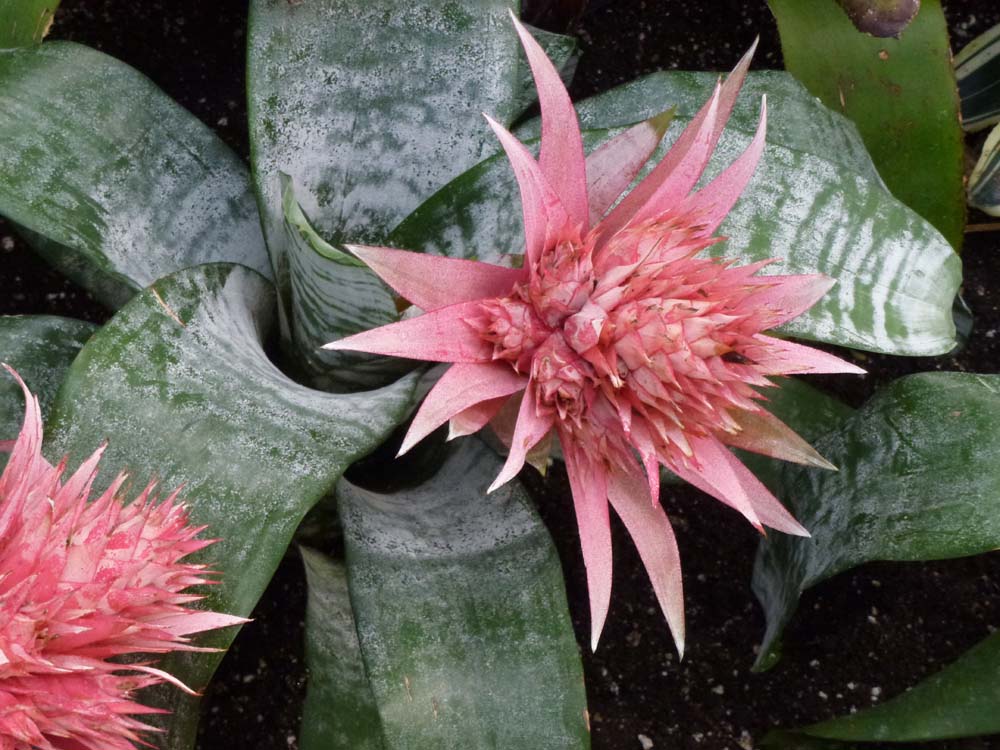
It needs a lot of light to bloom, but once it is blooming it can do with less light. In addition it needs high temperatures and humidity, and the minimum must not go below 15°C (60°F). Before the flowering period it even needs at least three degrees Celsius more.
For watering, it is best to use natural water such as rainwater, or filtered tap water. Water should be poured into the cup, while the potting soil only needs to stay moist and does not need much water. To keep the water in the cup clean, you can completely change it every one or two months. To maintain high humidity, you should mist with water from time to time, or use a humidifier. But do not mist at night.
Another type also has very large flowers, mixed with yellow, shaped like a bundle of straw, commonly known as the dragonfly bromeliad. There is also a coral bromeliad whose flowers resemble coral. There is also one whose leaves have very obvious horizontal stripes, so it is beautiful even when not in bloom.
Guzmania (Guzmania lingulata)
This type is also fairly common, also called the large Guzmania, and like the pink pineapple, its leaves are arranged in a rosette with a water cup in the middle, from which a huge red bract like a flower extends. The color is vivid, and sometimes it is translucent and reflects light, which is why it is popular. The real flowers are very small, mostly yellow or white.
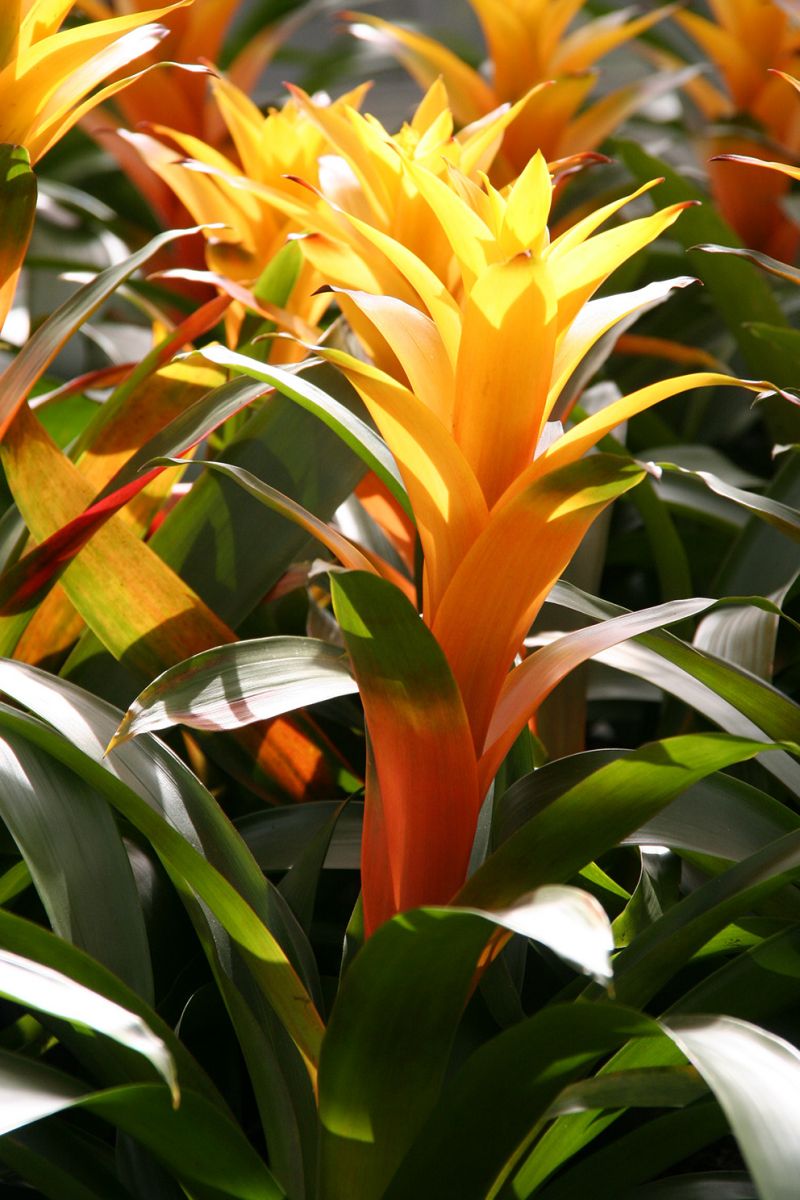
This type needs relatively high temperatures, preferably 24-27°C. In winter it must also not go below 16°C (65°F). And mist with water at any time to maintain high humidity.
Neoregelia and tricolor Neoregelia
The leaves of the Neoregelia, like those of the pink pineapple, are relatively thick. Most originate in the rainforests around Brazil, and their colors are the most vivid. Their distinguishing feature is that the center of the leaves is bright red, with no bract, while the center of the water cup in the middle of the leaves is green, and the small flowers bloom in the water cup.
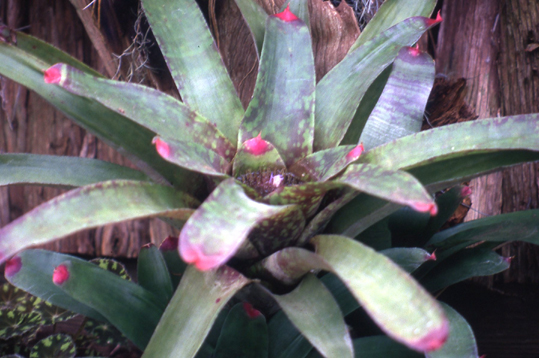
The tricolor Neoregelia has softer leaves, and its center is bright red, very eye-catching. Some tricolor Neoregelias have striped leaves. The one with the most vivid color has a bright red leaf center that gradually fades, so it is commonly also called Blushing bromeliad, because the color is like the red flush on a shy girl's cheeks. Another type has red only at the tips of the leaves, so it is also called Fingernail plant.
This type does not need too much light, but only with sufficient light do the leaves take on vivid colors. Neoregelias, which are usually grown for their leaves, can tolerate relatively low temperatures, preferably above 12°C, and in winter must not go below five degrees. (Above 55°F, do not go below 40°F).