-

Introduction to Suitable Regions, Temperatures and Precautions for Fragrant Pear Cultivation
What Issues Need Attention in Fragrant Pear Cultivation
-
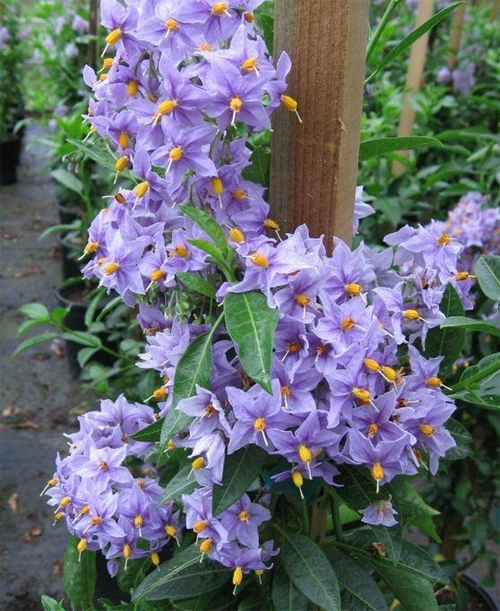
Cultivation Methods, Propagation Techniques, and Alias Introduction for Solanum jasminoides
What does Solanum jasminoides look like? It looks like it came from outer space. Solanum jasminoides belongs to the same genus as the eggplant, but it is much more attractive than the eggplant. What are the cultivation methods for Solanum jasminoides? How do you propagate it? What are its aliases?
-
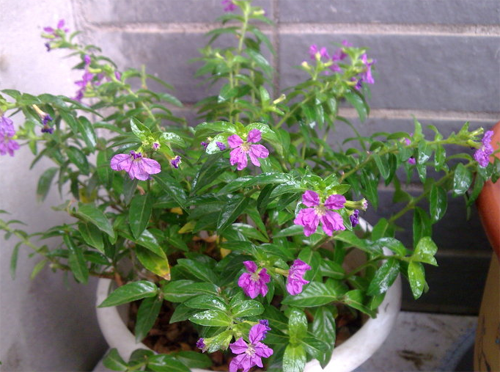
How to grow Cuphea hookeriana? Common disease control and price introduction
Cuphea hookeriana looks just like baby's breath, but its flowers are much larger than those of baby's breath. Most Cuphea hookeriana flowers are red, while most baby's breath flowers change color. How do you grow Cuphea hookeriana? What common diseases does it have? What is the price? How do you grow Cuphea hookeriana? Soil selection: Cuphea hookeriana is suited to growing in sandy soil
-
Detailed introduction to the new sesame variety Fengzhi 98
"Fengzhi 98" is a new sesame variety bred by Hefei Fengle Seed Co., Ltd. using ion beam mutation technology. This variety combines high yield, high quality, disease resistance, lodging resistance and broad adaptability. Characteristics: the variety is of the single-stem type, with a plant height of more than 180 cm, thick and sturdy stems, strong growth vigor, a long capsule-bearing axis and dense capsule setting; three flowers and four ridges, with large and plump capsules, and a 1000-grain weight of about 3.2 g. The seed coat is pure white and the grains are large, with good uniformity. The growth period for summer sowing is about 90 days, and it is medium-early maturing. Yield performance: the average yield is about 150 kg per mu, and under high-yield conditions it can
-
A Detailed Introduction to the Premium Pear Cultivar 'Daguo Shuijing'
The tree is vigorous with an upright growth habit, becoming moderately strong and robust after fruiting. The leaves are large; young leaves are large and thin, yellow-green with a light brown tint, and sparsely pubescent. Budbreak capacity is relatively weak, and branching capacity is moderate. It is precocious, bearing fruit three years after planting. It fruits mainly on short fruit spurs, with a relatively strong ability to fruit on axillary flower buds; young trees can bear fruit in the second year after top grafting. It produces abundant pollen, has strong compatibility with 'Qiyue Su', 'Kosui' and others, and sets fruit at a high rate. This cultivar is highly adaptable, cold-resistant, drought-resistant, and resistant to pear scab, anthracnose and ring rot; in rainy regions and years, the leaves are prone to alternaria leaf spot and brown spot, so attention should be paid to their control.
-
Introduction to the potato variety Qingshu 168
Variety source: Bred by the Qinghai Academy of Agricultural Sciences, introduced to our city in 1991, and virus-free propagated by the Municipal Institute of Agricultural Sciences and the Zhangchuan Agricultural Technology Center. Characteristics: Upright plant type, lush branches and leaves, plant height 70-80 cm, dark green leaves, light purple flowers, tubers both oblong and oblate, red skin relatively light, red-skinned tubers concentrated, good quality, relatively good eating taste. A late-maturing variety, growth period about 130 days, lightly susceptible to late blight and ring rot, field planting generally yields about 1500-2000 kg per mu. Cultivation points: Suitable for dry mountainous areas and semi-shaded
-
Introduction to the Characteristics of the Rice Variety K You 926
The hybrid rice K You 926 was developed in 1993 by the Rice and Sorghum Research Institute of the Sichuan Academy of Agricultural Sciences by crossing K17A (already identified) bred by the institute with Luhui 926. In 1995, it was jointly introduced to our city by the Chongqing Agricultural Technology Extension Station and the Chongqing Seed Station. In the three years 1996, 1998, and 1999, the average yield in the mid-season rice plus ratoon rice variety trials was 672.53 Kg per mu, a 3.36% increase over the control Shanyou 63. From 1995 to 1999, in 1
-
Detailed Introduction to Common Beekeeping Tools and Their Uses
1. Foundation Foundation is the base installed inside the frame for bees to build comb; it is a man-made sheet of beeswax pressed by a foundation mill, with a base plate having cells and cell walls. There is Italian bee foundation for keeping European honey bees; drone foundation for producing drone pupae; and Chinese bee foundation for keeping Chinese bees. Combs built with foundation are neat, flat, and sturdy, with few drone cells. 2. Veil The veil is a tool used when managing colonies to protect the operator's head and neck from bee stings. 3. Hive tool A special tool for beekeeping. One end is a curved blade, the other end
-
Detailed Introduction to the Characteristics of Guangzhou Sweet Carambola Varieties
Distribution: Produced in the suburbs of Guangzhou, most famously in Huadi, Fangcun and Liedeo, Tianhe. Currently mainly distributed in Xinjiao Town, Haizhu District, followed by Baiyun District. Characteristics: Carambola is a tropical evergreen fruit tree. In Guangzhou it shows semi-deciduous behavior, with moderate tree vigor and an open canopy. The branches are soft and drooping, with strong shoot production. The leaves are odd-pinnately compound, alternate, with 7-9 ovate leaflets. The inflorescence is a cymose panicle, emerging from the leaf axils; the flowers are small and pale purplish-red. Flowering occurs from May to September, with multiple fruiting cycles per year; flowering in June and fruit ripening in September constitute the main crop. The fruit is elliptical and plump, with five longitudinal ridges (ren), slightly blunt and flat at both ends, and the ridge edges are thick and full; this is the Juedu variety ("du" refers to the fruit apex, while "jue" means round, blunt and full). The fruit of the Jiandu variety is slightly pointed at both ends and slightly larger in the middle, with narrower and thinner ridge edges. When fully ripe, the peel is yellow to golden yellow with a white waxy luster, called red fruit. The flesh is crisp, tender and fiber-free, sweet and juicy, delicious and tasty, with few seeds and good quality; the edible rate is 96%. It contains 17.0%-18.0% soluble solids, and every 100 ml of juice contains 29.0 mg of vitamin C.
-
Introduction to the Huashan Pear Variety and Its Main Characteristics
I. Variety Origin: Introduced from South Korea in 1999 by the Beijing Municipal Forestry Bureau and planted at the Huangfa Nursery in Beijing. Parental combination: Hosui x Okusankichi. Approved by Beijing in 2002. II. Characteristics: This variety was bred in South Korea and belongs to the sand pear system, a large-fruited pear type. The tree vigor is relatively strong, the tree posture is semi-spreading, and it readily forms short fruit spurs and axillary flower buds, with 7-9 flowers per inflorescence. The leaves are broadly oval, with small serrations along the leaf margin, and the leaves are light green. One-year-old branches are yellowish brown, with large and densely arranged lenticels, and the branches are thick and sturdy.
条件筛选