-

-
Introduction to the main characteristics of the Himematsutake variety of oyster mushroom
An early-maturing Himematsutake introduced from Japan, with high yield and good quality, a yield per unit area of 11.93-14.07 kg/sq m, and a biological efficiency of 95.4%. The optimum humidity for mycelial growth is 24-28°C. The mycelium is pure white and short-fuzzy. The fruiting body formation temperature is 5-25°C, with no summer-over period, and the optimum temperature is 18-22°C; it belongs to the medium-temperature type of oyster mushroom species. The fruiting bodies grow in clusters, imbricate, with shell-shaped caps and smooth margins, grayish black when young and brown when mature. The flesh is white and fine. The stipe is white and lateral. The spore print is pink.
-
Five Key Gates in Autumn Mushroom Production and Introduction Notes
Five Key Gates to Grasp in Autumn Mushroom Production
-
Detailed Explanation of Fresh-keeping Methods for Edible Fungi and Introduction Notes
Fresh-keeping Methods for Edible Fungi
-
Introduction to Edible Fungi Cultivation and Pest Control Methods
Pests of Edible Fungi and Their Control
-
Introduction to Edible Fungi and Scientific Storage Methods for Dried Products
Scientific Storage of Dried Edible Fungi Products
-
What Types of Edible Mushrooms Are There? An Introduction to Common Varieties and Their Classification
Edible mushrooms refer to macrofungi with large fruiting bodies that can be eaten, commonly known as mushrooms. More than 350 species of edible mushrooms are known in China, and common ones include shiitake, straw mushroom, button mushroom...
-
Introduction to the Pleurotus ostreatus 5.39 strain variety
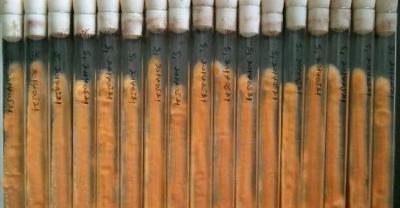
Introduced from Bulgaria, with stable yields and a biological efficiency of 90%. The mycelium grows at 3-35°C, with an optimum of 23-26°C; the mycelium is downy, white, with orange-yellow pigment. The fruiting bodies grow at 5-22°C, with an optimum of 14-18°C. The fruiting bodies grow in clusters, imbricate, grayish-blue when young and grayish-white when mature. The flesh is white, the caps are mostly shell-shaped, and the stipes are white and lateral. The spore print is light pink. The peak fruiting period of this strain is concentrated from late May to mid-June. To obtain more flushes, sunken-bed cultivation must be sown in early to mid-April, and greenhouse cultivation in mid to late March.
-
Introduction to the specific method of soil-covering cultivation of shiitake mushrooms
First, soil-covering cultivation of shiitake mushrooms adopts techniques such as natural color change, open fruiting, widening the wet-dry difference, and water management with alternating wet and dry conditions, which can make the shiitake fruiting bodies large, the flesh thick, and the number of flower shiitake abundant. Second, compared with the conventional method, the yield can be increased by 30%-40%. Third, after the substrate sticks are removed from the bags and covered with soil, they can change color naturally and are not easily infected. Fourth, after the substrate sticks are covered with soil, they can fully utilize and absorb the water and nutrients in the soil, which can save the cumbersome procedure of soaking the substrate sticks to replenish water after each flush of mushrooms. The specific method is as follows: bed width 80-100 cm, depth 20 cm
-
How are shiitake mushroom seasonings processed? An introduction to several common methods
1. Shiitake mushroom soup base: Take 100g shiitake mushroom powder, 350g table salt, 100g white sugar, 80g monosodium glutamate (MSG), and 1g white pepper powder, and mix thoroughly to make it. This soup base can be used as a seasoning for foods such as noodles, fast food, dumplings, and wontons, and can also be used as a condiment and seasoning for various cold dishes and vegetarian soups. 2. Shiitake mushroom soy sauce ① Raw material formula. 100L shiitake mushroom concentrate, 25kg table salt, 100g Sichuan pepper, 100g pepper, 150g star anise, 750g ginger, 5kg high-quality soy sauce, 0.1kg citric acid
条件筛选