-
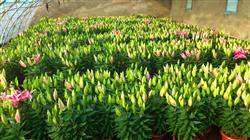
Detailed Introduction to Lily Planting Methods
Recently, a reader left us a message saying: You have the planting and pest control for edible lilies here, so why is there no planting technique for ornamental lilies? So now we are adding it: Lilies are plants of the genus Lilium in the family Liliaceae. They are excellent both as medicine and food, and the bulbs are used for food or medicine. They have the functions of nourishing yin and moistening the lungs, and clearing the heart and calming the mind....
-
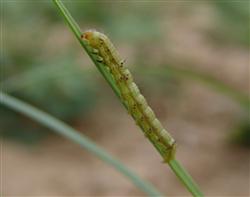
Introduction to Peanut Cultivation Techniques and Common Pests and Diseases
What pests and diseases affect peanuts? How to prevent and control them? We ask readers to help share information. The main pests and diseases of peanuts are leaf spot disease, cotton bollworm and red spider mite. Zhongdi Network has compiled their damage and control methods, listed below for readers' reference. 1. Damage of peanut leaf spot disease: Peanut leaf spot disease mainly includes brown spot...
-
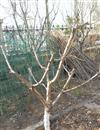
Video Introduction to Winter Pear Tree Pruning Techniques
What are the winter pear tree pruning techniques? How are pear trees pruned in winter? Experienced gardeners are invited to share their advice. Winter pruning of pear trees is carried out after the leaves fall and before bud break. Its main purposes are to develop the tree shape, adjust the canopy structure, develop fruiting branch groups, adjust the number of flower buds, and regulate...
-
-
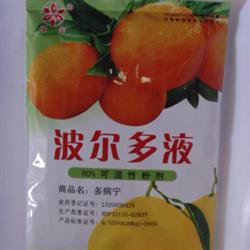
What is a non-systemic fungicide? This article gives you a detailed introduction
What is a non-systemic fungicide? Please explain. The Bordeaux mixture commonly used is a sky-blue viscous suspension prepared from copper sulfate, quicklime and water. It is alkaline and corrosive to metals. It is a non-systemic protective inorganic fungicide, and its active ingredient is basic copper sulfate. After the crop is sprayed, ...
-
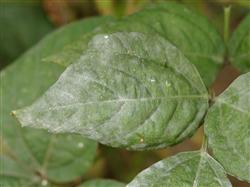
What is cowpea powdery mildew? An introduction to cowpea cultivation diseases
What is cowpea powdery mildew? An introduction to cowpea powdery mildew disease and its control methods Cowpea powdery mildew occurs mainly on the leaves. In the early stage of the disease, yellow-brown spots appear on the underside of the leaves; after they enlarge, they become purplish-brown spots covered with a thin layer of white powder. The powdery mildew pathogen is also a fungal disease, and on the leaf surface...
-
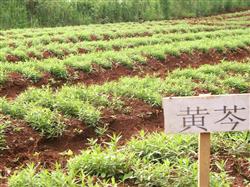
How to fertilize Scutellaria baicalensis (Baikal skullcap) when growing it? Introduction to scientific fertilization methods
How to fertilize when growing Scutellaria baicalensis? Please introduce the fertilization methods. When growing Scutellaria baicalensis, you can fertilize as follows. In the first year, after the seedlings are thinned to a stand, carry out the first fertilization, applying 500 kg of diluted human urine and manure per mu or 3-5 kg of urea, and in June-July topdress with 30 kg of ammonium phosphate. In the 2nd and 3rd years, after green-up, apply 40-50 kg of decomposed cake fertilizer, and in June...
-
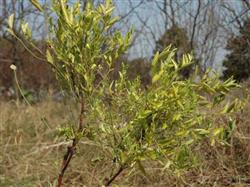
What is jujube root crown gall? Introduction to common diseases in jujube tree management
What is jujube root crown gall? What causes it? How should it be prevented and controlled? Please give an introduction. Jujube root crown gall is a bacterial disease that occurs in jujube-growing areas in the north. After the roots are affected, above-ground growth is slow and the plant is stunted; in severe cases the leaves turn yellow and drop early, and the branches and shoots weaken or even die, but it rarely causes the whole...
-
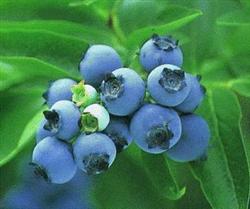
What are the main varieties of blueberries? A detailed introduction to common varieties
What are the main varieties of blueberries? Please note that the common varieties of strawberries are the following three: Rabbiteye blueberry: Rabbiteye blueberry originated in the subtropical regions of North America, with a tree height of 2-5 m, vigorous growth, drought resistance, heat tolerance, long life, and high yield; it has a wider tolerance range for soil acidity, and both its dormancy period and water requirement period are relatively short, making it suitable for...
-
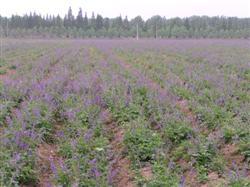
How to grow Salvia miltiorrhiza (red sage)? Detailed cultivation method introduction
How do you grow Salvia miltiorrhiza (red sage)? A detailed introduction. For growing Salvia miltiorrhiza, you can refer to the following methods: Land selection: If seedlings encounter high temperatures and dry weather, seedling growth stalls or even dies. Salvia miltiorrhiza has deep roots and requires deep soil layers, good drainage, and medium-fertility sandy loam as the best option. If the soil is too fertile, the roots will instead be less sturdy...
条件筛选