-

Phalaenopsis Little Flower Introduction: Variety Pictures and Characteristics Analysis
Phalaenopsis Little Flower, as the name suggests, is a variety of Phalaenopsis with relatively small flowers. This variety of Phalaenopsis came about as a mutation of Phalaenopsis. Its flowers are smaller than those of ordinary Phalaenopsis, so it is called Phalaenopsis Little Flower. Phalaenopsis Little Flower
-
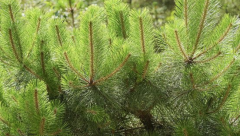
Can Masson pine be used for bonsai? An introduction to its timber prices
Masson pine is one of the pine species, belonging to the tree genus, widely distributed, and is a major timber tree species in southern China. Its economic value is high. So how much does Masson pine timber cost? Can Masson pine be used for bonsai? Can Masson pine be used for bonsai? Yes, it can,
-
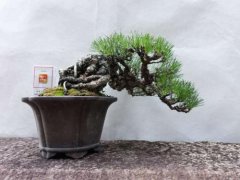
Can Black Pine Be Grown in Red Soil? An Introduction to the Prices of Styled Black Pines and One-Year-Old Black Pine Seedlings
Black pine is a fairly common pine seedling. Do you know that this kind of pine is usually used to make styled bonsai? Do you know how much a styled black pine costs? How much does a one-year-old black pine seedling cost? A one-year-old black pine seedling costs 0.2 yuan each.
-
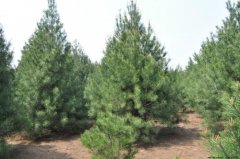
Slash Pine Pictures and Introduction to Its Economic Value: Can It Be Made into a Bonsai?
Slash pine (Pinus elliottii) is a type of pine tree. This pine is called slash pine because it likes to grow in moist soil at an altitude of 150-500 m, and the economic value of slash pine is also relatively high, with good timber quality and high resin yield. It can also be used in landscape design. Slash pine
-
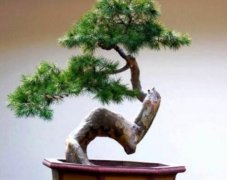
Can Lacebark Pine Be Made into Bonsai? Latest Prices and Medicinal Value Introduction
Lacebark pine (Pinus bungeana) is a plant commonly used for landscaping, but this plant also has high medicinal value. What medicinal value does it have? Many people say that the seedlings of lacebark pine and black pine are very similar, so can lacebark pine be made into bonsai? Lacebark pine
-
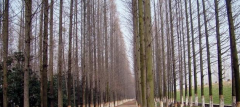
Characteristics and Features of the Line Fir, Pictures and Flower Language Introduction
Do you know the line fir? The line fir is a fir plant, an evergreen tree. Its wood is very strong, and in ancient times it was used as material for ships. Today its range of uses is also very wide. The line fir mainly grows at an altitude of 2500 m to 4000 m
-
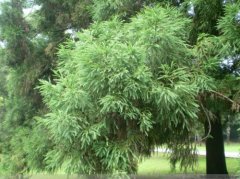
What are the characteristics of Cryptomeria japonica 'Nana'? With pictures and an introduction to cedar varieties
Cryptomeria japonica 'Nana' is a variety of cedar, belonging to the family Cupressaceae and the genus Cryptomeria. It is called by this name because, compared with other cedar varieties, its leaves are relatively small and short, so it is called short-leaved Cryptomeria. This
-
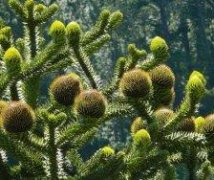
What are the characteristics of monkey-paw fir seeds? Introduction to the price of precious fir saplings
The monkey-paw fir is a variety of fir tree. The shape of its leaves and branches closely resembles a monkey's paw, which is why it is called the monkey-paw fir. Have you ever seen this kind of fir tree? This fir tree is mainly cultivated in the open field in regions of our country such as Guangzhou, Xiamen, Xishuangbanna in Yunnan, and Hainan.
-
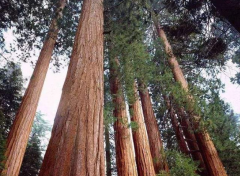
What terrain do coast redwoods grow on? Native images and an introduction to their maximum diameter
Coast redwood: the place where this redwood species was first discovered is on the American continent, discovered by a Scotsman named Seth. This redwood species is very easy to identify, its bark is red, and it generally grows in coastal areas. It grows close to the sea; in areas mainly consisting of mountains and plains in the westerlies.
-
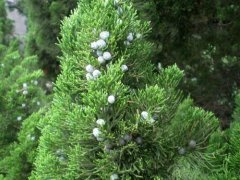
Does Chinese juniper 'Kaizuca' bear seeds? Price of 3 cm saplings and a brief introduction to cypress varieties
Chinese juniper 'Kaizuca' is a cypress variety; it is a variant of Chinese juniper. When Chinese juniper 'Kaizuca' reaches a certain height, its branches no longer grow as before but spiral and coil upward, just like a coiled dragon posture, hence the name "Chinese juniper 'Kaizuca'". Its bark is dark
条件筛选