What is a non-systemic fungicide? This article gives you a detailed introduction
What is a non-systemic fungicide? Please explain. The Bordeaux mixture commonly used is a sky-blue viscous suspension prepared from copper sulfate, quicklime and water. It is alkaline and corrosive to metals. It is a non-systemic protective inorganic fungicide, and its active ingredient is basic copper sulfate. After the crop is sprayed, ...
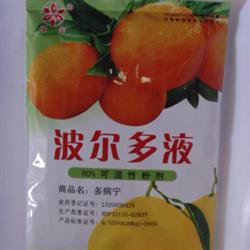
What is a non-systemic fungicide? Please explain.
The Bordeaux mixture commonly used is a sky-blue viscous suspension prepared from copper sulfate, quicklime and water. It is alkaline and corrosive to metals. It is a non-systemic protective inorganic fungicide, and its active ingredient is basic copper sulfate. After the crop is sprayed, it adheres to the crop surface and the surface of the pathogens in the form of fine particles. Through the action of factors such as air, moisture, carbon dioxide and the secretions of crops and pathogens, it slowly transforms into soluble copper and thus exerts its fungicidal effect. Bordeaux mixture will precipitate after standing for a long time, and crystals will form and its efficacy will gradually decrease. Therefore, it must be prepared and used immediately and cannot be stored. Bordeaux mixture can control many diseases of cotton, peanut, rapeseed, broad bean, vegetables and fruit trees. Because of its good adhesion, it is not easily washed off plants by rain, and it is simple to prepare and low in cost, so it is deeply welcomed by farmers. However, improper preparation and use can produce the opposite effect.
1. Material selection
The quality of Bordeaux mixture depends not only on the preparation method, but also closely on the quality of the raw materials. The quality of commercially available copper sulfate varies little, but quicklime varies greatly. Lime blocks that are thoroughly burned, free of impurities and low in density should be selected. Powdered lime that has absorbed moisture or weathered is generally not used. If there is no quicklime and hydrated lime must be used instead, the amount should be increased by 30-50%. The water should be river, lake, pond or canal water. High temperatures will cause the colloidal particles of Bordeaux mixture to coagulate and precipitate. When preparing it, hot water and water with a relatively high chloride content should also not be used, to prevent phytotoxicity.
2. Preparation
The preparation method generally adopts the "two-liquid method". That is, copper sulfate and quicklime are each dissolved in half the amount of water in two containers, then the copper sulfate and quicklime are simultaneously poured into a third container, and stirred gently and continuously in one direction with a wooden stick until the liquid turns sky blue. Alternatively, 90% of the water can be used to dissolve the copper sulfate and 10% of the water to mix the lime milk, and then the copper sulfate is slowly poured into the lime milk until it turns sky blue. The Bordeaux mixture prepared by these 2 methods has good suspension performance, fine particles, is not easy to precipitate, has strong adhesion on crops and has a good disease-control effect. Lime milk must absolutely not be poured into copper sulfate, otherwise the colloidal particles of the Bordeaux mixture will become coarser and it will precipitate easily. In addition, metal containers must not be used to prepare Bordeaux mixture; porcelain jars, wooden barrels or plastic buckets should be used, and used sprayers must also be rinsed clean immediately.
The ingredient ratio for each formulation of Bordeaux mixture should be determined according to the sensitivity of the crop to copper sulfate and quicklime, as well as the disease to be controlled, the season and the temperature. Under general conditions, the more lime used, the safer it is for plants and the longer lasting the effect, but the slower the fungicidal action. If less lime is used, the fungicidal action is faster, but phytotoxicity is more likely to occur, so it can only be used on crops with relatively strong copper tolerance.
There are several mixing ratios for preparing Bordeaux mixture. Which mixing ratio to use should be determined according to the crop and the type of disease. Generally there are several types, such as the "equal ratio", "half ratio" and "double ratio".
Click to get more fungicide application techniques
Click to get more pesticide application techniques