Detailed Explanation of Chemical Regulation Techniques for Beans in Greenhouses
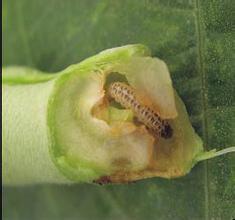
Spraying should adhere to the principle of primarily treating the buds, spraying to kill the larvae in the flower buds during the flowering period. The best time to spray is from 8-10 AM on a sunny day when the flower buds are open. After the flowers fade, when the pods are about 10 cm long, spray once to kill newly hatched larvae and young larvae that have bored into the young pods. For the pesticide, you can choose Kongfu 1500x dilution, or abamectin 150...
 Using chemical regulation techniques for cultivating beans in greenhouses can regulate plant growth and development, help increase flowers and preserve pods, and raise yields.
1. Controlling plant type. After the bush bean (dwarf common bean) emerges, spraying with 10-20 mg/L gibberellin once every 5 days for 3 treatments can elongate the stem nodes, increase branching, promote earlier flowering and pod setting, and advance the harvest period by 3-5 days. Spraying chlormequat and paclobutrazol during the mid-growth stage of hyacinth bean, common bean, and edamame can control plant height, reduce shading, and reduce the occurrence of pests and diseases. The usual concentrations are: chlormequat 20 mg/L, paclobutrazol 150 mg/L; 100 mg/L triiodobenzoic acid can also be used to control the plant height of edamame and increase its yield.
2. Promoting regrowth. In the late growth stage of cowpea and hyacinth bean, in order to promote the sprouting of new buds, a 20 mg/L gibberellin solution can be sprayed on the seed plants, generally once every 5 days, and 2 sprays are sufficient.
3. Reducing abscission. Too high or too low a temperature during flowering and pod setting will increase flower and pod drop in legume vegetables. During the flowering period of common bean and hyacinth bean, spraying 5-15 mg/L naphthaleneacetic acid solution or 6-12 mg/L p-chlorophenoxyacetic acid or 12-25 mg/L gibberellin can reduce flower and pod drop in the above crops and promote earlier ripening. Because the number of pods increases, fertilizer must be applied more heavily to achieve high yields.
4. Inhibiting photorespiration. Photorespiration in crops consumes large amounts of assimilated substances, and inhibiting crop photorespiration can greatly increase crop yields. Sodium bisulfite is a photorespiration inhibitor for legume crops, and the period for using sodium bisulfite is preferably from full bloom to pod setting. If the plants are growing weakly, it can be used earlier at the flowering stage. The concentration of sodium bisulfite used on common bean and cowpea is 30-60 mg/L, and the period of use is from early flowering to full bloom.