-

How to do a good job of disinfection and sterilization treatment for edible mushroom greenhouses
In edible mushroom cultivation, the most important thing to pay attention to is the problem of disease and pest control, and the essence of the problem, in the final analysis, is actually a matter of prevention. Therefore, in the entire production process of edible mushrooms, always adhering to the principle of "prevention first" is very necessary for every producer. Through hotline consultation content, combined with the actual situation of surveys, the author found that quite a few mushroom farmer friends are very vague about the disinfection (sterilization) and killing (bacteria) treatment of mushroom greenhouses, or even indifferent to it. Some, although already somewhat aware, have treatment measures that
-
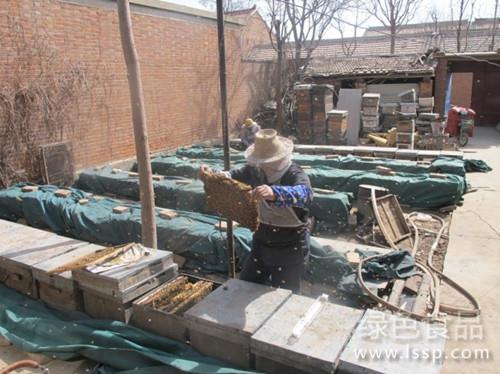
Key points for spring bee management: how to restore colony strength and make use of nectar sources
How to restore colony strength and make use of nectar sources: key points for spring bee management
-
How to treat cattle gastrointestinal inflammation? Clever use of stove soil works well
1. Incidence situation On August 15, 2005, a farmer surnamed Ma from our town came to the clinic and said that his family had 7 cattle and 18 sheep, which would not eat forage and only drank water, and had been having diarrhea for 3 days already. 3 cattle and 4 sheep had fallen and could not stand up. The cottonseed oil residue piled in the yard had been eaten by the cattle and sheep 3 days earlier. 2. Symptoms After examination, 7 cattle were found ill, weighing 180-290 kg. The cattle had white foam flowing from the mouth, were unsteady standing, had severe diarrhea, stopped eating grass, ruminating, and belching, liked to drink water, had sunken eye sockets, were physically weak, and their body temperature
-
Comprehensive Control Methods for Damping-Off Disease in Spruce Seedlings Grown in Greenhouse Tunnels
In high-cold mountain areas, greenhouse tunnel seedling cultivation is usually adopted to shorten the cultivation period of spruce seedlings and enable earlier out-planting. The special environment of the greenhouse tunnel creates conditions for the breeding and spread of various pathogenic bacteria and organisms that cause damping-off in newly sown spruce seedlings, and improper control can lead to failure of seedling cultivation. To control damping-off in newly sown spruce seedlings in greenhouse tunnels, the policy of "prevention first, comprehensive control" must be adhered to. 1 Damping-off symptoms The symptoms of damping-off mainly manifest in 4 types: (1) After sowing but before emergence, seeds and ungerminated sprouts rot and die in the soil,
-
What are the common mistakes in the use of fish medication?
In aquaculture, improper use of fish medication commonly causes losses. Fishermen and farmers should pay attention to this. 1. Treating without matching the disease. Some fishermen and farmers use bleaching powder, trichlorfon or copper sulfate for prevention and treatment no matter what fish disease occurs. Failing to prescribe the right medicine for the disease not only fails to prevent and treat the fish disease, but sometimes even has the opposite effect. 2. Using the same medication regardless of fish size. Some fishermen and farmers, upon seeing an outbreak of fish lice disease, spray 2.5% trichlorfon over the whole pond, yet do not realize that this
-
What to Do When Wheat Seedlings Turn Yellow? Common Causes and Control Methods
When wheat grows into the winter and spring seasons, the seedlings often turn yellow or even die, and applying fertilizer alone cannot make them turn green again. There are several types of yellowing in wheat seedlings, and if remedial measures are not taken in time, they can cause serious reductions in wheat yield. Yellowing from pests: yellowing of leaves caused by wheat aphids and wheat mites sucking leaf sap, occurring mainly around the overwintering period. Per 667 sq m, use 65-75 ml of 40% omethoate emulsifiable concentrate mixed with 50 kg of water for spray control. Yellowing from disease: wheat sheath blight damages
-
Onion skin soaking liquid can also be used as fertilizer
The solution made by soaking onion skins not only contains a substance that can kill pathogenic microorganisms in the soil, but also contains a variety of trace elements, so it can be used as fertilizer for crops. 1. If onion skin soaking liquid is used as fertilizer for indoor flowers, the branches grow luxuriantly and the flowers become more vivid. 2. Yellowed cucumber seedlings are especially suitable for spraying with onion skin soaking liquid; after spraying, the vines turn from yellow to green, grow vigorously, and soon bloom and bear fruit. Method for making onion skin soaking liquid: use 100 g of onion skins, add 25
-
Detailed Explanation of the Harvesting and Processing Methods and Uses of Lingzhi (Reishi Mushroom)
Harvesting and Processing: Lingzhi generally requires 50-60 days from inoculation to harvest. When the edge of the cap stops growing and brownish-red basidiospores appear on the hymenium beneath the cap, it indicates that the fruiting body has matured, and it can then be harvested. Cut it off from the middle of the stipe with a small knife, taking care not to crack the cut surface, then spread it out to air-dry or dry it at low temperature. If collecting spore powder, place clean plastic sheeting or smooth, clean paper under the fruiting bodies on the cultivation rack, collect with a bristle brush, and after the spore powder has been sun-dried and dried, store it in plastic bags for medicinal use. Uses:
-
Dry Pinellia Greenhouse Planting Methods and Technical Key Points
Dry Pinellia, also known as three-leaf pinellia, three-step jump, and hemp jade fruit, is a commonly used Chinese medicinal herb, with wild distribution throughout both northern and southern China. In recent years, due to people's reclamation and utilization of barren hillsides and the extensive use of herbicides in farmland, its ecological environment has been damaged, resources have decreased year by year, and prices have continued to rise. According to surveys, dry Pinellia products are currently scarce in seventeen specialized medicinal herb markets nationwide, supply has fallen short of demand, and the market price has remained firm at 36-42 yuan/kg. Therefore, the market prospects for artificially cultivating dry Pinellia are very broad. In recent years, we
-
What are the benefits and effects of Angelica sinensis (dong quai)? With commonly used formulas
Dong quai, also known as Qin gui, Yun gui, Xi gui, Quan dong gui, You dong gui, Bai dong gui, Gan gui, and Min gui. Its nature is sweet, pungent, bitter, and warm; it enters the Liver, Heart, Spleen, and Lung meridians, and has effects such as nourishing blood and regulating menstruation, invigorating blood and relieving pain, expelling toxins and promoting tissue regeneration, and relieving cough and calming wheezing. Clinically, dong quai is used to treat many diseases, such as: blood deficiency with sallow complexion, pale lips and nails, dizziness and blurred vision, irregular menstruation, scanty or absent menstruation, dysmenorrhea, excessive menstruation, metrorrhagia and blood in the stools as well as gastrointestinal bleeding, traumatic injuries, blood stasis with swelling and pain, headache, postoperative blood stasis pain, arthralgia with numbness, stroke with hemiplegia, sores and abscesses
条件筛选