-

Technical Methods for Bag Cultivation of Edible Mushrooms in Mushroom Houses and Mushroom Sheds
1. Cultivation site and setup. Bag cultivation uses the shelf cultivation method in mushroom houses (sheds). Choose a clean, well-ventilated room; set up 4 to 5 tiers of bed frames indoors, with a tier spacing of 50 cm and the bottom tier 30 cm above the ground. Place the mushroom bags upright in a single layer on the shelves, with 100 bags per sq m. 2. Cultivation materials and formulas. (1) 23% mixed sawdust, 23% cottonseed hulls, 28% bean stalk powder, 19% wheat bran, 5% cornmeal, 1% sucrose, 1% calcium carbonate; (2) 36% mixed sawdust, 25% cottonseed hulls, bean
-
Detailed Explanation of Pollution-Free High-Yield Cultivation Techniques for Goji Berry in Greenhouses
Goji berry (Lycium barbarum) is a perennial deciduous small shrub of the genus Lycium in the Solanaceae family. Its tender shoots and leaves (also known as goji tips) are eaten as a vegetable and can be stir-fried, served as a cold dish, or used in soups. They are nutritious, delicious and refreshing, and are highly favored by consumers. Lishui County, Jiangsu Province began introducing and cultivating it in 2002. The products are mainly sold to large and medium-sized cities such as Shanghai, Nanjing and Wuxi, and demand in the market exceeds supply, achieving relatively high economic returns. The pollution-free high-yield cultivation techniques for goji berry in greenhouses are introduced as follows: 1. Variety selection: Choose the large-leaf goji. This variety has large, green, oval-shaped leaves, with leaves
-
Producing Rhododendrons for Landscaping: Topiary Is the Direction, Don't Use Wild-Collected Rootstock
Regarding the phenomenon of some nursery growers using wild rhododendrons as rootstock to cultivate topiary rhododendrons for landscaping projects, Li Yong, secretary-general of the Rhododendron Branch of the China Flower Association, recently stated: topiary is currently an effective way to increase the added value of landscaping rhododendrons, but the practice of using wild-collected rootstock for grafting is not advocated. It is understood that although there are not many nurseries in China mainly growing rhododendrons for landscaping projects, many places in the south have already achieved year-round supply. Therefore, in the absence of disasters, the domestic supply of landscaping rhododendrons is currently basically saturated
-
Main Problems and Cause Analysis in Pleurotus pulmonarius Cultivation
At present, the cultivation area of Pleurotus pulmonarius in our city has exceeded 50 million bags, making it one of the main edible mushroom varieties cultivated in our city, with good cultivation prospects and benefits. Pleurotus pulmonarius cultivation can be carried out year-round through low-temperature treatment in cold storage. However, due to improper season, variety, culture medium, temperature treatment and water control, phenomena such as failure to fruit or death of mushroom buds often occur. Through years of cultivation practice, we have explored and summarized the above problems for the reference of peers. 1 Variety selection Currently, the main variety cultivated in our city is the Pleurotus pulmonarius series introduced from Taiwan, China by Luoyuan
-
Many Methods for Propagating Goji Berry: A Full Analysis of Commonly Used Propagation Techniques
1. Seed propagation: Spring sowing should be carried out from late March to mid-May, when temperatures rise noticeably. Soak the seeds in 30°C warm water for 24 hours, then rub them, pick out the flesh and skin, take out the sunken seeds, and dry them. Mix the seeds with wet sand at 1:3, then place them indoors at about 20°C to germinate, keeping them moist. When about 30% of the seeds have cracked and shown white, germination is complete. For the nursery site, loam or sandy loam near a water source can be chosen as the seedbed. It requires flat terrain, good drainage, and ample sunlight. Apply 5000 kg of decomposed barnyard manure per mu
-
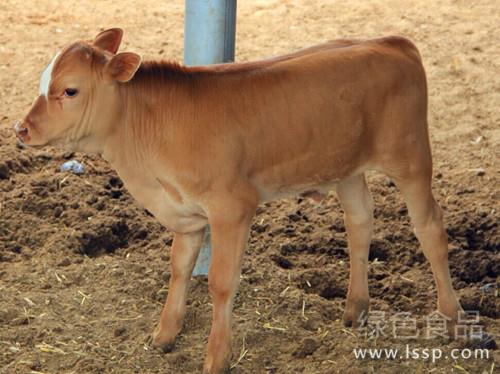
How to prevent and treat bovine respiratory distress syndrome in calves? Causes such as premature birth and hypoxia are complex
Complex causes such as premature birth and hypoxia: prevention and treatment of bovine respiratory distress syndrome in calves
-
Research progress on the mechanisms by which porcine circovirus type 2 infection causes immunosuppression
Circovirus infection is a newly discovered infectious disease. The disease has a relatively high infection rate in pigs and occurs widely throughout the world, having become one of the infectious diseases that seriously affect the development of the pig industry. Circovirus mainly attacks the pig immune system, interfering with and destroying the body's production and maintenance of immune antibodies against disease, resulting in reduced resistance and making pigs susceptible to secondary or concurrent other diseases. In recent years, scholars at home and abroad have conducted a great deal of research on the mechanisms by which porcine circovirus invades the immune system, and certain progress has been made in the virus replication mechanism, its effects on cytokines and lymph
-
Calcium and phosphorus metabolism disorders in geese caused by vitamin D deficiency
Vitamin D (VD) deficiency, calcium or phosphorus deficiency, and an imbalance in the calcium-to-phosphorus ratio can all cause osteoporosis, resulting in rickets in young geese or osteomalacia in adult geese. This disease is a nutritional bone disease that can occur in geese of different ages, and clinically it is often seen in young geese 1-3 weeks of age. The main signs are stunted growth and development, skeletal deformities, limb weakness, weak legs, and even paralysis. When adult geese are affected, egg production decreases or soft-shelled eggs are laid. In addition, this disease can also trigger other diseases, often causing certain economic losses to the goose-raising industry. 1. Dise
-
Why don't silkworms spin cocoons? An analysis of common causes
1. Pathological factors. For example, flacherie and soft rot are prone to infecting and causing disease before mounting, destroying the silkworm's silk gland secretion function, or the pathogen produces large amounts of toxic metabolites in the silkworm's body, paralyzing the silkworm's nerves so that it cannot spin silk and form a cocoon; 2. Physiological factors. First, abnormalities of the middle silk gland, mainly caused by rearing temperatures that are too high or too low, leaves that are too tender, or imbalance of the secretory glands, which causes silk gland abnormalities and prevents spinning; second, abnormalities of the anterior silk gland, mainly caused by exposure during rearing to excessive coal gas, fishy odors, alcohol and other harmful gases
-
What to Do About Leaf Drop in Golden Privet During the Growing Season? Causes and Control Measures
In 1999, golden privet (Ligustrum × vicaryi) began to be trial-planted in the Hengshui area of Hebei, and the planted area then increased rapidly. However, starting in 2002, a small number of local golden privets began to drop leaves during the growing season, showing patchy bare spots, and the problem kept spreading. By mid-June 2003, spots appeared successively on the leaves of golden privet over a large area; the spots appeared on old leaves later than on young leaves, then progressed to drying up, leaf drop, and the branches gradually dried up from top to bottom, with a small number dying. The dead patchy areas were mostly in the middle of the planting site.
条件筛选