-
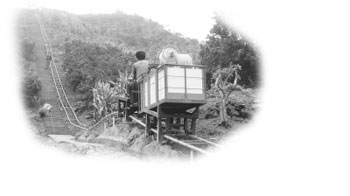
Light rail built in mountain orchards makes harvesting, fertilizing and watering easy
Light rail in mountain orchards makes harvesting easy, fertilizing and watering a breeze
-

Why interplanting dry Pinellia ternata in fruit orchards is highly profitable
Dry Pinellia ternata is best suited for interplanting in fruit orchards, because it prefers shaded environments. During hot seasons with direct sunlight, the plants are prone to lodging (seedlings turn yellow, wither and shrink), causing tuber growth to stop. In the hot summer, the lush foliage of fruit orchards serves as a natural protective umbrella that provides shade during the vigorous growth period of dry Pinellia ternata, offering favorable conditions for normal tuber growth. Interplanting dry Pinellia ternata in each mu of fruit orchard can yield about 120 kg of dried product, and its cultivation benefit increases by 3-5 times compared with interplanting conventional crops. 1. Sowing. Spring March-May
-
High returns from intercropping mushroom cultivation in citrus orchards
The author succeeded in growing mushrooms between the rows of a densely-canopied citrus orchard, achieving a double harvest of both citrus and mushrooms. Large-scale promotion has shown that generally each mu of orchard produces more than 3000 kg of citrus per year, worth 4000 yuan; and 800 kg of fresh mushrooms, worth 3200 yuan. After deducting production costs of 1500 yuan, the total net income is more than 5700 yuan, which is more than 2000 yuan higher than growing citrus alone. Intercropping mushrooms in the orchard also helps to increase humidity, retain warmth and improve the soil. 1 Raw material preparation Each mu requires 1500 kg of dry wheat straw (rice straw or sawdust may also be used), 20 kg of lime and 15 kg of urea
-
Detailed Explanation of Early Spring Management Measures and Technical Points for Peach Orchards
For early spring management of peach orchards, focus on ditching, supplementary fertilizing, gap filling, and applying eradication agents, which helps form strong buds and lays the foundation for high yield and quality peaches that year. 1. Clear ditches for smooth drainage. Low-lying terrain and heavy clay soil mean waterlogging damage is a major constraint on high yield and quality of peach trees. Especially since precipitation was low since the second half of last year, it is highly likely that rainfall will be excessive this year. If the ditch system in the peach orchard does not drain smoothly, severe waterlogging will damage roots and weaken tree vigor. Therefore, for the main drainage ditches and perimeter ditches of the peach orchard, labor should be organized for thorough clearing to
-
Key Points of Water Management Techniques in Schisandra chinensis Orchards
1. Irrigation The root system of Schisandra chinensis is relatively shallow, and drought has a considerable impact on its growth, flowering, and fruiting. In Northeast China, spring rainfall is scarce, making drought conditions likely and highly unfavorable to the early growth of Schisandra chinensis. If irrigation can be carried out promptly throughout the year according to climate changes and the plant's water requirements, it will have an extremely significant effect on improving the yield and quality of Schisandra chinensis. Schisandra chinensis is most sensitive to water during the bud break stage, the rapid shoot growth stage, and the rapid berry enlargement stage. Water shortage in the early growth period can cause uneven bud break, short and small shoots and leaves
-
Benefits and Cultivation Techniques of Interplanting Oyster Mushrooms in Pear Orchards
After the pear trees are harvested, the pear orchard has a fairly long idle period. Using the empty rows between the pear trees to grow a season of oyster mushrooms can yield good economic, ecological and social benefits. A seedbed of about 10 sq m can produce more than 100 kg of oyster mushrooms, with an income of more than 200 yuan, requiring little input and giving quick returns; it can also increase fertilizer sources, improve the soil, build up soil fertility and raise the phosphorus and potassium content; at the same time it can kill off winter weeds; and it is beneficial for the pear trees' second autumn root growth. To successfully interplant oyster mushrooms in a pear orchard, the following points of cultivation technique should be mastered. 1. Choosing the bed site
-
Key Points of Irrigation Techniques and Detailed Watering Methods for Jujube Orchards
Although jujube trees have strong drought resistance and heavy rainfall is unfavorable to jujube production, if there is drought and a lack of water, the growth and development of jujube trees are also adversely affected. During the growing season, jujube trees require a relative soil moisture content of 65%-70%. This is especially true during the flowering period and the rapid fruit growth period before pit hardening, when they are very sensitive to soil moisture. When the relative soil moisture content is less than 55% or greater than 80%, young fruit growth is hindered, and flower and fruit drop is severe. During the slow growth period after fruit pit hardening, when the relative moisture content drops to 30%-50%, the flesh cells lose turgor pressure and soften, and growth
-
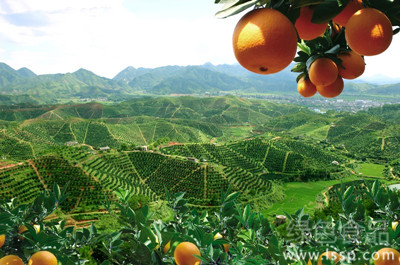
Effective management techniques for promoting growth in orchards in Sichuan in autumn
Effective management techniques for promoting growth in orchards in Sichuan in autumn
-
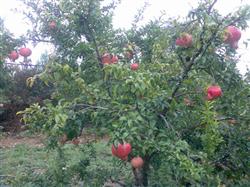
Detailed Explanation of Key Technical Points for Renovating Low-Yield Pomegranate Orchards
I. Strengthen soil, fertilizer and water management. In summer, dig over the tree basin, rake it level, then cover the tree basin with a 20 cm thick layer of grass or wheat straw, press a small amount of soil on top, and turn it under on the spot in early spring of the following year. From after harvest to early winter, apply base fertilizer by the trench method, with trenches 30-35 cm deep, applying 3000 kg of high-quality farmyard manure, 3 kg of superphosphate, and ternary compound...
-
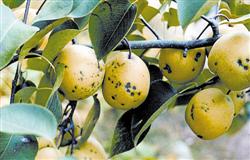
Key Points and Technical Details for Spring Management of Pear Orchards
In mid-May, some fruit growers in Xinji, Shenzhou and other places found that after spraying pear trees with pesticides, the young fruit of some pear varieties developed black spots, affecting fruit quality. In order to investigate the causes of the black spots, on May 22, Ni Qunzhou of the Shijiazhuang Fruit Tree Research Institute of the Provincial Academy of Agriculture and Forestry Sciences, Liu Pingjun of the Jinzhou Forestry Bureau, and Xie Zhuang Technicians of Zhaoxian County...
条件筛选