-
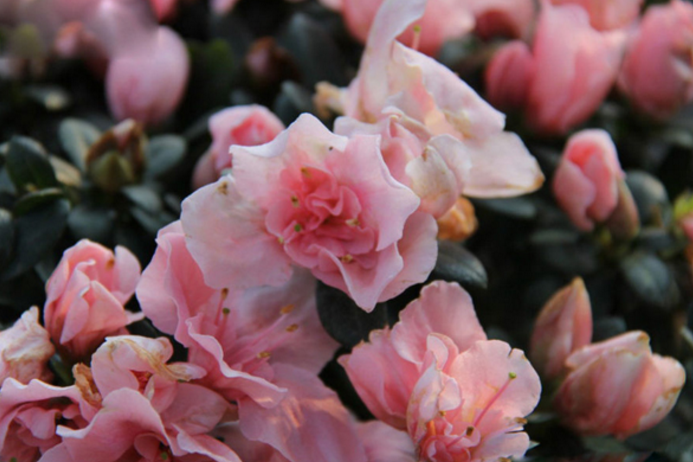
Azalea Growing Methods and Precautions, and the Difference from Ying Shan Hong (Mountain Azalea)
When it comes to azaleas, many people love to grow them. Azaleas are truly gorgeous. Let's take a look at the growing methods and precautions for azaleas. What is the difference between azaleas and Ying Shan Hong: Azalea growing methods and precautions: Care environment requirements
-

After nearly five years of fishing moratorium, mackerel body length has recovered, and the Fisheries Agency plans to open the "Honghuoxin fishing ground" to fishing boats of 100 tonnes and above for mackerel fishing
After nearly five years of fishing moratorium, mackerel body length has recovered, and the Fisheries Agency plans to open the "Honghuoxin fishing ground" to fishing boats of 100 tonnes and above for mackerel fishing
-

The alias of the Chinese medicine Guanzhong is Guanjie and Heigouji.
Scientific name: Cyrtomium fortunei. Aliases: Guanjie, Heigouji. Family and genus: A perennial herbaceous fern of the family Dryopteridaceae and the genus Cyrtomium. Morphological characteristics: Plant height 30-70cm. The rhizome is thick and upright. The leaves are clustered, odd-pinnate compound leaves, with 10-20 pairs of pinnae, sickle-shaped lanceolate, dark green on the surface and light green on the back. The sori are round, borne on the back or at the top of the veinlets and arranged in two rows along the midrib, with a round-reniform indusium.
-
Zhongzhi No. 10, a multi-resistant, high-quality sesame variety
Zhongzhi No. 10 was developed through targeted breeding using the principles of gene complementation and accumulation, with 5 varieties selected for composite crossing, combined with artificial waterlogging stress, natural disease nurseries, and identification and screening of major economic traits. The variety passed approval by the Hubei Provincial and the National Crop Variety Approval Committees in 1994 and 1997, respectively. Characteristics: This variety is of the branching type, with three flowers per leaf axil and four-angled capsules. Plant height is about 150 cm, reaching up to 2 m; it has about 4 effective branches, 100-200 capsules per plant, around 65 seeds per capsule, and a 1000-seed weight of 2
-
New sesame variety Zhongzhi 12: high yield, disease-resistant and high quality
Zhongzhi 12 was developed by the Oil Crops Research Institute of the Chinese Academy of Agricultural Sciences through crossing the introduced foreign sesame variety "CLSU-9" as the female parent with "Yiyangbai" as the male parent, followed by multiple generations of directional selection, and was approved by the Hubei Provincial Crop Variety Approval Committee in 2003. Characteristics: This variety is of the single-stem type, with three flowers per leaf axil and four-angled capsules. The plant is relatively tall, generally about 160 cm in height, and can reach more than 2 m at its tallest. The leaves are green, relatively large, with longer petioles, and the stem is greenish-yellow at maturity
-
Hongfeng Apricot
'Hongfeng' apricot is a sister line of the New Century apricot. It is a new early-maturing cultivar bred by combining sexual hybridization ('Erhuacao' x 'Honghebao') with embryo culture technology. It has the advantages of late flowering, early ripening, resistance to late frost, self-fruitfulness, a high fruit-setting rate, strong productivity and excellent quality, and is suitable for open-field and greenhouse cultivation in North China.
-
Introduction to the new potato variety Zhongshu 7
Suitable range: For spring and autumn planting in the Central Plains double-cropping region of Beijing, Shanghai, Jiangsu, Zhejiang, Anhui, Jiangxi, Shandong and Henan, and for early-maturing winter cultivation in the southern winter-cropping region of Fujian, Guangdong and Guangxi. Variety source: Selected through systematic breeding from the sexual cross of Zhongshu 2 x Jizhangshu 4. Characteristics and traits: An early-maturing variety with a growing period of 64 days after emergence. Plant type semi-erect, strong growth vigor, plant height 50 cm, leaves dark green, stems purple, corolla purplish red, tubers round, light yellow skin, milky white flesh, smooth skin, shallow eyes, stolons
-
Zhonghuang 13, the new high-yield soybean variety with the largest promotion area
The new high-yield soybean variety "Zhonghuang 13", supported by the national "Institute Directors Fund" (basic research operating expenses for public welfare research institutes), has now become the soybean variety with the largest promotion area in China, reaching a record 10.87 million mu in 2007. Zhonghuang 13 (National Approved Soybean 2001009) was bred under the leadership of the famous Chinese soybean breeder, Researcher Wang Lianzheng of the Chinese Academy of Agricultural Sciences, and was recommended by the Ministry of Agriculture as a national key soybean variety for three consecutive years from 2005 to 2007. It was developed by sexual hybridization using Yudou 8 as the female parent and Zhongzuo
-
Introduction to the Characteristics and Traits of the Wangzhongwang Soybean Variety
Variety source: Introduced by the Jinzhou District Grain and Oil Technology Promotion Center from the Mudanjiang Agricultural Science Research Institute. Characteristics and traits: Growth period of about 115 days, plant height 75cm, dark green leaves, main stem basically unbranched, determinate podding habit, long terminal inflorescence, many pods, 50-80 pods per plant, mostly three-seeded pods, yellow seeds, 100-seed weight 18-19g, good quality, relatively strong stress resistance, wide adaptability, can be used as a multiple cropping variety following wheat. Cultivation points: Suitable sowing time is around May 20. Row spacing 53cm, reasonable density is: flat land
-
Introduction to Zhongte No.1, a Soybean Variety Without Beany Flavor
Beany flavor is the odor produced when soybean lipoxygenase (LOX) catalyzes the oxidation of unsaturated fatty acids, generating harmful substances such as aldehydes and ketones. To eliminate the beany flavor of soybeans, the industry has had to use high-temperature deodorization and chemical deodorization processes in soybean processing. However, these two deodorization methods both reduce the solubility of soybean protein and cause varying degrees of contamination to soybean products, while also increasing costs. Growing soybeans free of beany flavor, however, provides a strong guarantee for the nationwide implementation of the "National Soybean Action Plan" and the "School Milk Program." Beany-flavor-free
条件筛选