-
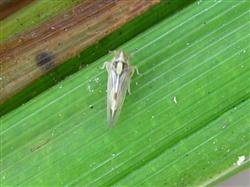
How to control rice planthoppers? A detailed guide to practical methods
How do you control rice planthoppers? Please provide an introduction to control methods. To control rice planthoppers, you can refer to the following methods: 1. Plant at a reasonable density, improve the field microclimate, and increase the rice plant's disease resistance. 2. Fertilize reasonably, control nitrogen fertilizer, increase phosphorus and potassium fertilizer, and apply topdressing skillfully, so that the rice grows and develops early and quickly,...
-
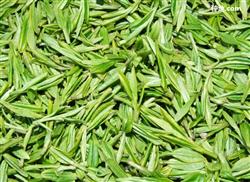
How Are Tea Leaves Named by Season? A Detailed Guide to the Rules
How are tea leaves named by season? Please explain that the names of tea production seasons are set according to China's twenty-four solar terms. There are nine in total, and each name is taken from the solar term at the time of picking. Because it affects the price of tea, tea farmers and tea merchants all pay close attention to it. In order from the beginning of the year, they are as follows: 1....
-
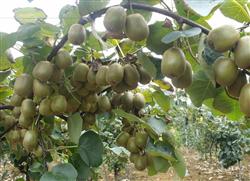
How to Grow Kiwifruit for High Yields? A Detailed Guide to Practical Techniques
How can kiwifruit be grown for high yields? Here are the cultivation methods. To achieve high yields when growing kiwifruit, you can refer to the following cultivation methods: 1. Choose varieties: select good varieties with large fruit, good quality, strong disease resistance and good yielding ability, such as Hayward, Allison, Bruno, etc. 2. Choose and establish the orchard site: kiwifruit...
-
How to Grow Licorice? A Detailed Guide to Cultivating the Medicinal Plant Licorice
●Growth Habits. Licorice, also known as sweet grass root, red licorice, and powdered licorice. It is a plant of the Fabaceae family. Its roots and rhizomes are used as medicine. It has the effects of clearing heat and detoxifying, moistening the lungs and relieving cough, tonifying the spleen and boosting qi, and harmonizing various medicines. Licorice mostly grows in the northern temperate zone, in plains, mountainous areas, or river valleys at an altitude of 0-200 m. The soil is mostly sandy soil. Soil...
-
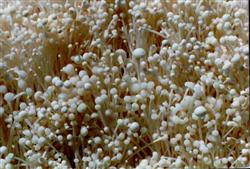
A Detailed Guide to Enoki Mushroom Regenerative Cultivation Techniques and Methods
How is enoki mushroom regeneratively cultivated? Please advise. Enoki mushroom has a strong regenerative branch characteristic: when young mushrooms dry out and wither, many new fruiting body primordia form on their stipes. With proper management of these primordia, they can all develop into high-quality mushroom bodies. This method has the characteristics of dense and uniform fruiting, thin stipes, being less prone to cap opening, good appearance...
-
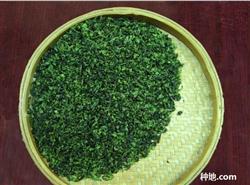
What Types of Tea Are There? A Complete Guide to Common Tea Classification
What types of tea are there? Please advise. There are many varieties of tea, with China having the most. At present, there is no unified method for classifying tea; different standards yield different classification methods. Among them, one method based on processing method and quality, using the degree of tea polyphenol oxidation as the order, divides primarily processed tea into green tea, yellow tea, dark tea, oolong tea, ...
-
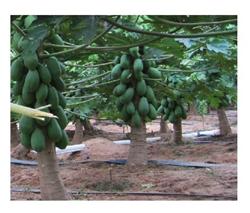
How to grow papaya? A detailed guide to papaya cultivation techniques
How to grow papaya? Please give a detailed introduction. For papaya cultivation, you can refer to the following methods: 1. Choose excellent varieties. Varieties suitable for the local area include Yizhou papaya, Yipinhong papaya, etc., and they can pollinate each other. 2. Field planting and orchard establishment. It is advisable to choose deep, fertile, well-drained neutral or slightly alkaline loam...
-
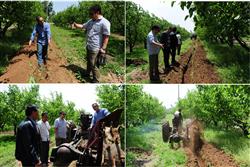
How to fertilize pear trees for good growth? A detailed guide to scientific fertilization methods
How should pear trees be fertilized for good growth? Please explain the fertilization methods. For planting pear trees, you can refer to the following methods for fertilization: 1. Apply more organic fertilizer to build up soil fertility and improve the soil. Organic fertilizer not only contains the various nutrients needed for pear tree growth, but can also improve soil structure, increase the soil's nutrient buffering capacity,...
-
How to Grow Japanese Honeysuckle? A Complete Guide to Methods and Key Technical Points
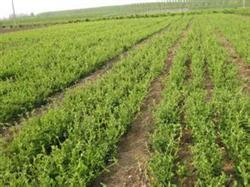
Japanese honeysuckle (Lonicera japonica) is a perennial tree-form plant grown for its medicinal flower buds; it is cold-tolerant and drought-tolerant, and can grow on barren hills, waste slopes, hilly ridges and sandy beaches. After receiving the honeysuckle seedlings, immediately untie the package, dip the roots in muddy water to improve the survival rate, and plant them promptly. Planting method: row spacing 1.3-1.5 m, plant spacing 0.9-1 m, with the seedling roots planted about 10 cm deep...
-
How to fertilize pear trees for good growth? A detailed guide to fertilization methods
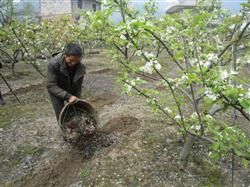
How to fertilize pear trees for good growth? Please give an introduction. The life of a pear tree goes through several main growth stages: the young tree first-fruiting stage, the full-fruiting stage and the aging stage. At different growth stages, the fertilizer required differs. 1. Young tree first-fruiting stage: In early spring, a nitrogen-based fertilizer should be applied as a top dressing. After early summer, when new shoots stop growing, flower buds begin to differentiate and the fruit begins to swell, a phosphorus- and potassium-based fertilizer should be applied as a top dressing. After harvesting the fruit in autumn, a base fertilizer should be applied once more. 2. Full-fruiting stage: After bud break and before flowering, apply a nitrogen-based fertilizer once as a top dressing. From late June, when the fruit begins to swell, until just before harvest, root-zone top dressing (foliar spraying) should be carried out, and nitrogen, phosphorus and potassium fertilizers should be applied together during top dressing. After the pear fruit is harvested, the tree enters a recovery stage, and during this period the base fertilizer should be applied early. 3. Aging stage: After decades of growth and fruiting, the pear tree enters the aging stage, and four top dressings and one base fertilizer are applied throughout the year (an average of 250-500 kg of barnyard manure per tree each year).
条件筛选