How to Grow Kiwifruit for High Yields? A Detailed Guide to Practical Techniques
How can kiwifruit be grown for high yields? Here are the cultivation methods. To achieve high yields when growing kiwifruit, you can refer to the following cultivation methods: 1. Choose varieties: select good varieties with large fruit, good quality, strong disease resistance and good yielding ability, such as Hayward, Allison, Bruno, etc. 2. Choose and establish the orchard site: kiwifruit...
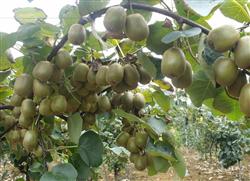
How can kiwifruit be grown for high yields? Here are the cultivation methods.
To achieve high yields when growing kiwifruit, you can refer to the following cultivation methods:
1. Choose varieties: select good varieties with large fruit, good quality, strong disease resistance and good yielding ability, such as Hayward, Allison, Bruno, etc.
2. Choose and establish the orchard site: kiwifruit prefers a cool and humid environment, is afraid of drought, waterlogging and wind, is cold-tolerant, but is not tolerant of late frost in early spring. Therefore, kiwifruit orchards in mountainous areas should be located on wind-sheltered, sunny slopes or open ground. The soil should preferably be loose, well-drained, micro-acidic sandy loam with high organic matter content and a pH of 5.5-6.5.
3. Cultivation method: before planting, dig the planting holes first, with a hole diameter of 1 m and a depth of 40-50 cm. Apply 40-60 kg of compost, 20 g of phosphate fertilizer and 400 g of silicon-calcium-phosphate fertilizer per hole. Planting can be done anytime from leaf fall in autumn to before bud break in spring, but late October in autumn and late February in spring, before the bleeding period of the shoots, are best. The plant and row spacing is 4.6 m x 6.0 m. To increase early yields, plants can be densely planted at twice the number and then thinned after the plants mature; 20% pollinating male plants should also be interplanted.
4. Trellising: pergola cultivation is generally used, including trellis-frame, arched tunnel and fence trellis types, with the horizontal pergola being the most suitable.
5. Summer management: after sprouting in summer, remove excessively vigorous side vines. From June onward, frequently tie the new shoots so that they evenly cover the trellis surface. Leave 10-15 nodes on fruiting canes and 15-20 nodes on vegetative canes, and remove all the rest.
6. Hand pollination and fruit thinning: first dilute the pollen from male flowers 10 times with lycopodium spores, then pollinate with a cotton swab. In addition, male flower canes can be grafted high onto female canes, or insects can be allowed to transfer pollen. Flower and fruit thinning should be done early, with the following standard: leave 1 fruit per node on fruiting canes, remove side fruits and keep the middle fruit. The leaf-to-fruit ratio can also be used as the standard, that is, leave 1 fruit for every 4-5 leaves. Generally, leave 1-2 fruits on weak fruiting canes 20 cm long, 3-4 fruits on fruiting canes 20-60 cm long, and 5-6 fruits on fruiting canes more than 60 cm long, and leave 20,000 fruits per 1.5 mu.
7. Winter pruning: prune from late December to late February of the following year. After winter pruning, generally leave 3-4 fruiting canes and 15-16 buds per mu of trellis surface. The complete tree structure per plant is: 1 trunk, 2 main branches, 3 secondary main branches, 26 side branches, 90 fruiting mother canes and 315 fruiting canes.
8. Scientific harvesting: kiwifruit is harvested from mid-September to mid-October. At this time the fruit is fully ripe and can be picked. Pick gently and handle gently, and avoid squeezing or bruising when piling the fruit. After harvest, the fruit needs an 8-10 day ripening period before it can be eaten.
9. Pest control: kiwifruit has a very strong resistance to diseases and pests. Its main pests include small leafhoppers, bean hawkmoths and scale insects, etc., and corresponding measures should be taken to carry out control work well.
Click to get more kiwifruit growing techniques
Click to get more fruit growing techniques