-
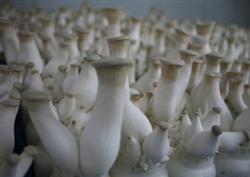
A detailed guide to the king oyster mushroom cultivation process, so easy to understand you will get the growing steps at a glance
What should you pay attention to when cultivating king oyster mushrooms? King oyster mushroom is one of the edible mushroom species newly developed in recent years. Because its cultivation techniques are not yet widespread, some problems encountered in production often affect yields, so attention must be paid to them. 1. Most of the mushroom bags become contaminated during the spawn-running process, and in severe cases...
-
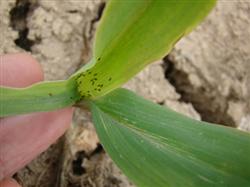
Complete Guide to Summer Corn Pest and Disease Control
How do you control summer corn pests and diseases? Here is an introduction. During the summer sowing period and seedling stage, many types of pests, diseases and weeds occur, and the damage is severe. If control is poor, it very easily causes missing plants and broken rows, leading to reduced yield. Therefore, throughout the entire growth period of corn, carrying out comprehensive control of pests, diseases and weeds at the sowing and seedling stages is crucial. First...
-

Detailed Guide to Propagating Osmanthus by Softwood Cuttings
Osmanthus (Osmanthus fragrans) is an evergreen tree of the family Oleaceae, with dense green foliage and a graceful form; when it blooms, its fragrance is rich and carries for miles. It is not only enjoyed for its flowers but can also be eaten and used to extract essential oil, giving it high ornamental and economic value. Because osmanthus produces few seeds and they are difficult to obtain, it is mostly propagated by cuttings; among these methods, softwood cutting propagation is easy to source material for...
-
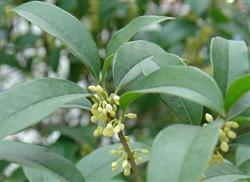
A Detailed Guide to Controlling Common Pests and Diseases of Osmanthus
How do you control common pests and diseases of osmanthus? Methods wanted. The pests and diseases of osmanthus trees include the following: 1. Leaf spot: it mainly damages the leaves, starting as small brown spots; the lesions are round or irregular, later gray to grayish white in the center with reddish-brown edges, and dark gray mold-like growth appears on the lesions. High temperature and high humidity are often the triggers, and it spreads through wind and rain, causing infection; after October the disease subsides. Control: 1) In winter, prune off diseased leaves and clear away fallen diseased leaves, and burn them in a centralized manner; 2) In early May, spray 1:2:100-200 Bordeaux mixture, after which you can spray 50% benomyl 1000 to 1500 times dilution or pyrazophos 500 times dilution or 70% thiophanate-methyl 1000 times dilution.
-
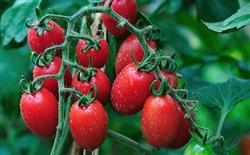
Is cherry tomato the same as cherry tomato? A detailed guide to growing methods
What is cherry tomato? How to grow it? Please give an introduction. Cherry tomato is also known as grape tomato and cherry tomato. In addition to containing all the nutrients of tomato, its vitamin content is 1.7 times that of ordinary tomato. The nutritional value of cherry tomato is superior to the components of ordinary tomato. Cherry tomato contains special substances such as glutathione and lycopene...
-

What Fertilizer to Apply to Tobacco to Increase Yield? A Detailed Guide to Scientific Fertilization Methods
How to fertilize tobacco scientifically? The various nutrients needed by flue-cured tobacco throughout its entire field growth period are mainly absorbed from the soil. Judging from the soil nutrient conditions in tobacco-growing areas under various ecological conditions in China, whether in terms of nutrient quantity or the dynamic supply process, they often cannot satisfy flue-cured tobacco's requirements for yield and quality...
-
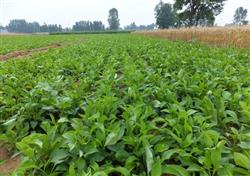
A Detailed Guide to the Cultivation Techniques and Growing Methods of the Chinese Medicinal Herb Atractylodes macrocephala
Cultivation Techniques 1. Raising Seedlings (1) Preparing the Seedbed One month before sowing Atractylodes macrocephala, turn the soil, cover it with a 30 cm thick layer of weeds, and burn the soil to disinfect it and prevent pests and diseases. Immediately after burning, turn the grass ash into the soil. If the soil is not to be burned, it can be turned in the previous winter so that the soil is fully weathered by freezing. The land...
-
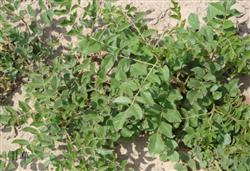
Detailed Guide to Harvest Time and Processing Methods of Licorice
Key technical measures for high-yield cultivation: choose fertile, loose-textured, well-drained sandy loam soil for planting. Treat seeds before sowing to improve germination rate, water during the seedling stage to keep seedlings alive, and apply sufficient phosphorus and potassium fertilizer every early spring. Harvest and processing 1. Harvest: Licorice propagated by seed generally grows for 4...
-
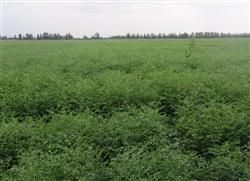
What Does Licorice Look Like? A Detailed Guide to Its Morphological Characteristics and Suitable Growing Environment
[Morphological Characteristics]Licorice (Glycyrrhiza) is a perennial herb, 30-100 cm tall. The entire plant is covered with short white pubescence and glandular hairs. The above-ground stem is upright, woody at the lower part, and the branchlets are angular and green. The leaves are alternate and odd-pinnately compound. There are 3-8 pairs of leaflets, ovate or ovate-elliptic, with entire margins, and the terminal leaflet is larger. The raceme...
-
How to supplement nutrient solution for enoki mushrooms? A detailed guide to the method
How to cultivate white enoki mushrooms? Please advise. To cultivate white enoki mushrooms, you can refer to the following method: 1. Choose a suitable cultivation time. Most white enoki mushroom varieties are low-temperature types; the optimum temperature for mycelial growth is 18-20°C, and the optimum temperature for mushroom formation is 6-8°C. Accordingly, white enoki mushrooms are generally suitable for cultivation from October to the first ten days of March of the following year...
条件筛选