A Detailed Guide to Enoki Mushroom Regenerative Cultivation Techniques and Methods
How is enoki mushroom regeneratively cultivated? Please advise. Enoki mushroom has a strong regenerative branch characteristic: when young mushrooms dry out and wither, many new fruiting body primordia form on their stipes. With proper management of these primordia, they can all develop into high-quality mushroom bodies. This method has the characteristics of dense and uniform fruiting, thin stipes, being less prone to cap opening, good appearance...
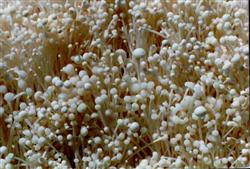
How is enoki mushroom regeneratively cultivated? Please advise.
Enoki mushroom has a strong regenerative branch characteristic: when young mushrooms dry out and wither, many new fruiting body primordia form on their stipes. With proper management of these primordia, they can all develop into high-quality mushroom bodies. This method has the characteristics of dense and uniform fruiting, thin stipes, being less prone to cap opening, good appearance, excellent mushroom quality, and high yield, and is a relatively ideal cultivation and management method worth promoting. Its high-yield cultivation and management techniques are as follows:
1. Move into the room to induce fruiting. After the fungus logs are fully covered with mycelium in the bags, move them into the cultivation room and maintain 12°C to 15°C to induce fruiting. When the fruiting bodies on the surface of the substrate grow to 2-3 cm tall (appearing fibrous-root-like, with only stipes grown and no caps), open the bag mouth, roll it down as close to the substrate surface as possible, and press the fruiting bodies down so that they lie prostrate, closely adhering to and evenly covering the substrate surface. If a small number of fruiting bodies have already grown caps, the caps can be cut off.
2. Strengthen ventilation. After opening the bags, ventilation should be strengthened. The pressed-down stipes begin to dry out and turn brown the next day. Generally, about 4 days after opening the bags (or 5-6 days when the temperature is below 12°C), a large number of small white dots (fruiting body primordia) will grow from the dried stipes. When the stipes grow to 2-3 cm tall, the height is even and the caps are uniform in size. In regenerative cultivation, because many fruiting bodies grow, attention must be paid to ventilation and air exchange. Ventilate for 0.5-1 hour before covering with a wet cloth each time, and open windows at night for ventilation and air exchange for 1 hour. When the temperature exceeds 15°C, ventilate for 4-5 hours at night after covering with a wet cloth. With this management, mushroom quality is good and yield is high.
3. Straighten the bag mouth. When the stipe diameter is 2-3 mm, straighten the plastic bag mouth. If the relative humidity is high, or some stipes are thicker and not easy to dry out, they will not produce small mushroom buds again after being pressed down, and caps will still grow from the stipes the next day. In this case, the mushrooms will also grow much longer and denser than before, and the stipe height will be relatively uniform and consistent.
4. Regulate humidity. When the stipes grow to about 10 cm, if the relative air humidity is below 85%, cover the bag mouth with a wet cloth or frequently spray water on the covering paper; when the stipes reach 15 cm long and the cap diameter does not exceed 13 mm, reaching commercial specifications, harvest promptly. After harvesting, rake away the old mycelial skin and residual stipes on the substrate surface, let the substrate surface dry for 1-2 days, then add rings and cotton plugs to the bag mouths, culture for 8-15 days, and a second flush of mushrooms will occur. If the culture substrate is relatively dry, cover the bag mouth with a wet cloth in advance; generally, cover with a wet cloth after the bag mouth is straightened. The third flush is managed the same as the first flush.
Click to get more enoki mushroom cultivation techniques
Click to get more edible fungus cultivation techniques