-
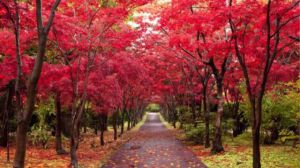
What is the difference between Japanese maple (Acer palmatum) and red maple (Acer palmatum 'Atropurpureum')? A quick guide to telling them apart
Leaf differences: Japanese maple leaves are papery, round in shape, with palmate lobes that are oblong; red maple has alternate simple leaves clustered at the tips of branches, with palmate lobes that are lanceolate. Flower differences: Japanese maple flowers are purple, in corymbose inflorescences; red maple has corymbose inflorescences that are terminal.
-
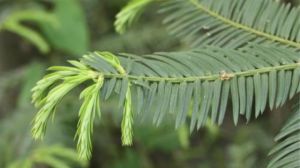
What is the difference between Torreya grandis and Cephalotaxus sinensis? A quick guide to telling them apart
Leaf differences: Torreya grandis leaves are linear, arranged in two rows, with a protruding pointed tip; Cephalotaxus sinensis leaves are also linear, arranged in two rows, with a nearly rounded base and a prominent midrib. Flower differences: the male cones of Torreya grandis are cylindrical; the male cones of Cephalotaxus sinensis are ovoid and arranged in head-like clusters. Fruit differences: the fruit of Torreya grandis is elliptical and turns pale purplish-brown when ripe; the fruit of Cephalotaxus sinensis is ovoid or nearly spherical.
-
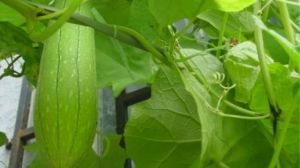
What is the difference between vegetable melon and cucumber? A quick guide to telling the two melons apart
Leaf differences: vegetable melon leaves are alternate, ovate or kidney-shaped; cucumber leaves are broadly ovate-cordate with fuzz on the surface. Flower differences: vegetable melon flowers are solitary and yellowish-white; cucumber flowers are clustered in the leaf axils and yellowish-white. Fruit differences: vegetable melon fruit is long-cylindrical or elliptical, with greenish-white or pale green skin; cucumber fruit is oblong, yellow-green, with a rough surface covered in wart-like bumps.
-
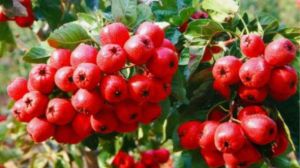
What are the differences between wild jujube and hawthorn? A quick guide to telling them apart
Leaf differences: wild jujube leaves are alternate, elliptical or ovate-lanceolate; hawthorn leaves are broadly ovate or triangular-ovate, with doubly serrated margins. Flower differences: wild jujube flowers are yellow-green, clustered in the leaf axils; hawthorn has corymbose inflorescences with white flowers. Fruit differences: wild jujube fruit is nearly spherical or oblong, reddish-brown; hawthorn fruit is nearly spherical or pear-shaped, dark red.
-
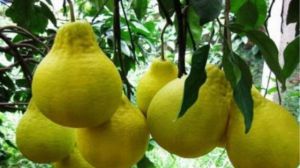
What is the difference between Shatian pomelo and grapefruit? A quick guide to tell them apart
Leaf differences: Shatian pomelo leaves are thick and dark green, broadly ovate or elliptic; grapefruit leaves are ovate, thickly leathery and dark green. Flower differences: Shatian pomelo has racemes with white flowers; grapefruit has cymes with white flowers. Fruit differences: Shatian pomelo fruit is spherical, pear-shaped or broadly conical; grapefruit peel is yellow, and the flesh is pale pinkish-white.
-
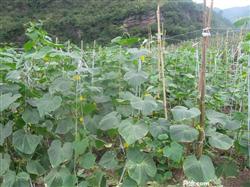
How to fertilize cucumber cultivation? A detailed guide to scientific fertilization methods
How to fertilize cucumber cultivation properly? Please explain. Cucumber is a high-yield vegetable that sets fruit early and has a long fruiting period, and its growing period requires a large amount of fertilizer. Generally, producing 1000 kg of cucumber requires 2.6 kg of pure nitrogen, 1.5 kg of phosphorus pentoxide and 3.5 kg of potassium oxide. In production, fertilizer must be applied in time to meet the nutritional needs of cucumber growth and development...
-
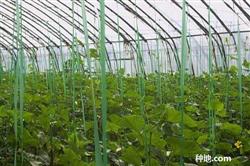
How to Grow Cucumbers with Soilless Culture? A Detailed Guide to the Cultivation Techniques
How are cucumbers grown with soilless culture? This article explains that soilless culture can avoid soil-borne diseases, pests and continuous cropping obstacles, and compared with soil cultivation, it also has the characteristics of reducing pesticide use, improving crop yield and quality, saving fertilizer, labor and water, and not being limited by soil fertility conditions. This article intends to take the Zimao Changqing Experimental...
-
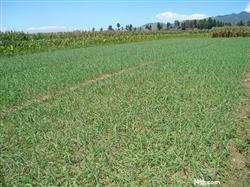
Detailed Guide to Land Preparation and Fertilization for Garlic Planting
How do you prepare the land and fertilize when planting garlic? Please explain in detail. Garlic has strong adaptability to soil and can grow in all soils except saline-alkali and sandy wasteland. However, because its root system is small and short and its ability to absorb nutrients is poor, sandy soil rich in organic matter, well drained and loose is best. Garlic is afraid of alkali and does not like clay. When cultivated in alkaline soil, the mother cloves rot easily and are prone to damage by garlic maggots, and the seedlings are yellow and weak, with the false stem lodging when alkali returns.
-
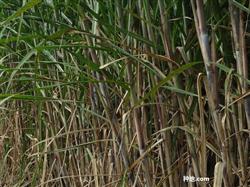
How to Fertilize Sugarcane for High Yield? A Detailed Guide to the Methods
How can sugarcane be fertilized for high yield? Please explain. Sugarcane has a long growth period and high yield, generally producing 5000-8000 kg of cane stalks per mu. It absorbs a large amount of nutrients throughout its growth period, making it one of the crops with relatively high fertilizer requirements. According to research, for every 1000 kg of sugarcane grown, it needs to absorb 1.5-2 kg of nitrogen, 1-1... from the soil.
-
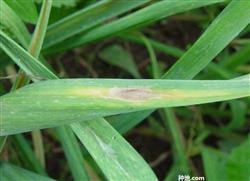
What is garlic mosaic virus disease? A comprehensive guide to this disease
What is garlic mosaic virus disease? How to prevent and control it, please advise. Garlic mosaic virus disease: 1. Symptoms In the early stage of the disease, intermittent yellow dotted lines appear along the leaf veins, which later connect into long stripes of alternating yellow and green. Plants become stunted, and the central leaves of some plants are wrapped by adjacent leaves, showing curled deformity and unable to fully extend for a long time, causing the leaves to twist...
条件筛选