-
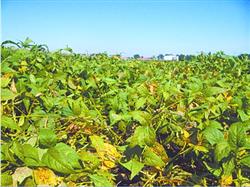
How to prevent soybean lodging? A detailed guide to practical prevention methods
Lodging in the late growth stage of soybeans affects soybean yield and quality, and is not conducive to harvesting. The first thing to consider as a cause is whether the variety is suitable. Some varieties have taller plants and thinner stems, are suited to plots with medium to low water and fertilizer, and belong to the barren-tolerant type. If plant density is too high, field ventilation and light penetration are poor, plant stems are thin and weak, tall but not sturdy, and lodging is easily caused.
-
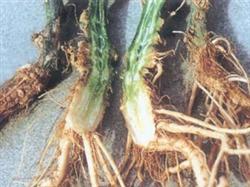
How to Prevent Winter Melon from Cracking? A Detailed Guide to Practical Methods
In recent years, Fusarium wilt has constrained winter melon production. Based on many years of practice, the following effective control methods have been summarized: Fusarium wilt is the main disease of winter melon in our county. The pathogen is a fungus of the genus Fusarium, generally occurring at the seedling stage, and the affected parts are mainly the root crown, stem and petiole. The affected...
-
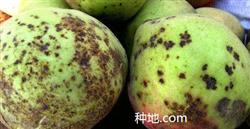
What disease causes black spots on peach fruit? A detailed guide to prevention and control methods
What disease causes large numbers of black spots on peaches? How should it be prevented and controlled? The main symptoms of peach scab are: peach scab mainly damages the fruit, but can also attack leaves and new shoots. When the fruit is affected, dark brown round spots usually appear on the shoulder, gradually expanding to 2-3 mm, then becoming black mole-like spots,...
-
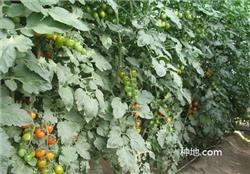
What to Do When Cherry Tomatoes Grow Too Vigorously? A Detailed Guide to Practical Vigor-Control Methods
What should you do if the cherry tomatoes you are growing now are growing too vigorously? The following methods can be used to control it: To control excessive vigor in cherry tomatoes, practice has proven that layering the vines to control the plant works very well. Layering the vines weakens apical dominance and inhibits rapid vegetative growth; by making use of this effect, plant vigor can be well regulated....
-
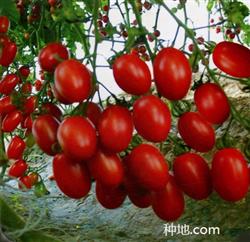
Detailed Guide to the Layering Method for Cherry Tomatoes
How do you grow cherry tomatoes? The ideal soil for cherry tomatoes is deep, fertile, well-drained yet reasonably water-retentive sandy loam to clay loam with a soil pH of 5.6-6.7. Tomatoes should not be grown in continuous cropping; they are best rotated with rice, legumes, corn, and similar crops. 1. Variety selection...
-
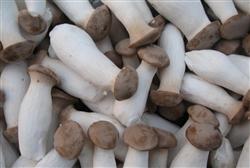
How to Grow King Oyster Mushrooms: A Detailed Guide to Cultivating Rare Edible Mushrooms
King oyster mushroom (Pleurotus eryngii) is a precious fungus valued both as food and medicine. Its caps are thick and fleshy with a crisp, tender texture, and its stems are densely structured, creamy white and firm, and rich in nutrients. It has been listed as one of the edible mushrooms with the greatest development potential in the 21st century. Because of its relatively high contamination rate and low biological conversion rate, production fluctuates greatly, and cultivation numbers and yields...
-

What do repotting, changing pots, and rotating pots mean? A guide to gardening terminology for beginners
After growing flowers for so many years, I found when talking with friends that it felt like listening to a foreign language. What is repotting, what is rotating pots? I had no idea what they were talking about. So when we grow flowers, we still need to keep learning the professional vocabulary of the flower-growing world, so that we can...
-
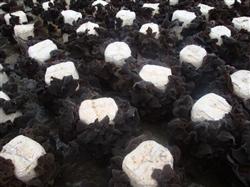
A Detailed Guide to Black Fungus Planting Methods and Cultivation Techniques
I. Overview Black fungus is also called wood ear, smooth wood ear, or cloud ear. Taxonomically it belongs to the class Basidiomycetes, order Tremellales, family Auriculariaceae, genus Auricularia. There are about a dozen or more species in this genus, such as black fungus, hairy wood ear, wrinkled wood ear, felt-cap wood ear, horny wood ear, shield-shaped wood ear, and so on. Among these wood ears, only the smooth wood ear has a plump, tender texture and a delicious flavor...
-
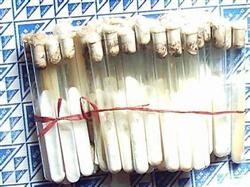
Detailed Guide to Methods and Tips for Selecting Straw Mushroom Spawn
Superior straw mushroom spawn is produced on a straw substrate and overwintered (10-15°C). After overwintering, those proven by early cultivation to be high-quality and high-yielding are selected. Mother spawn (first-generation spawn) is then obtained through tissue isolation and further expanded for culture, to supply spawn for that year's production. Mushroom growers should pay attention to the following points when selecting straw mushroom spawn: 1. Straw...
-
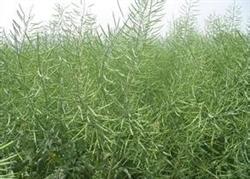
How to Fertilize Rapeseed for High Yield? A Detailed Guide to Practical Fertilization Methods
1. Apply seedling fertilizer early. In late November or early December, mainly use organic fertilizer, applying 1500-2000 kg of organic fertilizer per mu. For some fields with poor growth, an appropriate amount of chemical fertilizer should also be applied. 2. Apply stem-elongation fertilizer at the right time. Stem-elongation fertilizer should preferably be applied when the main stem bolts to 10 cm. For fields with good early seedling vigor, it may be slightly...
条件筛选