How to Grow Cucumbers with Soilless Culture? A Detailed Guide to the Cultivation Techniques
How are cucumbers grown with soilless culture? This article explains that soilless culture can avoid soil-borne diseases, pests and continuous cropping obstacles, and compared with soil cultivation, it also has the characteristics of reducing pesticide use, improving crop yield and quality, saving fertilizer, labor and water, and not being limited by soil fertility conditions. This article intends to take the Zimao Changqing Experimental...
How are cucumbers grown with soilless culture? Please introduce
Soilless culture can avoid soil-borne diseases, pests and continuous cropping obstacles, and compared with soil cultivation, it also has the characteristics of reducing pesticide use, improving crop yield and quality, saving fertilizer, labor and water, and not being limited by soil fertility conditions. This article intends to take cucumber cultivation with soilless culture at the Zimao Changqing Experimental Garden to explore the key points of its cultivation techniques and its trait performance.
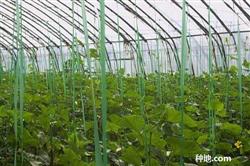
I. Soilless culture techniques for cucumber. 1. Supporting facilities and the setup of the cultivation system. (1) Supporting facilities. ① Greenhouse plastic tunnel (specifications 35 m x 4 m x 6 m), with an area of 210 sq m. Note that medium and small tunnels, water arch tunnels and other facilities are not recommended. For protective facilities, the height is especially required to be appropriately higher so that the environment has a certain regulatory capacity. ② Sufficient water source, using tap water automatic water supply and fertilizer supply system. (2) Cultivation system. ① Cultivation troughs: using the bag culture method, generally each bag is 25-30 cm in diameter and 40-45 cm in height. About 600 bags can be placed in each tunnel. ② Irrigation system. Lay 1 drip irrigation tape in each trough. Other water and fertilizer management channels can use plastic water pipes, adopting an automatic water and fertilizer regulation system. (3) Cultivation substrate. Use a mixed substrate prepared mainly with sawdust, or peat: slag = 4:6, peat: perlite = 1:1, etc. Its fertilizer ratio is ammonium sulfate: monoammonium phosphate: potassium sulfate = 10:7:7, but note that this ratio must be applied flexibly according to differences in fertilizers used in different places, and should not be copied mechanically, in order to seek the best effect. (4) Variety selection. Cucumber, 'Zhongnong No. 5' cucumber. 2. Cultivation and management techniques in the greenhouse. (1) Stubble arrangement for greenhouse cucumber. Generally there are three methods: early spring stubble cultivation, winter stubble cultivation and long-term cultivation. Here the long-term cultivation method is adopted. (2) Seedling raising. Because the temperature and light climate conditions in our city are superior, using greenhouse tunnels for seedling raising is generally not restricted by time. The seedling raising method adopts plug tray seedling raising. First water the substrate thoroughly, then sow the sprouted seeds, cover with a layer of vermiculite, water, and then cover with film to keep warm and moist. Maintain 25-30°C during the day and 15-20°C at night. Air with higher moisture and substrate temperature are favorable for female flower formation, so do not control water too excessively in water and fertilizer management, and the irrigation period should be kept moist. Generally it is better to keep sunlight to 8-10 hours. Pay attention to strengthening nitrogen and nutrient supply. 0.1% urea can be sprayed on the leaves 1-2 times to promote female flower differentiation. Carbon dioxide fertilization technology can also be applied, or ethylene can also promote female flower differentiation and increase the number of female flowers. When more than 50% of seedlings emerge through the soil, remove the film in time and enter the seedling management stage. The whole seedling period is about 25-30 days. (3) Transplanting and planting. Cucumber seedlings can generally be transplanted and planted when they have 3-4 leaves. For planting, each cultivation bag is placed one against another, divided into 6 rows, and about 600 cultivation bags can be planted in each tunnel. After planting, water once with drip irrigation as planting water. After about 3-5 days, after the seedlings recover, enter the normal production management stage. (4) Field management. ① Environmental control and regulation. Because the temperature and light conditions in our city are sufficient and the day-night temperature difference is small, environmental regulation is relatively easy to master. Generally in spring and autumn, little manual regulation is needed; covering the tunnel with an insect-proof net is enough. When severe winter comes, if the temperature is lower than 25°C and at night lower than 13-15°C, plastic film can be used for covering, or straw mats can be added. In hot summer, cover with a shading net, or adopt measures such as mist cooling, and try to keep the temperature below 30°C and the day-night temperature difference above 10°C. ② Water and fertilizer management. When using the drip irrigation system, cucumbers that have just been planted and recovered should be watered 400-500 ml per plant per day, and as the plants continue to grow, the amount gradually increases. At the full melon stage, because cucumber grows vigorously and sets a large amount of fruit, each plant needs 2000-2500 ml per day, and at the peak it can be watered at 1.20-1.50 times the full concentration. After the weather turns hot and the full melon stage has passed, the concentration should also gradually decrease to half strength, but the irrigation amount cannot be reduced. The pH value of the nutrient solution is preferably 5.60-6.20. (5) Plant adjustment. After planting, cucumber seedlings recover quickly, so materials for hanging vines should be prepared. Generally nylon thread is used as the hanging line, and iron wire is made into a double-hook hanging rope frame that can wind around the hanging rope and is hooked on the thick iron pipe in the upper part of the greenhouse. One end of the nylon thread is wound around the hanging rope frame, and the other end is lightly wound around the base of the plant. When the plant grows to a certain height (about 2 m or so), the excess rope above can be gradually let down, or the vines at the base can be coiled on the steel frame near the ground. For varieties that mainly set fruit on the main vine, side vines and tendrils below the 10th node can be removed in time during pruning. Vine coiling should be done on sunny days to avoid breaking the main vine. When the main vine grows to the upper thick iron pipe, the growing tip should be pinched off to promote fruit growth and side vine growth. (6) Harvesting. Generally harvest once every 2-3 days. Entering the full fruit stage, harvest every other day, or even every day. Harvesting cucumbers is suitable in the afternoon, when the fruit strips are fresh and tender, full of water, and good in quality.
II. Trait performance and economic benefit analysis of cucumber. After soilless culture, the main traits of cucumber are shown in the following aspects: 1. The fruit shape is straight and large, and the color is attractive. Generally each one can average 1.50 kg in weight. 2. Rich in nutrition, good quality and good taste. Tests show that the contents of vitamin C, soluble solids and sugar all show a relatively large increase. 3. No pollution, and it can reach the green food standard. Soilless culture better solves the problem of serious pollution caused by heavy use of chemical fertilizers and pesticides, and the problem of substances harmful to human health in the fruit exceeding the standard, achieving both nutrition and safety. According to preliminary calculations by the provincial green food center, cucumbers produced by soilless culture in the Zimao Changqing Garden can reach the A-grade green food standard. 4. Yield is greatly increased. The ratio of cucumber yield per mu to conventional yield is about 5:1. Each mu can reach about 100,000 kg per year.
Click to get more cucumber cultivation techniques
Click to get more vegetable cultivation techniques