What is the difference between Japanese maple (Acer palmatum) and red maple (Acer palmatum 'Atropurpureum')? A quick guide to telling them apart
I. Leaf differences
Japanese maple leaves are papery, round, 6 to 10 cm in diameter, with a heart-shaped or nearly heart-shaped, rarely truncate base, and 5 to 9 palmate lobes, usually 7, the lobes lanceolate, with sharp tips and sharply serrate margins, the lobes cut to 1/2 or 1/3 of the leaf diameter, and the leaf surface hairless.
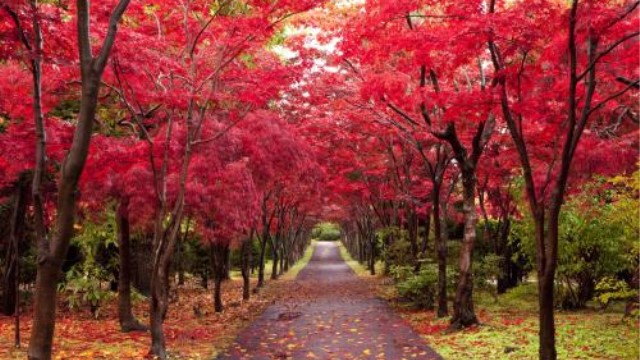
Red maple has alternate simple leaves, usually clustered at the tips of branches, with deeply palmate lobes, 5 to 9 lobes, the cuts reaching down to the leaf base, the lobes oblong-ovate or lanceolate, with sharply serrate margins. The leaves are red in spring and autumn and purplish-red in summer.
II. Flower differences
Japanese maple flowers are purple, in corymbose inflorescences, the common peduncle 2 to 3 cm long, with 5 sepals, ovate-lanceolate, and 5 petals, elliptic or obovate, with bluntly rounded tips, about 2 mm long.
Red maple has corymbose inflorescences, usually terminal, and is polygamous.