How to Grow King Oyster Mushrooms: A Detailed Guide to Cultivating Rare Edible Mushrooms
King oyster mushroom (Pleurotus eryngii) is a precious fungus valued both as food and medicine. Its caps are thick and fleshy with a crisp, tender texture, and its stems are densely structured, creamy white and firm, and rich in nutrients. It has been listed as one of the edible mushrooms with the greatest development potential in the 21st century. Because of its relatively high contamination rate and low biological conversion rate, production fluctuates greatly, and cultivation numbers and yields...
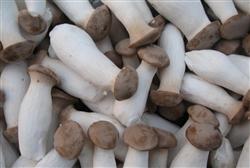
King oyster mushroom (Pleurotus eryngii) is a precious fungus valued both as food and medicine. Its caps are thick and fleshy with a crisp, tender texture, and its stems are densely structured, creamy white and firm, and rich in nutrients. It has been listed as one of the edible mushrooms with the greatest development potential in the 21st century. Because of its relatively high contamination rate and low biological conversion rate, production fluctuates greatly, and cultivation numbers and yields are unstable. Only by understanding its biological characteristics and adopting scientific technical measures can the desired results be achieved.
1. Nutrition. King oyster mushroom is an edible mushroom with a strong ability to decompose cellulose and lignin. It is suited to many growing substrates, such as sawdust, cottonseed hulls, corn cobs and bean stalks, all of which can be used as cultivation materials. Cultivation trial results show that when the sawdust content in the medium is relatively high, the mycelium grows slowly, the growth and development cycle is long, and the yield is low, whereas when the cottonseed hull content is high, growth is fast and the yield is high. Adding wheat bran or cornmeal has a good effect on promoting the growth and development of king oyster mushroom and increasing the yield of fruiting bodies. Adding bean stalk powder can also increase the yield of king oyster mushroom.
2. Temperature. The maximum suitable temperature for the mycelial growth of king oyster mushroom is 25°C; the temperature for primordium formation is 10°C-18°C, with the most suitable temperature being 13°C-16°C; the temperature for fruiting body development is 8°C-20°C, with the most suitable temperature being 10°C-16°C. When the air temperature is below 10°C or above 20°C, fruiting is difficult, so choosing the right cultivation period is crucial when growing king oyster mushroom.
3. Moisture. During the mycelial growth stage of king oyster mushroom, the water content of the substrate should preferably be 60%-65%. The ratio of total dry material to water should preferably be 1:1.1-1.4, and the relative air humidity should be 60%-70%. During the formation and development stage of fruiting bodies, the air humidity should be 85%-95%.
4. Air. During the mycelial growth stage, king oyster mushroom is not strict about air requirements; during mycelial growth, the carbon dioxide accumulated in the bottles or bags promotes mycelial growth. However, during the primordium formation stage, sufficient oxygen is needed to promote a large number of mushroom buds and rapid growth. During the fruiting body growth stage, the carbon dioxide concentration should preferably be less than 2000 mg/kg.
5. Light. The mycelial growth stage of king oyster mushroom does not require light; culturing in a dark cultivation room makes the mycelium grow faster. The formation and development of fruiting bodies require diffused light, and the suitable light intensity is 500-1000 lux.
6. pH. The mycelium can grow at pH 4-8, with the optimum at pH 6.5-7.5; the optimum pH at fruiting time is pH 5.5-6.5.