-

Detailed Guide to Saxifraga stolonifera Planting Techniques, from Planting to Care and Management
Saxifraga stolonifera Planting Techniques
-

A Detailed Guide to Snapdragon Cultivation Techniques: Management Points from Sowing to Blooming
Snapdragon Cultivation Techniques
-
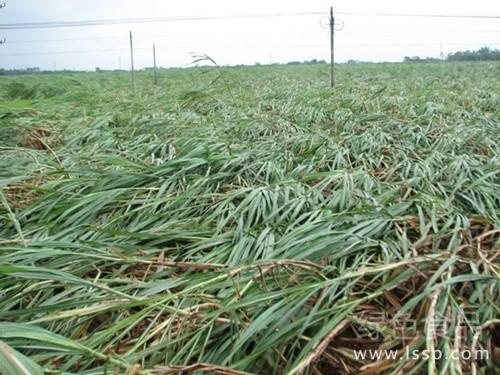
Sugarcane tends to become hollow or pithy after lodging; how to prevent it from being blown over by strong winds
Lodged sugarcane easily becomes hollow or pithy; how to prevent strong winds from blowing over sugarcane
-

How to quickly remove odor from pig pens? Introduction to practical methods
Methods to quickly remove odor from pig pens
-

How to prevent sows from crushing piglets to death? These methods are very practical
Methods to prevent sows from crushing piglets to death
-

Jujube: The Green Pearl Grown from Badlands Soil
"South Wind. Seasonal Flavors" Jujube, the Green Pearl of Badlands Soil
-

The tea fixation process evolved from steaming to pan-firing.
Compared with cake tea, the aroma of the tea leaves was better preserved in steamed loose-leaf tea. However, the steaming method still had the drawback of insufficiently rich aroma, so the pan-firing technique emerged, using dry heat to bring out the tea's aroma. In the Ming Dynasty, the pan-firing method of tea making gradually became more refined and was recorded in detail in Zhang Yuan's "Tea Record," Xu Cishu's "Tea Commentary," and Luo Lin's "Tea Explanation." Its production method was roughly: high-temperature fixation, rolling, re-firing, and baking until dry; this process is very similar to the modern method of making pan-fired green tea.
-
The Dezhou donkey is a treasure from head to tail. Just how high is its breeding value?
The Dezhou donkey originated in the counties along the Bohai coast in Binzhou City and Dezhou City, Shandong Province, with Wudi as the central production area, so it is also called the "Wudi donkey." It is one of China's large donkey breeds and an excellent local breed, and it has now been included in the national list of protected local breeds. In appearance, it is divided into two major types: the "Sanfen donkey" and the "Wutou donkey." The Dezhou donkey has strong adaptability, tolerates coarse feed, and has strong disease resistance, making it deeply popular among farmers in various regions. The Dezhou donkey has now been introduced as breeding stock to 24 provinces and cities including **, Shaanxi, and Liaoning, and has also brought considerable economic benefits to breeders.
-
What measures can prevent eggplants from turning bitter?
In response to the above problems, starting with prevention and strengthening comprehensive cultivation management measures is the key to preventing bitter eggplants in protected cultivation. The main measures are: 1. Select varieties suitable for planting in protected cultivation. When cultivating in protected conditions, choose varieties that are resistant to low temperatures, tolerant of weak light, and have only slight bitterness. For newly introduced varieties, expand planting only after successful trial planting first, to avoid blind planting and losses. 2. Optimize the production environment of protected cultivation and meet the physiological needs of eggplants as much as possible. Pay attention to choosing greenhouse materials with strong heat preservation capacity and drip-free film with good light transmission, and frequently remove dust accumulation and dirt on the greenhouse film to ensure sufficient light. Where conditions permit, certain light-increasing measures can be taken, such as using reflective screens and artificial supplemental lighting. Enhance the heat retention and insulation performance of the protected facility so that the temperature inside can meet the needs of eggplant growth. Especially after fruit set, make even greater efforts to reach the suitable temperature for eggplant growth, to prevent imbalance in eggplant growth and development caused by insufficient light and heat, which leads to bitterness.
-
Potato and scallion multiple cropping can achieve two harvests from one field
I. Cultivation of the preceding potato crop 1. Variety selection The potato variety suitable for potato-scallion multiple cropping in the Xiongyue area is "Dongnong 303", with 15 kg of seed used per mu, maintaining 4500 plants. 2. Deep plowing and fertilization In autumn, plow the soil to a depth of 15-20 cm, harrow the soil in spring, and apply 4000 kg of high-quality organic fertilizer per mu as base fertilizer. 3. Seed potato sprouting In early March, place the selected seed potatoes in a greenhouse or on a heated kang to sprout for about 10 days. Cut the seed potatoes into pieces of 20-30 g, and after cutting, air-dry the seed pieces for 6-12 d, then they are ready
条件筛选