Sugarcane tends to become hollow or pithy after lodging; how to prevent it from being blown over by strong winds
In the mid-to-late elongation stage, sugarcane plants are tall with many leaves, and if hit by wind and rain, they easily lodge. This is especially true after rain, when water accumulates at the tail end of the cane stalk, making it too heavy, so it lodges as soon as wind comes. After sugarcane lodges, the node segments near the ground easily grow aerial roots and sprout side buds, causing the cane stalk to bend, consuming nutrients in the internodes, resulting in hollow or pithy stalks, reducing sugarcane yield and lowering sugar content, and causing poor regrowth of ratoon cane. In sugarcane areas and high-yield cane fields where strong winds are frequent from July to September, preventing lodging is the key to achieving high sugarcane yields. There are mainly the following five measures to prevent sugarcane lodging:
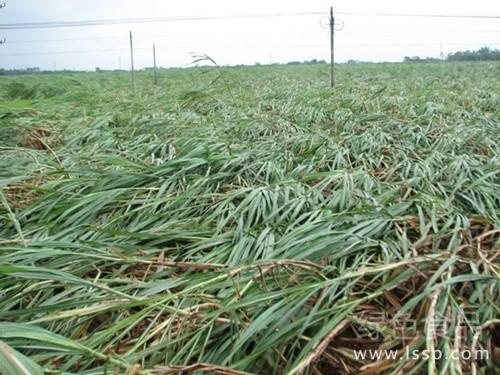
Sugarcane lodging
1. Choose wind-resistant and lodging-resistant varieties. The characteristics of lodging-resistant varieties are hard cane stalks, thick and strong bases, upright growth, and not overly vigorous late-stage growth, which helps resist lodging.
2. Apply sufficient basal fertilizer. Sugarcane should be given sufficient basal fertilizer and early topdressing, with a reasonable combination of nitrogen, phosphorus, and potassium fertilizers, and no excessive single application of nitrogen fertilizer, so that sugarcane is sturdy at the seedling stage, the cane plants do not grow excessively, and lodging resistance is improved.
3. Deep furrows, shallow planting, and high hilling. The root system of sugarcane grows from the root points on the root band at the base of the cane stalk. High hilling can increase the root band buried in the soil, allow more cane roots to grow, make the cane roots penetrate deeply and firmly, enhance wind resistance, and prevent lodging. If the planting furrow is too shallow, it easily causes the plant to tip over and lodge.
4. Strip leaves to prevent lodging. Some lower leaves of sugarcane have already dried up, and old leaves have low photosynthetic efficiency. In the late stage, each sugarcane plant only needs to keep 6-7 fully emerged leaves, so excess old leaves and dead leaves should be stripped off to reduce the weight borne by the cane stalk, reduce the wind-receiving area, and prevent lodging.
5. Tie up sugarcane to prevent lodging. Sugarcane plants are tall. In September, when the cane plants reach 2 m in height, two rows of sugarcane should be tied crosswise into a "" shape, which can effectively prevent lodging.