-

Major progress made in project to control soybean yield reduction from continuous and alternating cropping
The reporter learned from relevant departments that the project "Research and Demonstration of Key Technologies for Controlling Soybean Yield Reduction under Continuous and Alternating Cropping," tendered by the Municipal Science and Technology Bureau, has achieved major progress after two years of scientific research. The project was carried out in Yilan and Bayan counties, the two counties with the largest soybean area in Harbin. Through key technology research, soybean varieties resistant to continuous and alternating cropping were selected, including Kenfeng 16, Heinong 48, Kangxian 4, and Hefeng 47. A formula fertilization technique was proposed with 45 kg of nitrogen, 60-67.5 kg of phosphorus, 67.5-75 kg of potassium, and
-
How to prevent and control greenhouse potatoes from before sowing to the sowing period?
1. Adjust the planting structure and carry out reasonable crop rotation. Avoid continuous cropping with cucurbits and solanaceous vegetables; instead, rotate for more than three years with cruciferous crops such as cabbage and Chinese cabbage, and liliaceous crops such as Welsh onion and garlic. 2. Select disease-resistant varieties. Such as Haijiao No. 2, Zhongjiao No. 4, Zhongjiao No. 5, Zhongjiao No. 6, Zhongjiao No. 7, Zhongjiao No. 8, Tianjiao No. 3, Tianjiao No. 4, Tianjiao No. 6, Zhijiao No. 1, Zhijiao No. 9, Fengjiao No. 1, Dujiao No. 1, Jinjiao No. 8, Zaozao No. 1, etc. 3. Disinfect the seedbed. You can use 50
-
Key Management Points for Greenhouse Potatoes from Sowing to Planting Out
1. Use 75% thiophanate-methyl at 600-800 times dilution or 75% chlorothalonil at 1000 times dilution to control damping-off; spray the seedbed with 72.2% propamocarb aqueous solution at 5-7.5 ml per sq m to control Pythium damping-off, which also controls early blight, anthracnose, and other diseases. 2. During the seedbed stage, spray per 667 sq m with two bags of Wu's chili pepper powder, or 500-800 times dilution of kebingling, or 400 times dilution of virus A wettable powder to control viral diseases. Spray once every 7 days, for 3 consecutive sprays. All can achieve good results.
-
How to manage greenhouse potatoes from planting to fruiting stage
Use 50% pirimicarb or 10% imidacloprid 5 g per (mu) mixed with 40 kg water to control aphids, and also control cotton bollworm; alternately use dt emulsion 400 ml per (mu), or use 2 billion PIB/ml Helicoverpa armigera nucleopolyhedrovirus suspension 50-60 ml per (mu) to control cotton bollworm, and also control tobacco budworm and aphids. Before the onset of Fusarium wilt and in the early stage of the disease, drench the roots with Lvheng No. 1 3000-fold solution, or Lvheng No. 2 600-fold solution or Lvheng No. 8 1500-2000-fold solution, or Qingjiaoan
-
Introduction to New Rice Hybrid Combinations from Fengle Seed
Yuxiangyou No. 2 is a new two-line hybrid rice combination developed by the Rice Research Institute of Fengle Seed using the broad-compatibility restorer line Fengxianghui No. 1 with Guangzhan 63s. It is a high-quality, high-yield, disease-resistant, aromatic two-line hybrid rice combination. In 2003 it entered the mid-season rice preliminary trial in Hubei Province, and in 2004 it entered the mid-season rice regional trial in Hubei Province. When cultivated as mid-season rice, the whole growth period is about 135 days, comparable to Shanyou 63. It has good vigor, plant height about 125 cm, total grains per panicle 180-200, seed-setting rate about 85%, 1000-grain weight 28 g, yield about 600
-
High returns from the grid-pool fish-lotus polyculture model
The grid-pool fish-lotus polyculture technique involves partitioning a hardened lotus pool with roof tiles, hard boards and the like into small grids of 2-4 sq m each, planting lotus within the grids, yielding an average of 0.5 wan kg of lotus and 400-450 kg of fish per mu of water surface, with a net return of over 10,000 yuan per mu. This technique can make use of waste pits, wasteland, river beach land and scattered corner plots to build grid-pool fish-lotus polyculture systems; it features small investment, low cost, quick returns and high benefits, is suitable for vigorous development by countless rural households, and has very broad prospects for extension.
-
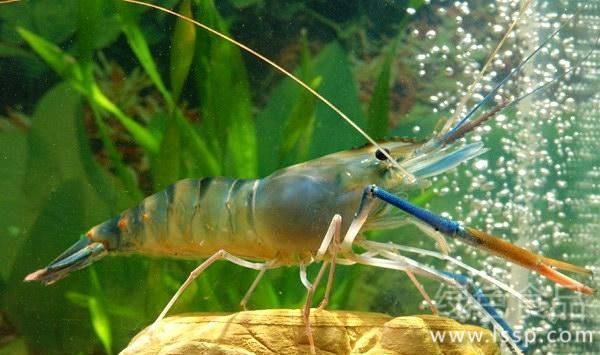
To achieve high yield and good profits from freshwater shrimp and river crabs, grasping six key points is very important
For high yield and good profits from freshwater shrimp and river crabs, grasping the "six key points" is very important
-
Key Points for Preparatory Work Before Sowing Gastrodia elata Seeds from Sexual Reproduction
The sexual reproduction of Gastrodia elata uses hybrid seedling seeds of Gastrodia elata, which reproduce under the combined action of germination fungi and Armillaria mellea. The growth period of sexually reproduced Gastrodia elata is one and a half years, that is, planted in June-July of the current year and harvested at the end of the second year. Its characteristics are small investment, high success rate, and stable yield, and it is currently a relatively advanced high-yield cultivation technique for Gastrodia elata in China. 1. Selection of planting site. The growth of Gastrodia elata hardly requires sunlight, so it can be planted in basements, air-raid shelters, mountain streams, and other places with certain ventilation conditions, as well as in all idle land such as the edges of courtyards, fields, roads, slopes, forests, and bamboo groves. In areas with relatively high temperatures such as semi-mountainous and plain areas, indoor planting is advocated. For the sexual reproduction of Gastrodia elata, river sand, hemp-bone stone sand, etc. should be used as much as possible. In places where there is really no river sand, sandy loam soil with a sand content of more than 50% should also be selected.
-
Key Processing Techniques for Fried Flavor Foods Made from Oyster Mushrooms
Using fresh oyster mushrooms as the raw material, fried processing can produce flavored dried oyster mushrooms and oyster mushroom nutritional oil. 1. Raw material selection: Choose fresh oyster mushrooms of suitable maturity, normal mushroom shape, free of disease spots and insect damage, and with spores not yet released as the raw material. 2. Raw material handling: Cut off the mushroom stems, quickly rinse with clean water to remove debris, drain, then use a fan to blow-dry the surface moisture. Do not soak for too long during washing; if the mushrooms absorb too much water, use a centrifugal spin dryer to remove most of the moisture. After washing, cut the raw material into mushroom strips 2 cm wide. 3. Frying: Use refined rapeseed oil; the oyster mushroom addition
-
A Detailed Guide to Propagating Lilies from Bulbils: Grow Lily Seedlings from Bulbils
Lily seeds have an extremely short lifespan; after half a year in storage they lose their ability to germinate, and seedlings grown from seed need many years of cultivation before they can flower. After sowing, lilies must be cultivated for several years before commercial bulbs can be obtained. Therefore, vegetative propagation is generally used first to obtain planting bulbs, which are then planted in the field to grow into commercial lilies. Planting bulbs are small bulbs of 50 g to 100 g first grown from various propagation materials, and the number of years required varies depending on the propagating organ used. The method of bulbils cultivation is briefly described below. The bulbil cultivation method is suitable for varieties that produce bulbils,
条件筛选