-

Microwave spicy shrimp is simple to make and tastes very fresh and delicious.
Difficulty: Intermediate Time: Under ten minutes Main ingredients: Seafood Category: Microwave dishes It doesn't need much time, and there are no complicated steps, yet it can add an enticingly delicious dish to the table. Ingredients Fresh large shrimp 500g Tender celery 80g Pistachios 50g Garlic 3 cloves Spicy sauce 10ml Light soy sauce 1 tablespoon (15ml) Sugar 10g Shredded scallion and shredded ginger, as needed Method
-
Main-culture techniques for freshwater pomfret (piaractus brachypomus) in shallow ponds
Among existing ponds, shallow ponds still account for a very large proportion. Such ponds are shallow, lack matched drainage and irrigation systems, and some are formed by seasonal flooding; when traditional fish species are farmed in them, fish yields are low and returns are very poor. To explore ways to increase production, income and efficiency in such ponds, for two consecutive years from 1993 to 1994, we conducted a "trial of main-culture of freshwater pomfret in shallow ponds" in three ponds with a total area of 9.7 mu and a maximum water depth of 1 m. Without aeration facilities, satisfactory results were achieved: in 1994 the average yield per mu was 227 kg
-
Key Management Techniques for Fresh-Eating Jujube in Summer and Autumn
I. Promoting Jujube Fruit Enlargement The size of the fruit depends on the genetic factors of the variety itself, but scientific management measures have a relatively large impact on fruit size. The main technical measures for increasing fruit size in production are: 1. Strengthen soil, fertilizer and water management by increasing the application of organic fertilizer, deep plowing to improve the soil, and improving soil permeability, so as to achieve sufficient nutrition for tree growth and ensure jujube fruit enlargement and increased yield. Before fruit enlargement, apply an appropriate amount of phosphorus and potassium fertilizer as a top dressing. Generally, for trees in full fruit period, apply 0.75-1 kg of potassium sulfate or potassium-magnesium fertilizer per tree, either by flushing application or hole application, to increase fruit size
-
How to Store Fresh Peaches to Extend the Supply Period
Peaches have many varieties, and with early, mid and late maturing types and different growing methods, they are supplied to market successively from April to October. Fresh peaches have a short storage life and are prone to rotting and spoilage. If suitable fresh-keeping methods are adopted, the supply period of fresh peaches can be extended and economic returns improved. Harvest without injury, grade and pack. To judge peach fruit maturity: first, after the fruit has fully developed, the skin begins to lose its green color, the flesh is slightly firm, and colored varieties have basically reached full color, this is the firm-ripe stage. Second, when the fruit's ground color is light green and the fuzz on the fruit surface begins to color, it is at the seven-to-eight-tenths ripe stage. Firm-ripe stage
-
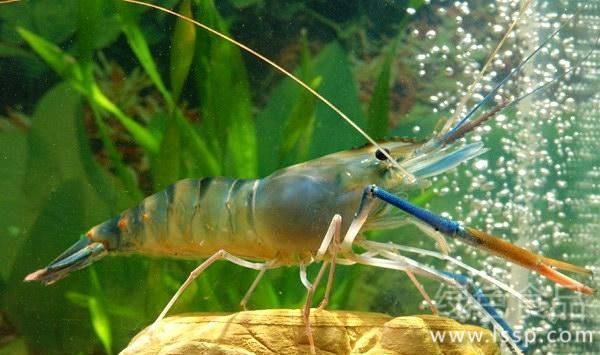
To achieve high yield and good profits from freshwater shrimp and river crabs, grasping six key points is very important
For high yield and good profits from freshwater shrimp and river crabs, grasping the "six key points" is very important
-
Detailed Explanation of Key Points of Lily Bulb Storage and Fresh-Keeping Techniques
I. Choose storage-tolerant varieties. China is the country of origin for lilies, with many cultivated types and varieties. The main ones include Longya lily, Chuan lily, and tiger lily (Lilium lancifolium) and other variants. Among them, the Chuan lily, which is white, flat-spherical, tightly clustered, large, and sweet-tasting, has good quality and stores well. Lilies are generally harvested in early November, mostly by digging out the bulbs with a spade, promptly removing the stems and soil, and cutting off the fibrous roots. Newly dug bulbs must not be exposed to wind and sun in the field, to prevent the outer scales from discoloring and losing water. II. Pre-cool and select the bulbs. After harvest, lilies should be promptly transported to a shady place and evenly
-
Detailed Explanation of Fresh Peach Juice Processing and Production Technology
Raw material selection. Select fully ripe, fresh peaches free from pests, diseases and rot. Raw material pretreatment. Wash the raw material with water to remove the fuzz; after washing, rinse in a 1% hydrochloric acid solution or detergent solution to remove pesticide residues, then rinse again in water and drain. Remove the peach pits with a splitting and pitting machine. Soak the pitted raw material in a mixed solution of 0.1% vitamin C and citric acid for color protection. Heating and pulping. Heat the fruit pieces at 90-95°C for 3-5 minutes to soften them
-
Detailed explanation of the production method for almond refreshing beverage
Almond refreshing beverage production process: raw material selection and impurity removal → washing and soaking → pre-boiling → peeling → debittering and color protection → rinsing → re-boiling → grinding → pulp-residue separation → almond juice → blending → filling base material → filling CO2 water → capping → inspection → labeling → packing → finished product. Key points of process operation: Water treatment. The water used for the beverage must meet the soda water quality requirements in QB926-84. The water used in the process must be tested and qualified after electrodialysis and other treatments before use. Preparation of almond juice. Selection: fresh, plump, mold-free almonds
-
Methods and Technical Key Points for the Fresh-keeping and Storage of Jun Jujube
Red beauty, nourishing life. For thousands of years, red jujube has been regarded as an excellent product for beautifying the complexion, resisting aging, and promoting longevity, and it is also one of the important food sources for the survival of people in jujube-growing areas and for getting through famines. Red jujube is different from ordinary dried and fresh fruits; it combines medicinal, health-care, and edible functions in one. As a rare fruit and the "king of vitamin C," Jun Jujube, as one of the four famous jujubes of Shanxi, is favored by consumers for its unique shape, deep red color, thin skin and thick flesh, small pit and large fruit, and crisp, sweet, fragrant taste. According to measurements, every 100 g of fresh Jun Jujube contains sugar
-
Xianmi Jujube: A Premium Variety Among Fresh-Eating Jujubes
1. Early to market. It ripens in early September (Zhanhua winter jujube ripens in early October), so it can be marketed during the Mid-Autumn Festival. It can also be picked and sold in late August at the wax-ripe stage, when the flesh is relatively crisp, with little residue, abundant juice, a rich and very sweet taste, and a quality that has already reached the upper-intermediate level. 2. Large fruit. The fruit is short and round, with a purplish-red surface, thin skin, thick flesh, and a very small pit. The average single-fruit weight is 28 g (Zhanhua winter jujube is 14 g), and large fruits reach 40 g, giving it excellent commercial appearance. 3. Excellent quality. The flesh is extremely fine, especially crisp, juicy, and sweet, containing
条件筛选