-

Detailed Method for Storing Fresh Jujubes in Wet Sand at Room Temperature
Choose a cool, dry room (large boxes, baskets, or other containers can also be used). First sweep the surrounding area and sprinkle quicklime to disinfect. Then spread a 3-5 cm thick layer of wet fine river sand on the floor, place a layer of fresh jujubes on top (1 jujube deep), then spread another layer of wet sand. Continue stacking in this way until the pile reaches 30-40 cm high. After that, simply keep the sand moist (a small amount of clean water can be added periodically. This method can store jujube fruit for more than 30 days).
-
How to Keep Garlic Fresh for a Long Time? Try These Traditional Preservation Techniques
After the summer solstice, garlic bulbs entering dormancy are extremely sensitive to their environment (temperature and humidity), and the slightest mishandling can easily lead to rot and spoilage. Several traditional garlic preservation techniques are introduced below: 1. Mixed storage with bran. First spread a layer of bran about 20 cm thick on the bottom of a storage box (or basket), then stack the dried garlic bulbs layer by layer by piling one layer of garlic bulbs (a height of 2 to 3 bulbs is appropriate) and scattering one layer of bran, and when the pile reaches 40 to 50 mm from the rim of the storage container, cover it with bran so that the garlic bulbs are completely covered. This method mainly uses
-
Processing Methods and Technical Key Points for Freshwater Fish Sausage
1. Raw material pre-treatment: Fresh fish after catching should be sent quickly to the processing plant, and fish with off odors or spoilage should be removed. After gutting and beheading the fresh fish, rinse away blood and dirt with clean water. If it cannot be processed in time, the fish chunks should be quick-frozen and stored at minus 18 degrees Celsius for later use. For thawing frozen fish, running water thawing is better. The water temperature should be controlled at around 10 degrees Celsius. 2. Meat collection: Control the meat collection rate at around 25 percent. If the meat collection rate is too low, it will affect the finished product yield and increase costs; if the meat collection rate is too high, tens of thousands of blood-red muscle [tissue will be collected],
-
Seasoned Conger Eel Rolls: Fresh, Savory Seafood Conger Eel Rolls
1. Processing flow: Conger eel (thaw → remove head and viscera → fillet → remove fins → wash in alum water → marinate in seasoning) + burdock and carrot (peel, trim roots) + kidney beans (trim roots) + dried loofah strips (slice → boil → cool) → weigh → shape → arrange on rack → steam cook → cool → season → plate and bag → vacuum package → quick freeze → package → cold storage. 2. Process operation requirements. (1) Raw material pretreatment. ① Conger eel: same as Conger Eel and Burdock Rolls. ② Burdock, carrot
-
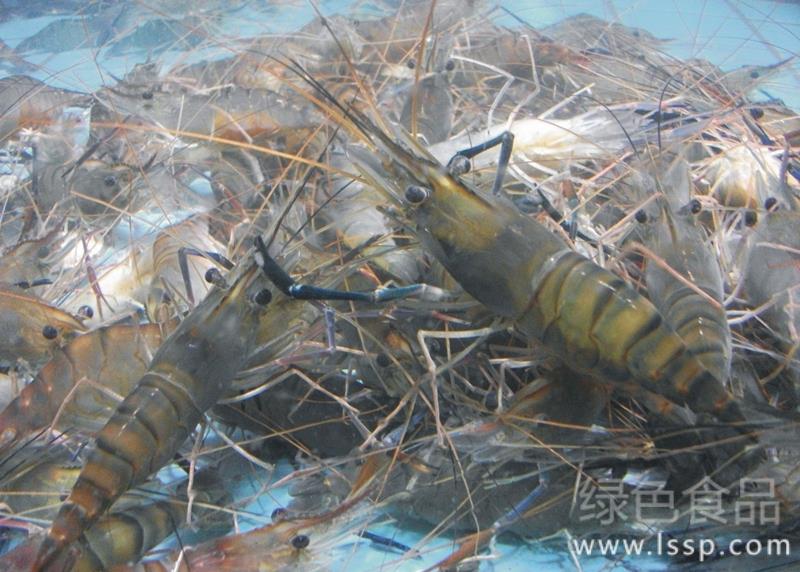
Red body disease in freshwater shrimp (Macrobrachium nipponense) causes explosive mortality - how can it be scientifically prevented and treated?
Red body disease causes explosive mortality in freshwater shrimp - how to prevent and treat red body disease in freshwater shrimp
-
Detailed Explanation of Key Points of Oyster Mushroom Storage and Fresh-Keeping Techniques
Fresh oyster mushrooms have a high water content and tender, crisp tissue, making them extremely prone to damage. If stored improperly, they easily rot and deteriorate, causing losses to producers. Several storage methods for oyster mushrooms are introduced below: 1. Fresh storage: The storage time of fresh oyster mushrooms at room temperature is greatly affected by temperature and air humidity. When the room temperature is 3°C-5°C and the relative air humidity is around 80%, fresh mushrooms can be stored for one week. As temperature increases, humidity must also increase. When the quantity of mushrooms is small, the oyster mushrooms can be placed in a vat containing a small amount of cold water, and the vat opening sealed tightly; even if the temperature reaches 15°C-16°C, they can be kept fresh for about one week.
-
Key Points and Detailed Methods for Lily Storage and Fresh-keeping Technology
Lilies prefer warmth and are afraid of cold; after being exposed to wind, the scales will turn red and shrivel. There are many storage methods, and the yellow sand burial method is especially effective. The specific method is: build a burial pit indoors with bricks or cement, or use wooden boxes, baskets, etc. as containers. First spread a layer of yellow sand about 20 mm thick on the bottom of the container, then place one layer of lilies and one layer of yellow sand, stacking to about 50 mm from the container opening. Then cover with yellow sand again so that the lilies are not exposed to the air. What should be noted with this method is: the containers used for storage should first be disinfected with 0
-
Shahongtao: A Rare and Excellent Variety Among Fresh Peaches
Shahongtao is a new fresh-eating peach variety systematically selected and bred by engineer Zheng Deyou from the Japanese Cangfang Zaosheng variety, and was approved by the Shaanxi Province Crop Variety Approval Committee in 1999. Variety characteristics: the tree posture is relatively upright, biennial branches are brown, smooth, with small and few lenticels; leaves are long elliptical lanceolate, large, 20-24 cm long, 5-7 cm wide, leaf margins bluntly serrated, leaf surfaces raised on both sides, flowers are rose-type, single-petaled, pink, 4 cm in diameter, with pollen, anthers light red. The tree grows vigorously, germination rate
-
Where can you buy Lingwu long jujube saplings? Cultivation techniques increase the freshness period 10-fold
Yesterday, a reporter learned from the Science and Technology Department of the Autonomous Region that the Science and Technology Department, together with the Forestry Department, organized experts in forestry, fruits and vegetables, food and other fields to conduct an on-site acceptance inspection of the room-temperature preservation research portion of the region's first nationally tendered project, "Key Technology Development and Research on Storage, Transportation and Preservation of Lingwu long jujube." The results showed that the preservation period of Lingwu long jujube increased 10-fold compared with before, achieving 30-day room-temperature storage. It is reported that Lingwu long jujube has long entered high-end markets such as the southeast coast and Hong Kong, China, but because Lingwu long jujube is prone to losing
-
Detailed Explanation of the Processing Technology for Fresh-Brined Red Drum Fish Fillets
The scientific name of the red drum (Sciaenops ocellatus) is the spotted weakfish, belonging to the genus Sciaenops, family Sciaenidae, order Perciformes. It is a eurythermal and euryhaline fish, with a suitable temperature of 10-30°C, optimally 18-25°C. It has been reported to tolerate low temperatures of 2°C. Its salinity tolerance range is very wide, and it can grow normally in freshwater, brackish water, and seawater. It is a carnivorous fish. In natural waters, it mainly feeds on shellfish, cephalopods, small fish, etc. In artificial rearing, compound feed can be used. The red drum has few diseases and grows quickly. According to reports,
条件筛选