-
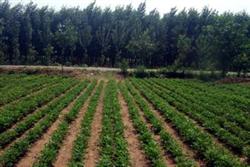
What are the key points of fertilization techniques for spring peanuts?
Calcium can promote pod formation, reduce empty pods and increase the number of filled pods; applying calcareous fertilizer such as lime to acidic soil can also reduce soil acidity and benefit nitrogen fixation by root nodules. Therefore, calcareous fertilizer can improve peanut yield and quality. When peanuts are deficient in calcium, plant growth is slow, roots are thin and seedlings are weak, and the edges and surface of old leaves will show...
-

Detailed Explanation of Key Points of High-Yield Fertilization Techniques for Chestnut
High-Yield Fertilization Techniques for Chestnut
-
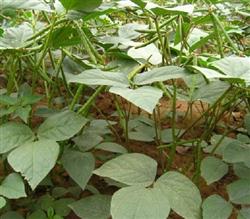
How is the fertilization and stress-response technology for mung beans implemented? A full analysis of the key points
Mung bean is a major crop in our city, with a planting area of more than 1 million mu every year and a yield of more than 110,000 tons, accounting for more than 30% of the country's annual mung bean output. Baicheng mung beans, with their large seeds, plump grains, bright color, fresh green appearance, no off-colors, no pollution, and high protein content, have become a sought-after commodity on the international market...
-
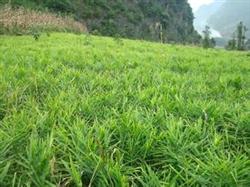
Detailed Explanation of High-Yield Formula Fertilization Techniques for Ginger
Ginger has a long growth period and a high fertilizer requirement. Under medium fertility conditions, to produce 2500 kg of ginger per mu, 25-40 kg of nitrogen, 10-22 kg of phosphorus (P2O5), and 30-50 kg of potassium (K2O) are needed. The absorption ratio of nitrogen, phosphorus, and potassium is 11:1:16 or 1:0.5:2. In addition, calcium, magnesium, boron, zinc, iron, and other medium and trace...
-
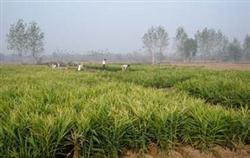
How to fertilize ginger for high yield? Detailed explanation of the key points of formula fertilization technology
Ginger has a long growing period and a high fertilizer requirement. Under medium fertility conditions, to produce general 2500 kg of ginger per mu, 25-40 kg of nitrogen, 10-22 kg of phosphorus (P2O5), and 30-50 kg of potassium (K2O) need to be applied. The absorption ratio of nitrogen, phosphorus, and potassium is 11:1:16 or 1:0.5:2. In addition, calcium, magnesium, boron, zinc, iron, and other medium and trace...
-
Detailed Explanation of Fertilization and Water Management Techniques for Longan
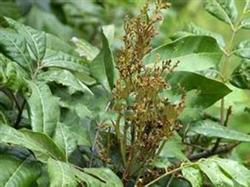
I. Symptoms Young shoots, leaves and flower panicles can all be affected, and show obvious symptoms. The young leaves on diseased shoots are narrow and small, pale green, with curled leaf margins that cannot unfold, appearing tubular; in severe cases the entire leaf becomes linear and smoke-brown. The leaf surface of mature leaves is uneven, the leaf margins often curl and shrink toward the leaf underside, and the leaf tip bends downward; the leaf...
-
Detailed Explanation of Key Points of Formula Fertilization Technology for Yardlong Beans
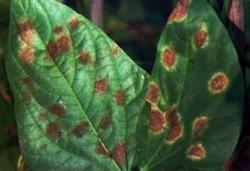
1. Symptoms mainly affect leaves, stems and vines, and pods. In the early stage of the disease, purple-brown spots appear on both sides of the leaves, and after expanding they become nearly circular dark brown lesions, 1-2 cm in diameter, with indistinct edges; when humid, the lesion surface is densely covered with sooty mold (especially prominent on the underside of the leaves). In severe cases, it causes early defoliation, leaving only the young leaves at the top, ...
-
Spring planting fertilization tip: Effective potassium application boosts high yields in spring corn
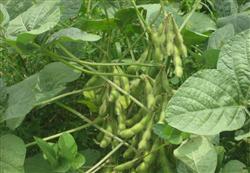
Delayed senescence (staying green and late-maturing) refers to soybeans that, when they should be maturing, still have green branches and leaves with vigorous growth and seeds that are not yet plump, though not shriveled pods or shriveled seeds. The main cause of delayed senescence is excessive application of nitrogen fertilizer or application too late, causing excessive vegetative growth, delaying maturity, and affecting yield. To prevent delayed senescence in soybeans, it is necessary to timely...
-
A Complete Analysis of the Key Technical Points for Soil Testing and Formula Fertilization in Spring Corn
1. Choose suitable varieties. Select suitable and superior varieties according to local conditions; based on heat resources and actual production conditions, choose medium-to-late maturing varieties with a growth period of 120-130 days. Among spring corn varieties with relatively outstanding comprehensive traits, the main one is Nongda 108, etc. 2. Fine land preparation. Spring corn requires deep plowing, and the earlier the autumn plowing...
-
Why Spring Corn Fertilization Should Be Light Early and Heavy Late
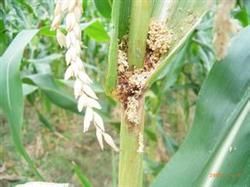
The corn borer, also known as the corn stalk borer. Spring corn is currently at the late whorl stage (funnel stage), and this period is the best time to control the corn borer. At the funnel stage, most newly hatched corn borer larvae crawl into the leaf whorl tube and feed on the mesophyll of the not yet unfolded leaves, and spraying at this stage makes it easy for the spray liquid to enter the leaf whorl tube, improving control effect...
条件筛选