-
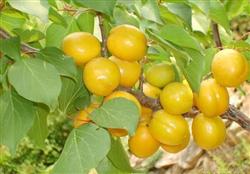
Key Technical Points for Fertilization and Irrigation Management of Apricot Trees
(1) Fertilization: Each year in September to October, after new shoots stop growing, apply sufficient base fertilizer, mainly organic fertilizers such as barnyard manure and chicken manure, combined with a certain amount of quick-acting fertilizer. The amount of fertilizer applied should be determined according to the size of the tree and its growth conditions. Usually, apply 30-50 kg of organic fertilizer per tree, plus about 0.5 kg of compound fertilizer specially formulated for fruit trees. After sprouting...
-
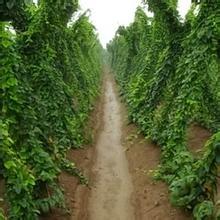
Fertilization technical specifications for pollution-free cultivation of yam
As long as several main aspects of production management are handled well, the planting benefits of yam will be greatly improved. In yam cultivation management, the key points are the application of base fertilizer, loose soil, treatment of yam seed pieces, timely topdressing, disease control, and taking measures to promote the growth of the rhizome as much as possible. 1. ...
-
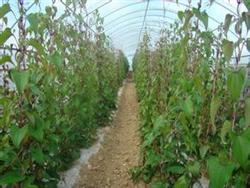
Key Technical Points for Site Selection, Land Preparation and Fertilization in Yam Cultivation
How should yams be managed after planting? From planting until trellising, timely cultivation and weeding should be carried out; later cultivation should be shallow rather than deep, so as not to damage the roots. A few days after the yams emerge, they begin to send out vines, so supports must be set up immediately to train the vines; to increase the light-receiving area, a trellis height of about 1.5 is best. After sowing and until the vines grow, manure can be spread on the ground surface, spread...
-
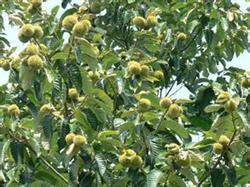
Key Technical Points and Precautions for Summer Fertilization of Chinese Chestnut
To improve the yield and quality of Chinese chestnut, the chestnut trees should be fertilized in summer. There are mainly two fertilization methods: the soil fertilization method: for chestnut orchards with thin, poor soil and a severe lack of fertilizer, the soil fertilization method gives better results. Dig a circular ring trench within the drip line of the chestnut tree canopy for fertilization, with a trench width of 25 cm and a depth of 2...
-

A Complete Guide to Fertilization Techniques and Key Points for Chestnut Orchards
Chestnut blight, also known as chestnut canker, trunk blight, or chestnut bark disease, is a major disease of chestnut trees. It mainly affects the trunk and main branches, often causing the trunk and main branches to rot until the entire tree dies. The chestnut blight pathogen mainly overwinters in diseased branches as mycelium, pycnidia, and perithecia, while conidia and ascosp...
-
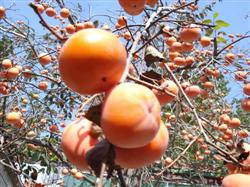
Detailed Explanation of Fertilization Techniques for Persimmon Orchards: Master Scientific Fertilization Methods
The main cultivation and management techniques are: 1. Implement the "Three Improvements" 1.1 Improve the orchard site: The vast majority of mature mountain persimmon orchards have terraces with no ridge in front and no ditch behind, and the terrace surface is low in front and high in back, causing severe soil and water erosion and exposed root systems. To improve the orchard site, the terrace surface of the persimmon orchard should be shaped with a ridge in front and a ditch behind, with the front ridge 10-15 cm high...
-
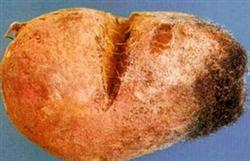
Sweet potato fertilization has its subtleties: keep these four points in mind
1. Harvest at the right time and avoid mechanical damage. Summer sweet potatoes should be fully harvested around Frost's Descent, and autumn sweet potatoes before the Start of Winter. Choose a sunny day for harvesting, and when digging the tubers, minimize or avoid causing wounds. 2. Select healthy tubers carefully to ensure safe storage in the cellar. Before the sweet potatoes go into the cellar, select them carefully, discard diseased, damaged and rotten tubers, let the moisture dry off, then store...
-
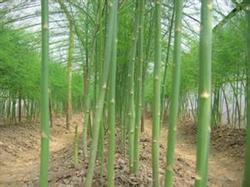
Key Technical Points for Fertilization and Earthing-Up Management of Asparagus
1. Fertilization: When cultivating asparagus, use plenty of organic fertilizer to make the soil loose and fertile, which is beneficial to the development of rhizomes and root systems. The amount of fertilizer used should be comprehensively considered based on factors such as the size of plant growth, soil fertility level, and utilization rate. Plant growth includes the yield of young shoots, the weight of aboveground stems, and the growth of rhizomes and fleshy roots...
-
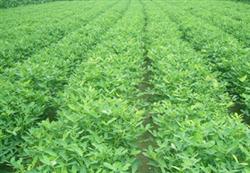
Key Technical Points and Fertilization Methods for Topdressing Summer Peanuts
Fertilization should follow the "two topdressings, one spray, four supplements" approach. Specifically: the two topdressings are, first, early topdressing before the peanut plants form a full cluster, with 10 kg urea, 15 kg diammonium phosphate and 10 kg potassium chloride; the second topdressing is at the early stage of young pod swelling, generally 10 kg urea per mu. The one spray is in the late growth stage, per mu...
-
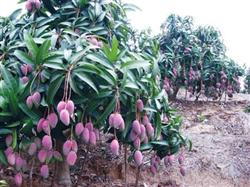
What are the key points to note for high-yield fertilization of mango
For high-yield mango cultivation, the first step is to select good varieties. After the grafted seedlings survive, timely management measures such as expanding the planting holes and deep plowing, as well as pest and disease control, should be carried out. Scientific and rational fertilization runs through the entire tree age cycle and is an important link related to high yield and good fruit quality. Points to note: 1. Young mango trees have small root systems and fibrous roots...
条件筛选