-

Detailed Explanation of Eight Key Points in Azalea Cultivation and Management
Azaleas have lush branches and leaves and brilliant flowers. In cultivation and management, the following eight points must be noted: 1. Carefully choose flower pots. For potted azaleas, clay pots are most suitable, especially for small seedlings, because clay pots absorb water and breathe, which is beneficial to root growth and development. For large seedlings over 3 years old, purple clay pots can also be used, but more broken tiles and coarse-grained potting soil should be placed at the bottom of the pot to facilitate air permeability and drainage, otherwise root rot is likely. 2. Skillfully choose potting soil. Azaleas like loose, fertile, well-drained, slightly acidic mountain soil or potting soil with a pH value between 5.5 and 6.5. If alkaline soil with more lime or heavy clay soil with poor drainage is used,
-
Eight Key Points for Late-Season Wheat Sowing to Achieve High Yield
Generally, late-season wheat has less accumulated temperature before winter, fewer roots, fewer leaves, fewer tillers, small and weak seedlings, and a rapid development process in spring. To ensure high and stable yields of late-season wheat, sowing must adhere to comprehensive cultivation techniques focused on increasing fertilizer application, selecting improved wheat varieties suitable for late sowing and early maturity, and increasing seeding rate. The following eight points should be emphasized: 1. Early clearing of stubble: Without affecting the yield of autumn crops, strive to clear stubble early, prepare the soil early, and sow early, speeding up sowing progress and reducing the loss of accumulated temperature. For
-
Eight Technical Measures for High-Yield Cultivation of Lion's Mane Mushroom
Selecting Good Strains First, the mother cultures used for production should have excellent traits, shown as fast growth, uniform and neat, and covering the slanted surface within two weeks at suitable temperature. When preserved in a refrigerator, primordia often form, and microscopic examination shows a small number of chlamydospores; if there are too many spores, the yield tends to be low. If the mycelium turns yellow, is thin and weak, or sparse, it indicates that the strain has degenerated. If growth is uneven or irregular, or there is antagonism, it indicates that the strain is not pure, and none of these should be used. All stock cultures should be dense and white, uniform from top to bottom, with no interruption in the mycelium, and vigorous mycelium on the surface. If the substrate shrinks and dries, separates from the container wall, and the color darkens, it indicates that the strain is aging.
-
How to make Eight Treasures Fresh Soup Fish Swallow? Detailed recipe shared
Basic ingredients: 6 liang of rehydrated fish swallow. Shiitake mushrooms, crab sticks, Jinhua ham, clams, shrimp, salt, MSG, white pepper. Introduction: Fish swallow is made from fresh natural sea eel finely processed into fresh wrappers, with fresh scallops, abalone heads, dried flatfish, etc. as filling. Its ingredients are superior, high in calcium, low in fat, and contain various amino acids. This product combines the flavors of the Min capital and Hong Kong and Guangdong, and can be called the best in the culinary world! Fish swallow series products have recently become very popular in the catering market. Because this type of dish is simple to prepare and presents well, and the taste is very fresh and delicious, very
-
What are the eight non-grain feeds for pigs?
With the rapid development of China's livestock industry, the demand for feed grain is increasing day by day. To ease the conflict between humans and livestock competing for grain, developing non-grain feeds is imperative. Moreover, developing non-grain feeds can effectively reduce production costs and improve the economic benefits of farms and households. Below are several non-grain feeds suitable for feeding pigs. 1. Chicken manure Chicken manure is a high-quality, low-cost protein supplement. Dry manure contains up to 15%-30% crude protein, 10%-16% crude fiber, and 8%-10% various amino acids. 1 kg of chicken manure
-
Eight Key Points of Winter Management for Sichuan Pepper Trees Explained in Detail
The first is "pruning", which means shaping and pruning. Winter is a great season for pruning Sichuan pepper trees. When pruning, the "seven branches" must be removed, namely: water sprouts, dead branches, diseased and pest-infested branches, overly dense branches, crossing branches, overlapping branches, and weak slender branches. Then the removed branches should be gathered and burned, which can eliminate pests and pathogens overwintering on the branches and trunk. The second is "scraping", which means scraping off the rough bark. Many insect eggs overwinter in the cracks of the rough bark of pepper trees, and mulberry white scale insects parasitize the trunk. The scraped rough bark and gummosis spots should be gathered and burned, then apply Liujiaowei and Suolibaer pesticides, and
-
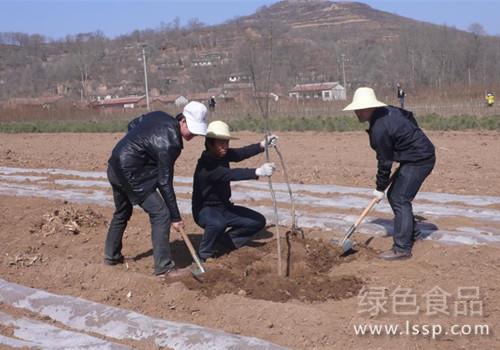
Eight key points for walnut cultivation; only by applying techniques according to the specific conditions can you achieve high yields
Only by applying techniques according to the specific conditions can you achieve high yields. Eight key points to note in walnut cultivation
-
How to prevent chicken stress? Master these eight measures
Reduce stocking density. One set of equipment to support 100 adult chickens is relatively reasonable, and the stocking density per sq m should be 6~8 birds. After the flock is fixed, do not casually add new chickens to the group. Be cautious when moving the flock or relocating to a new site. Moving the flock is best done at night. 2~3 days before moving, add an appropriate amount of antibiotics and multiple vitamins to the feed or drinking water. 1~2 hours before catching the chickens, add chlorpromazine to each kg of feed, 30 mg per chick, and 50 mg per adult chicken or growing chicken. Carefully formulate feed according to the age of the chickens
-
Eight key points to grasp firmly in autumn nursery management
1. Apply fertilizer in the right amount. There are usually two ways to apply topdressing. ① Underground topdressing. Generally, quick-acting fertilizers such as urea are sufficient. Open a furrow between the rows, apply the fertilizer into the furrow, and then cover it with soil. The fertilizer can also be diluted and evenly sprayed onto the seedbed (ridge, border), then the plants rinsed with clean water. Under normal circumstances, apply 15-20 kg of urea per mu, then apply again after 15 days, and 2-3 applications are enough. ② Foliar topdressing. In autumn, combine it with pesticide spraying and spray 0.2% urea plus 0.3% potassium dihydrogen phosphate solution. For broadleaf tree species, it is best not to fertilize again after the Beginning of Autumn
-
How to prevent and control mushroom wilting disease? Remember these eight key points
1. Early prevention in the substrate mix. When using corncobs, wheat straw, or rice straw as the main material, add 5% wheat bran or 4% fermented and decomposed livestock and poultry manure at the bottom; when using nitrogen-rich cottonseed hulls as the main material, no nitrogen source needs to be added, but attention must be paid to controlling mite damage, and spraying an 800-fold dilution of trichlorfon when mixing the substrate works very well. 2. Moderate acidity and alkalinity. The amount of lime added when mixing should reach 5%, and after each mushroom harvest, spray 1% lime water or 4% plant ash water to raise the pH. 3. Ventilation and air
条件筛选