-

Does eating too many bananas cause weight gain, and what harm can it do to the body
The banana is a cheap and healthy fruit, and its nutritional value is also very high, but it should not be eaten in large amounts. Why is that? Bananas are high in calories and sugar. Excessive intake can be harmful to health. It seems that people with cardiovascular disease and diabetes should try not to eat them
-
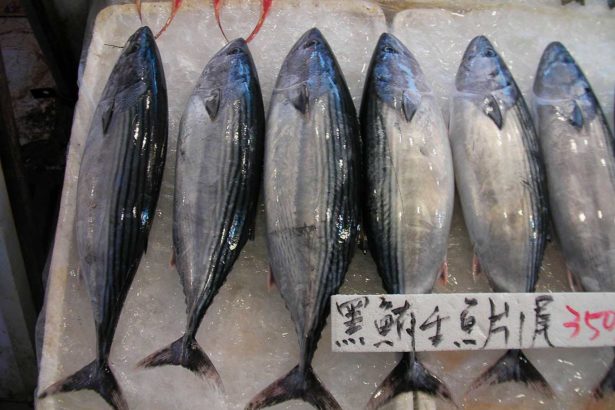
Seafood fraud is rampant, Taiwan, China is also on the list, eight common tactics at a glance
Xu Chengyu / Seafood fraud is rampant worldwide, Taiwan, China is also on the list, eight common fraud methods at a glance
-

What to do when Clivia leaves turn yellow? Eight methods to help you solve it
Clivia leaves turning yellow often happens in summer, and yellowing Clivia leaves greatly affect its ornamental value. I still remember when I first started growing Clivia, seeing the thick fleshy leaves begin to show yellow, first I panicked, then I grew anxious, that feeling was really awful
-

Eight Measures for Safe Rice Seed Use Explained in Detail
1. Select varieties rationally. Rice blast is the main disease affecting harvest, and the resistance differences among varieties are very obvious; choosing varieties with strong resistance is one of the most effective preventive measures. In old rice blast areas and shaded cold-waterlogged fields, first, when purchasing seeds, carefully understand the resistance of the variety; second, new varieties should only be promoted after small-scale trial planting; third, use imported Fuji No. 1 for prevention at the early stage of disease onset and during the booting and heading stages. In mountainous areas with high humidity, for hybrid late rice it is not advisable to choose two-line hybrid late rice combinations, to prevent damage from rice false smut.
-
Adding Eucommia ulmoides to pig feed can speed up pig weight gain
Process the Chinese herbal medicine Eucommia ulmoides into powder or fine granules and add it to the daily diet of fattening pigs at a ratio of 0.2 percent to 0.3 percent, and good results of fast weight gain and a high lean meat rate can be achieved. According to experiments, compared with fattening pigs not given Eucommia ulmoides, their weight gain rate is about 11 percent to 16 percent faster, about 0.24 kg of feed is saved per 1 kg of weight gain, feed conversion rate is increased by 5.4 percent, and carcass lean meat rate is increased by more than 30 percent, because Eucommia ulmoides can promote cell division and the development of muscle fibers and increase the collagen content in muscle
-
During the piglets' peak feeding period, add more feed to stretch their bellies and speed up weight gain.
After weaning, the amount of feed piglets consume gradually increases with age in days. Generally, at around 35 days of age, they begin to show greedy eating and scrambling for food. This vigorous feeding phenomenon is called "peak feeding." Between the start of the peak feeding period and 60 days of age, piglets can double their body weight, with daily gains reaching more than 0.5 kg. The main measures for rapid weight gain during the piglets' peak feeding period are: feed on a fixed schedule, feed small amounts frequently. Starting from 30 days of age, the number of feedings should be increased, generally 5-6 times a day, and at fixed times,
-
Eight Major Disease Prevention Measures and Key Technical Points for Mushroom Cultivation
In mushroom cultivation, to achieve high and stable yields, you must firmly master the following eight disease prevention measures. 1. Establish a concept of integrated control. The occurrence, and even the epidemic or development, of edible mushroom diseases follows its own patterns of development. On the surface, a disease may appear only at a certain stage of production, but the occurrence of disease requires quite a few conditions. Therefore, disease prevention should start from the source and continue until production is completely finished, and the intermediate steps must not be relaxed in the slightest, so as to thoroughly eliminate the channels through which diseases occur. 2. Selecting excellent virus-free spawn is the guarantee
-
Feeding Pigs Extra at Night Makes Them Gain Weight Faster
In the hot summer weather, feeding pigs at night makes them gain weight faster than feeding them during the day. This is because the cooler night weather and fewer outside disturbances help pigs eat more, sleep more, and reduce their daytime activity. To increase feeding at night, keep the following points in mind: feeding times can generally be 19:00, 23:00, and 4:00 in the early morning, for 3 feedings; during the day, give each pig 0.5% lightly salted water once at 10:00 a.m. and once at 2:00 p.m. Feed formula: wheat flour 20%, corn flour 20%, wheat bran 26%, cottonseed cake 30%, fish
-
Eight key technical measures for increasing soybean yield
First, applying flower-and-pod fertilizer. The flowering and pod-setting stage is when soybean grows and develops most vigorously, and it is the period of greatest fertilizer demand in the soybean's entire life. Applying flower-and-pod fertilizer can reduce flower and pod drop, promote full grains, and improve quality. Flower-and-pod fertilizer should be applied at the early flowering stage, preferably as a combined application of nitrogen and phosphorus fertilizer, with 3-5 kg of urea and 7.5-10 kg of phosphate fertilizer per mu, applied in holes opened 5 cm to the side of the soybean roots, and after application, soil should be hilled up to cover the fertilizer. Second, spraying foliar fertilizer. In addition to the three major elements nitrogen, phosphorus and potassium, boron, zinc and molybdenum are indispensable trace elements for soybean. Therefore, from the flowering to the seed-filling stage of soybean
-
Eight Major Disease Prevention and Control Measures for the Green Development of Mushrooms
Establish the "big prevention and control" concept of integrated management. The occurrence, and even the epidemic or outbreak, of edible mushroom diseases all follows certain developmental patterns. Patterns are science, and no carelessness is tolerated. On the surface, diseases appear only at a certain production stage, but the occurrence of disease requires quite a few conditions. If any one condition cannot be met, the occurrence of disease may be reduced, lowered, or even impossible, or even if it occurs, it cannot cause harm. Therefore, one should not only prevent or treat at the stage where the disease occurs, but should start from the source
条件筛选