Eight key points for walnut cultivation; only by applying techniques according to the specific conditions can you achieve high yields
Walnut is one of China's important export dried fruits. In recent years, walnut prices have been on an upward trend. Therefore, developing walnuts has broad prospects. In cultivation and management, techniques should be applied according to the specific conditions.
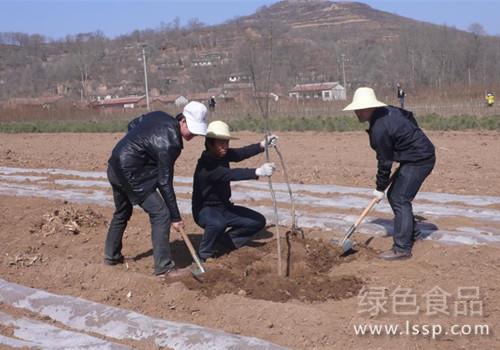
Planting walnuts
Orchard site selection: Walnut is a deep-rooted tree species that likes warmth and light and fears wind. As the saying goes, "Wind-sheltered walnuts fill the mountain like jujubes." The walnut orchard site should be chosen in an ecological area with flat terrain, deep soil, a wind-sheltered sunny aspect, convenient transportation, pure water quality and no pollution. The pH value should be between 6.05-7.05. Absolutely avoid choosing abandoned land, continuous cropping land and saline-alkali land with a salt content above 0.25%.
Plant grafted seedlings: Generally, walnut seedlings propagated from seed begin to bear fruit in 6-8 years and only enter the full fruiting period after 20 years. Grafted seedlings, however, generally bear fruit 3-4 years after grafting, seeing returns more than 3 years earlier than seedling-grown trees. Therefore, in order to shorten the juvenile phase of walnuts, improve economic returns and increase fruit growers' income, early-fruiting grafted propagation seedlings should be selected.
Choose excellent varieties: Be sure to select excellent varieties with early fruiting, strong adaptability, a high kernel yield, thin shells, easy kernel removal and high oil content. Currently, relatively good varieties include Luguang, Fenghui, Xiangling, Liaohe No. 1, Yuanfeng, Baojinxiang, Linhe No. 1 and No. 2, Xifu No. 2, Zhonglin No. 1, 8518, Xifu Lufeng, Jinbaoxiang No. 1, No. 2, No. 3, No. 4, etc.
Overcome the "dichogamy" phenomenon: Walnut flowers are unisexual flowers, with male and female flowers on the same plant. In some varieties, the male and female flowers do not bloom at the same time, which is called the "dichogamy" phenomenon, affecting the fruit-setting rate. Therefore, pollinator trees should be matched to achieve mutual pollination and fertilization and improve the fruit-setting rate. Generally, the planting ratio of the main variety to pollinator trees is 5-8:1. For example: Xiangling matched with Xilin No. 2; Xifu No. 2 matched with Luguang, etc.
Spring grafting requires "bleeding": Compared with other fruit trees, walnuts have a lower grafting survival rate. The main reason: both the rootstock and scion of walnut contain tannins, which easily oxidize in air to form a dark brown isolation layer, hindering the exchange of cellular materials between the scion and rootstock. Spring grafting coincides with the late stage of walnut bleeding. Bleeding can suppress the physiological activity of cells at the graft site and hinder the reduction of tannin oxidation condensation products. To improve the grafting survival rate, "bleeding" should be done below the graft union. Generally, for young trees, make 2 cuts 10-20cm below the union, 1-1.5cm long, reaching the xylem. For large trees, generally make 2-3 cuts below the union, with the same length and depth as above. In this way, the rising bleeding can be cut off, improving the survival rate of spring branch grafting.
Pruning should avoid the bleeding period: The period from leaf fall to bud break in walnuts is the bleeding period. If pruning is carried out, there will be many wounds and heavy bleeding, which not only makes the wounds difficult to heal but also easily causes premature decline of tree vigor. Therefore, pruning should avoid the bleeding period. Generally, it should be carried out from after the fruit is harvested in autumn to before leaf fall (Cold Dew) or from after leaf expansion in spring to the young fruit swelling stage.
Pay attention to cold protection for young trees: Young walnut trees have poor cold resistance and are easily frozen to death. Therefore, winter cold protection work should be done well. Cold protection methods include whitewashing, wrapping with plastic film, and burying in soil, etc. Burying in soil has a relatively good cold protection effect. The method is: generally after leaf fall and before the soil thaws, slowly bend the seedling down so that its top touches the ground, cover it with 30-40cm of moist fine soil, firm it down, and then cover it with about 5cm of dry fine soil on top. Before sprouting the following spring, remove the soil and straighten the seedling trunk.
Correctly handle the "back branch" phenomenon of "pulling back" and seizing the leader: After a walnut tree bears fruit, the upper branches of the main and lateral branches will weaken, and the back branches will quickly become vigorous, forming the phenomenon of the main and lateral branch leaders being "pulled back" and having their leader seized. If not handled for a long time, they will extend over many years to become drooping branches, growing quickly and consuming much nutrients, causing the upper branches and rear branches of the original branch leader to gradually dry up and die. Therefore, back branches should be handled correctly. Handling methods: First, cut back the drooping part at the branching point to raise the branch angle. Second, if the drooping angle is not large and growth is moderate, and plump buds have already formed, they can be temporarily retained and cut off after fruiting. Third, if the drooping is severe and there is no fruiting capacity or very little fruiting, they should be removed in time.