-

What are the medicinal values of Codonopsis pilosula? A detailed explanation of its effects and functions
The root of Codonopsis pilosula (poor man's ginseng) is used as medicine; it is sweet in taste and neutral in nature. It has the functions of tonifying the spleen and replenishing qi, quenching thirst and promoting fluid production, and is used to treat weakness of the spleen and stomach, insufficiency of lung qi, fatigue and weakness, shortness of breath with wheezing and coughing, weak voice, dizziness and palpitations due to blood deficiency, dry tongue due to depletion of fluids, thirst, and other conditions. The cultivation history of Codonopsis pilosula is relatively short, and no record of cultivated Codonopsis pilosula has been seen in the materia medica of past dynasties. Shanxi Province was the earliest to cultivate Codonopsis pilosula artificially. Changzhi County, Shanxi Province, is the "hometown of Codonopsis pilosula" in China.
-
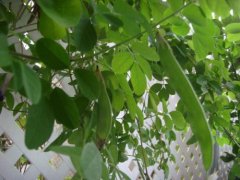
What is the butterfly pea? How to grow it and the benefits and effects of butterfly pea flowers
We generally know green beans and common beans, but have you ever heard of the butterfly pea? Do you know how to grow butterfly pea? Would you like to learn about it? Then take a look at the introduction below. The butterfly pea is native to tropical South America, and because its flower shape closely resembles a butterfly, it is called the butterfly pea.
-
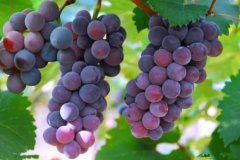
What are the nutritional benefits and dietary contraindications of grapes?
Do you like eating grapes? Then do you know what benefits they have? What components do grapes contain? Let's take a look together. Grapes are plants of the Vitaceae family and have been consumed by humans since prehistoric times. After the discovery of the New World, European grapes were immediately introduced to the Americas; grape cultivation in China began in the Western Han Dynasty, and legend has it that Zhang Qian, on his mission to the Western Regions, brought back European grape varieties from the Kingdom of Dayuan.
-
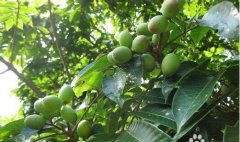
What are the benefits and effects of olives? Eating olives often has many benefits
What benefits do olives have, and can you eat them often? So what are the main benefits and effects of olives? Let's take a look together. The olive is the fruit of the olive plant, a member of the Oleaceae family. People may have begun cultivating olives before recorded history; the Bible frequently mentions
-
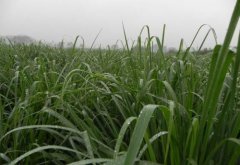
The Benefits and Effects of Lemongrass, and an Introduction to the Lemon-Scented Plant
Lemongrass: In Taiwan, China, during the 40s to 50s of the Republic of China era (1951-1961), it was once cultivated on a large scale to extract lemongrass oil for export trade. At that time, together with peppermint oil and camphor oil, it was one of the important agricultural products that earned foreign exchange for our country. After the 57th year of the Republic of China (1968), due to the development of chemical synthesis technology
-
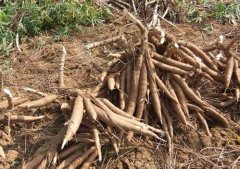
What Is Cassava? The Benefits and Effects of Cassava and Whether It Is Yam
Organic Cultivation of Cassava. Cassava, an erect shrub, 1.5-3 m tall; tuberous roots cylindrical. Leaves papery, outline nearly circular, palmately parted almost to the base, lobes 3-7, oblanceolate to narrowly elliptic, apex acuminate; petiole 8-22 cm long, slightly peltate, with inconspicuous fine ridges; stipules triangular-lanceolate, entire or with 1-2 bristle-like fine lobes. Panicles terminal or axillary, bracts linear-lanceolate; calyx purplish red with a white powdery bloom; male flowers: calyx about 7 mm long, lobes oblong-ovate, subequal, hairy inside; stamens 6-7 mm long, anthers tipped with short white hairs; female flowers: calyx about 10 mm long, lobes oblong-lanceolate, stigma recurved, fan-folded. Capsule elliptic, surface rough, with 6 narrow wavy longitudinal wings; seeds about 1 cm long, more or less trigonous, seed coat crustaceous, mottled, smooth. Flowering period September-November.
-
What are the varieties of cauliflower? An introduction to the benefits and effects of broccoli
Broccoli is a perennial overwintering herbaceous plant of the genus Brassica in the crucifer family. Because the part eaten is mainly the flower stalk formed by dense flower buds, it is called broccoli. It originated along the coast of Western Europe and came from a wild variety of cabbage. Its cultivation history is earlier than that of cauliflower. At present
-

The benefits, effects and contraindications of drinking gardenia flower infused water; people with kidney deficiency should not drink it
Whenever summer arrives, the pure white gardenia blossoms. If you grow it at home, in the morning you will be intoxicated by the fragrance filling the air. When it comes to the benefits and effects of gardenia, everyone thinks of its beauty and its ability to remove odours, but in fact, besides these, gardenia also has great medicinal value, such as protecting the liver and promoting bile flow, lowering blood pressure and calming the nerves.
-
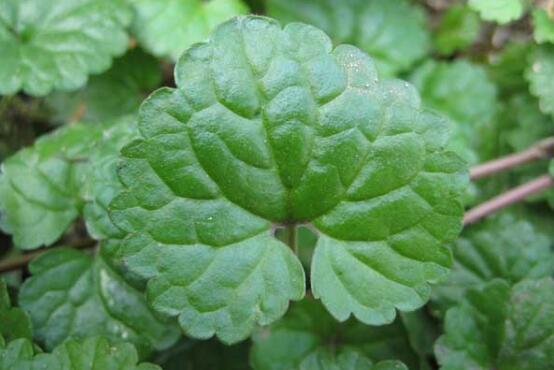
Can Lysimachia christinae treat gynecological diseases? Side effects and contraindications you must know
Lysimachia christinae, a medicinal herb with rich medicinal value, can treat many diseases in the human body. However, every medicine has some toxicity, and although Lysimachia christinae is good, frequent use also has side effects, and not everyone is suited to use it. So what are the side effects and contraindications of Lysimachia christinae? Hearing about the wonders of Lysimachia christinae
-
Peony: Benefits, Effects and Contraindications: Root Bark Can Fight Cancer and Stop Bleeding, Use with Caution If You Have Heart Disease
Peonies are very common in daily life. Many people grow potted peonies at home; they are not only beautiful but also do a great job of beautifying the environment. The uses of peonies go far beyond ornamentation: their flowers can also be brewed as tea, and their medicinal value is very broad. Their root bark can be used as medicine to fight cancer and stop bleeding. These are all benefits and effects of peonies.
条件筛选