The benefits, effects and contraindications of drinking gardenia flower infused water; people with kidney deficiency should not drink it
Whenever summer arrives, the pure white gardenia blossoms. If you grow it at home, in the morning you will be intoxicated by the fragrance filling the air. When it comes to the benefits and effects of gardenia, everyone thinks of its beauty and its ability to remove odours, but in fact, besides these, gardenia also has great medicinal value, such as protecting the liver and promoting bile flow, lowering blood pressure and calming the nerves. For a better understanding, below the editor brings you the benefits, effects and contraindications of gardenia.
I. The benefits, effects and contraindications of gardenia
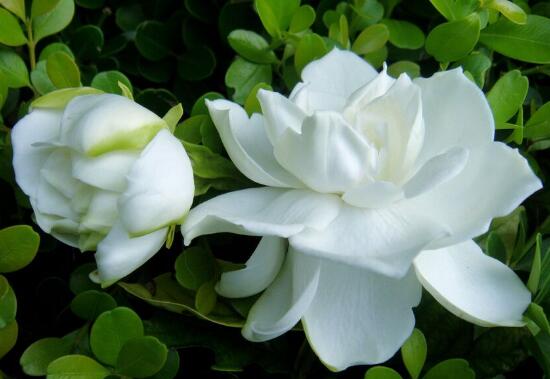
(1) Highly ornamental
Gardenia, also known as yellow gardenia, golden gardenia and silver gardenia, is a very common flower that is suitable for growing at home. The gardenia has a long flowering period, blooming continuously from May to June. Its flowers are pure white with a clear fragrance, and it can be said to be exceptionally beautiful. So when it comes to the benefits and effects of gardenia, the first is that it is highly ornamental.
(2) The benefits and effects of gardenia
Besides being ornamental, its flowers, fruit, leaves and roots can all be used as medicine and are greatly beneficial to the human body. Its main effects are the following three:
1. Promoting bile flow and reducing jaundice
Injection of gardenia water extract, crocin and crocetin into rabbits significantly increases bile secretion and clearly contracts the human gallbladder. It can also significantly reduce bilirubin in the blood and peripheral lymph, and can promote the rapid excretion of bilirubin in the blood.
2. Promoting pancreatic secretion
Promoting pancreatic secretion is also one of the benefits and effects of gardenia. Through high-tech production processes, people can extract gardenia hydroxygardenioside from gardenia and refine it into a product, which promotes pancreatic secretion, has a significant effect in lowering pancreatic amylase, and can increase pancreaticobiliary flow.
3. Antipyretic and antimicrobial effects
The alcohol extracts of gardenia and its various processed products all have antipyretic effects, with raw gardenia having the stronger antipyretic effect. Ursolic acid is one of the effective components of gardenia for lowering temperature and calming. After being fried to charcoal, the ursolic acid content decreases significantly, so the antipyretic effect of fried gardenia is markedly weakened, while charred gardenia has none. Gardenia water infusion has an inhibitory effect on various dermatophytes and on hemolytic streptococcus.
Regarding the above benefits and effects of gardenia, many people are probably confused, since there is too much technical terminology. In fact, to put it plainly, when gardenia is used as a food therapy, it can treat many illnesses. When you encounter the following illnesses, you might as well use gardenia for treatment:
① High fever from a cold: 60 grams of gardenia root, 30 grams of Shanmazi root, 60 grams of the secondary bark of Yajiaocun, and 30 grams of Honghuapo root, decocted and taken, with very good results.
② Hoarse voice: 5-7 gardenia flowers, brewed with boiling water, drunk as tea.
③ Nosebleed: Dry gardenia flowers by roasting, grind into a fine powder, take a little each time and blow it into the nasal cavity, then press with sterilized cotton. 10 grams each of gardenia flowers and pagoda tree flowers, decocted in water for 15 minutes, drunk as tea.
④ Cough from lung heat: Boil 3 eggs until cooked, remove the shells, then cook together with 30 grams of gardenia flowers for half an hour, and eat in 3 portions per day; pickle 15 grams of gardenia flowers with 30 grams of white sugar for half a day, then take a little each time and brew it as tea.
⑤ Bronchitis: 10 grams of gardenia and 30 grams of fresh gardenia root, decocted in water and taken.
⑥ Stomach ache: 7-9 gardenia fruits fried until charred, add an appropriate amount of ginger, decoct in water and take; 30 grams of gardenia root and 20 grams of rock sugar, stewed and taken.
⑦ High blood pressure: Brew gardenia leaves as tea; it has the effect of lowering blood pressure.
⑧ Dysentery: Stew gardenia root with rock sugar and take it, with very good results; it takes effect after 7 consecutive days.
⑨ Jaundice-type hepatitis: Use 30—60 grams of gardenia root, cook with lean meat and eat; after about half a month, the jaundice can subside.
(4) The contraindications of gardenia; people with kidney deficiency should not use it
Diet is very important to health, but gardenia is also very controversial when consumed in daily life, because some people are forbidden from using gardenia. It is understood that the groups who should avoid gardenia mainly include:
1. People who are allergic or physically weak should not take gardenia;
2. Gardenia is bitter and cold; people with spleen deficiency and diarrhoea, or with insufficient kidney yang, should consume gardenia with caution.
The best way to take gardenia is to brew it in water, which can treat illnesses. Secondly, gardenia has no toxic side effects and can be taken with confidence. So after reading the above introduction to the benefits and effects of gardenia, are you tempted? Hurry and buy a pot to grow at home, because the gardenia's flowering time is coming! If you really want to grow it, you might as well go and look at how to cultivate gardenia, and see whether you are suited to growing it!
The benefits and contraindications of drinking astragalus infused water
Astragalus is a relatively common traditional Chinese medicinal herb in our daily life. Astragalus has high nutritional value, and using it to brew water for health preservation has even better effects. Drinking it appropriately can not only improve the body's immunity, but also achieve the effect of protecting the cardiovascular system. So do you know how to brew astragalus in water? What are the benefits of drinking astragalus infused water? Today I will tell you the 10 major benefits of drinking astragalus infused water. Let's take a look.Introduction to astragalusAstragalus, also known as Mianqi. It is a perennial herb, 50-100 cm tall. The main root is thick and fleshy, woody, often branched, and greyish-white. The stem is upright, mostly branched in the upper part, with fine ridges and covered with white soft hairs. Perennial herb, 50-100 cm tall. It is produced in Inner Mongolia, Shanxi, Gansu, Heilongjiang and other places.
Astragalus has a medicinal history of more than 2000 years so far. It has the effects of enhancing the body's immune function, protecting the liver, promoting urination, anti-ageing, anti-stress, lowering blood pressure and relatively broad antibacterial effects. However, it must be forbidden in excess syndromes such as exterior excess with strong pathogenic factors, qi stagnation and dampness obstruction, food accumulation and stagnation, and early-stage sores or post-ulceration with still-abundant heat toxin, as well as in people with yin deficiency and yang hyperactivity.
How to brew astragalus in water
Among the people there is a saying, "Drink astragalus soup often, prevent illness and stay healthy," meaning that regularly brewing astragalus in water and drinking it as tea has a good disease-preventing and health-protecting effect. Astragalus tea can tonify the middle and boost qi, and it tonifies without being cloying. It can improve qi deficiency and anaemia, strengthen the constitution and prolong life. If you also add Chinese wolfberry, codonopsis, poria and other medicinal herbs to brew together, the effect is even better.
1. Each day use about 30 grams of astragalus, decoct in water and take it. Or decoct it in water and then drink it as tea. Using 30 grams of astragalus plus 15 grams of Chinese wolfberry, decocted in water and taken, has an even better effect on people with weak qi and blood.
2. Take about 50 grams of astragalus, decoct it into a soup, then use the decocted liquid to cook rice or porridge, turning it into astragalus rice or astragalus porridge, which is also very beneficial.
3. Some people also like to add a little astragalus when braising meat, chicken or duck to increase the nourishing effect, and the results are quite good too.
Astragalus can be brewed in water, but it must be freshly boiled water, as only then can the medicinal flavour be drawn out. However, at most only three or four tenths of the medicinal effect can be extracted, which is a bit of a waste of the medicinal material. It is recommended to mainly use decoction, which gives a better effect.
The benefits of drinking astragalus infused water
Astragalus can not only be used as a traditional Chinese medicinal herb to treat illness, but can also be added to the diet as a food ingredient. In addition, the simplest method for maintaining health in daily life is to brew it in water. Taking astragalus after brewing it in water can very well promote blood circulation in the body. Besides this, patients with long-standing illness can also achieve a good therapeutic effect after taking it.
In traditional Chinese medicine, it is believed that astragalus has a very good effect of tonifying the middle and boosting qi, with specific effects comparable to ginseng.Besides this, after daily use it also has the effects of reducing swelling, promoting urination, beautifying the face and nourishing the skin, lowering blood sugar and preventing colds, so it is a versatile herb with very good effects on many kinds of illnesses. It can usually be purchased in all major traditional Chinese medicine shops, and the price is also very cheap.
In daily life, only about one hundred grams of astragalus is needed to brew water about six or seven times, and its nourishing effect on the body is very good. However, it should be noted that when buying astragalus in daily life you must be careful to distinguish it, because many unscrupulous sellers pass off inferior goods as good ones. It is recommended that when buying astragalus you not only look at the appearance and colour, but also smell it; the one with a beany, raw smell is genuine astragalus, and you can buy it with confidence.
Veteran traditional Chinese medicine doctors suggest that office workers had best persist in drinking some astragalus water every day. This not only makes the body's constitution and immunity better, but also promotes spleen and stomach health and helps with lung deficiency and other conditions, and has a very good therapeutic effect on bodily fatigue, coughing with shortness of breath and colds.
If you feel that your stress is very great and your body is getting more and more exhausted, then drinking some astragalus water can very well fill your body with energy.
Many people have puffy eyelids when they get up in the morning, which is unbearable for many women who love beauty. To improve this situation, you only need to brew a cup of astragalus water and you can beautifully restore your looks.
If you want to achieve a very good effect of nourishing and beautifying the face, then brew astragalus together with angelica dahurica and safflower in water and take it; after persisting for a long time, your skin will become fairer and fairer. Now let's look together at what other magical benefits astragalus infused water has.
1. Strengthening the constitution and improving immunity
Drinking astragalus infused water can treat the problem of excessive sweating caused by qi deficiency; spleen deficiency leads to fatigue, and lung deficiency leads to coughing with shortness of breath, and these problems can be solved by brewing astragalus and drinking it. During periods of high influenza incidence, or in autumn and winter, astragalus infused water can prevent colds.
2. Protecting the cardiovascular system
Astragalus itself has the effects of strengthening the heart, lowering blood pressure, fighting arrhythmia and protecting the cardiovascular system, so drinking astragalus infused water is suitable for people with heart disease, angina pectoris, heart failure, coronary heart disease and high blood pressure.
3. Protecting the liver
Drinking astragalus infused water can protect the liver. People with hepatitis, gastric ulcer, gastritis or liver damage can brew some astragalus and drink it in daily life, which is very beneficial.
4. Regulating blood sugar
Drinking astragalus infused water can also lower blood sugar, while it has a raising effect on hypoglycaemia caused by phenformin and insulin.
5. Anti-tumour
The polysaccharides contained in astragalus, combined with anti-tumour drugs, can enhance the drug's efficacy while reducing side effects. People with cancer who take astragalus for a long time can achieve a relatively good anti-cancer effect.
6. Promoting urination and reducing swelling
Whether it is puffy eyelids or leg swelling when getting up in the morning, or oedema caused by high blood pressure and diabetes, you can brew astragalus and drink it to reduce the swelling.
7. Antibacterial and virus-inhibiting
Drinking astragalus brewed as tea has an inhibitory effect on dysentery bacilli, pneumococcus, hemolytic streptococcus A, B and C, and Staphylococcus aureus, Staphylococcus citreus and Staphylococcus albus.
8. Tonifying qi and raising yang
Drinking astragalus brewed as tea can be used for anal prolapse, uterine prolapse, metrorrhagia, dizziness and fatigue caused by qi deficiency, and is often used together with cimicifuga, bupleurum and the like.
9. Stabilising the exterior and stopping sweating
It is mostly used for spontaneous sweating caused by bodily weakness and weak exterior. If the exterior qi is unstable and sweating occurs due to externally contracted wind-cold, treating it with astragalus combined with white atractylodes and saposhnikovia will surely be effective after long-term use.
10. Drawing out sores and discharging pus
It is used for sores that have long failed to ulcerate and have sunk inward, and has the effect of promoting ulceration and limiting the lesion. Used after a sore has ulcerated and long fails to close, it has the effect of generating flesh and closing the wound, and is often combined with honeysuckle, spina gleditsiae, viola and the like.
The side effects of drinking astragalus infused water
The most common side effect is the rapid appearance of "internal heat" symptoms, such as a red face, restlessness, poor sleep or insomnia, sore throat, elevated blood pressure or dizziness, and it may even worsen the condition or reverse the course of the illness.
Clinically, it is a dangerous behaviour of courting illness or worsening disease for ordinary people to frequently use astragalus alone for tonification or to take a large amount for tonification all at once.
When using astragalus for tonification, one should generally start with a small amount and gradually increase it, observing while taking it whether there are signs of internal heat, whether any original illness has worsened, or whether feelings of stuffiness or pain appear.
Once these occur, one should stop using it or only use it with other medicines; if symptoms such as fatigue, excessive sweating or shortness of breath lessen, and spirit and physical strength improve without the above side effects, the dosage can be increased.
A safer approach is to first use codonopsis, and after it is effective without side effects, then add or switch to astragalus. When using astragalus, adopt a method of gradually increasing the dosage, to the extent that the body can tolerate it without side effects. The safest approach is to use it in a formula.
Three types of kidney deficiency: use astragalus with caution
In kidney disease belonging to yin deficiency, or with abundant damp-heat or heat toxin, using astragalus generally produces toxic side effects and should be prohibited. This is because astragalus is sweet in nature and slightly warm; taken by yin deficiency patients it helps heat and easily damages yin and stirs blood; while taken by patients with abundant damp-heat or heat toxin it easily stagnates the pathogenic factor and worsens the condition. If astragalus must be taken, it must be used in combination.
Manifestations of yin deficiency
There are heat in the palms and soles, dry mouth and throat, soreness and pain in the lower back, tidal fever and night sweats, insomnia and many dreams, a red tongue with no coating, and a thin, rapid pulse, etc. Manifestations of damp-heat: bitter taste in the mouth, dry mouth, and a yellow, greasy tongue coating, etc.
Manifestations of abundant heat toxin: various purulent infections, such as acne infection, throat infection, peritonitis, etc., manifesting as a flushed face, red throat, dry throat, sore throat, bitter taste and dry mouth, a red and crimson tongue and lips, a yellow and dry tongue coating, and a slippery, rapid pulse, etc.
Yin deficiency patients using astragalus must use it in combination with yin-nourishing medicines, such as raw rehmannia, prepared rehmannia, scrophularia, dwarf lilyturf, asparagus, and fragrant solomonseal, etc. Damp-heat patients must use it in combination with medicines that clear and disinhibit damp-heat, such as coptis, oriental wormwood, and scutellaria, etc. Patients with abundant heat toxin must use it in combination with medicines that clear heat and detoxify, such as coptis, gardenia, rhubarb, and patrinia, etc.
The contraindications of drinking astragalus infused water
Astragalus's most important effect is to tonify the middle and boost qi. After taking it, it can not only treat the body's qi deficiency, but also has effects such as preventing colds and beautifying the face and nourishing the skin. It is a tonic medicinal herb that many people love very much.
Astragalus has a history of more than two thousand years of use in China and is loved by many Chinese people. Although astragalus has many benefits for the body after being taken, not everyone is suited to taking it. Below the editor will talk with everyone about the contraindications of drinking astragalus infused water. Let's take a look!
Many people like to brew astragalus in water and take it in daily life, especially many women who like to soak astragalus together with red dates and Chinese wolfberry. This not only strengthens the constitution, but the complexion also gets better and better.
However, the amount of astragalus used each time had best not exceed 15 grams, and it should be divided into two or three doses to avoid an excessive amount. If astragalus is used in excess, the patient may experience dizziness, poorer sleep quality, reddening of both cheeks, and irritability, etc.
Veteran traditional Chinese medicine doctors tell us that in fact drinking astragalus infused water does not produce side effects, but why do some people experience discomfort after taking it in excess? This is mainly because an excessive amount of astragalus, after entering the body, breaks the balance of the internal environment, which leads to the appearance of various bodily discomforts.
After taking astragalus, it can very well improve memory decline and dizziness and fatigue, etc. But if astragalus water is usually taken in excess, then not only can it not improve dizziness and blurred vision, it will instead worsen the condition, that is, the dizziness becomes more severe and memory is not well restored either.
Astragalus belongs to a kind of warm-tonifying traditional Chinese medicine. If taken in excess, the body mainly shows restlessness and irritability as well as reddening of the cheeks.
Although we say that to obtain the best health-preserving effect one should take a cup of astragalus water every day, this astragalus water had best be divided into two or three doses; do not drink it all at once. In addition, each time astragalus is brewed in water, it is best to keep it to around 15 grams, but some prescriptions online suggest using around 20~30 grams, which must be analysed according to the specific situation.
Besides this, the amount of astragalus used for brewing water and the amount used for cooking porridge are different. If brewing water, then it is 15 grams as said above; if cooking porridge, then it is best to use around 50 grams. In fact, whether you cook porridge or brew water, the amount of astragalus used has clear regulations, so never exceed the amount!
The groups who should avoid drinking astragalus infused water
Astragalus is a natural traditional Chinese medicinal herb, and the common ways to use it are brewing in water, cooking porridge and making soup. Although astragalus and ginseng have the same effects, their prices differ enormously, so ordinary families like to choose astragalus as the medicinal herb for daily health care.
However, it should be noted that astragalus is not suitable for taking every day, and not everyone can drink it. The details are as follows.
1. If you belong to the patients with kidney yin deficiency, damp-heat or abundant heat toxin, then by no means should you drink astragalus infused water, because this not only cannot restore the body to health, but will instead worsen the condition. If this type of patient wants to restore the body to health, then they should brew coptis, rhubarb, patrinia and gardenia together in water and take it, and must never choose astragalus.
2. If you are a patient with pulmonary tuberculosis, with symptoms mainly manifesting as coughing blood, dry mouth and tongue, and bodily fever, then we also do not recommend using astragalus infused water alone; it must be combined with suitable traditional Chinese medicines according to the specific situation.
3. Women who are currently menstruating are also unable to take astragalus water, otherwise it will have an adverse effect on menstruation and the body.
4. Patients with colds and fever should also not take astragalus, as this is not conducive to bringing down the fever.
5. Women during pregnancy also need to take special care when taking astragalus, because it may very likely cause miscarriage and harm the foetus and the pregnant woman. Expectant mothers, especially in the late stages of pregnancy, need to take particular care.
If a pregnant woman accidentally uses astragalus, it may lead to a reduction of amniotic fluid in the body, which may increase the duration of labour during delivery, thereby increasing the danger to the foetus.
In addition, research results also show that after taking astragalus there is an increase in chromosomal abnormalities and the micronucleus rate of cells, causing damage to the child's future physical and intellectual development, so women who are trying to conceive as well as those who are pregnant should be cautious about taking astragalus.
The editor's suggestions
There are many ways to drink astragalus infused water. Besides directly brewing astragalus in water, you can also pair it with other traditional Chinese medicinal herbs or herbal teas, such as red dates, schisandra, liquorice, cassia twig, safflower, Chinese wolfberry, rose, etc., all of which are very good choices.
Brewing astragalus together with red dates and Chinese wolfberry as tea can effectively strengthen the constitution, and also has the effects of improving eyesight and nourishing the blood, making it very suitable for white-collar workers. You can also directly brew astragalus with boiling water; this not only makes the body more energetic, the constitution also gets better and better, and the skin becomes fairer, achieving multiple benefits at once.
Dendrobium orchid_Dendrobium orchid flower language complete guide, the benefits, effects and edible methods of Dendrobium orchid
Because Dendrobium orchid has a temperament that is strong yet gentle and amiable, many countries regard it as the “Father's Day flower” on 20 June each year. Abroad, the flower language of Dendrobium orchid is “Welcome, dear.” So what exactly does a Dendrobium orchid look like? And what flower language does giving a Dendrobium orchid have? Below the editor will introduce them to you one by one.
Pictures of Dendrobium orchid
The flower language of Dendrobium orchid
The flower of fathers, representing firmness and courage
Upright and brave, kind and loving, joy, blessing, happiness.
How to cultivate Dendrobium orchid
Potted Dendrobium needs light, well-drained, breathable substrates such as peat moss, fern roots, bark chunks and charcoal. At the same time, place more tiles or crushed brick fragments at the bottom of the pot to facilitate root development. The cultivation site must have sufficient light, which is more favourable for the growth and flowering of Dendrobium. During the growing period in spring and summer, water fully to make the pseudobulbs grow faster.
The benefits, effects and edible methods of Dendrobium
The benefits of Dendrobium:
Benefiting the stomach and promoting fluid production, nourishing yin and clearing heat. Stomach promoting fluid production, nourishing yin and clearing heat. Used for damage to yin with depletion of fluids, dry mouth and excessive thirst, little food intake and dry retching, deficient heat after illness, and dim vision.
The effects of Dendrobium:
1. Stomach yin deficiency and syndromes of damage to fluids from febrile disease. This product excels at nourishing stomach yin, promoting fluid production and quenching thirst, and also can clear stomach heat. It mainly treats syndromes of damage to fluids from febrile disease with excessive thirst and a dry tongue with a black coating, and is often used together with trichosanthes root, fresh rehmannia, dwarf lilyturf and the like, as in the "clear heat and protect fluids method" from the Treatise on Seasonal Diseases. To treat stomach pain, swollen and painful gums, and mouth and tongue sores from stomach heat and yin deficiency, it can be used together with raw rehmannia, dwarf lilyturf, scutellaria and the like.
2. Kidney yin deficiency syndrome. This product can also nourish kidney yin and also lower deficient fire, and is suitable for dim vision, weak and limp sinews and bones, and yin deficiency with fire hyperactivity, steaming bone and consumptive fever and other syndromes from kidney yin depletion. For those with kidney yin depletion and dim vision, it is often used together with Chinese wolfberry, prepared rehmannia, dodder and the like, as in Shihu Yeguang Wan (from Yuanji Qwei). For those with kidney yin depletion and weak and limp sinews and bones, it is often used together with prepared rehmannia, cornus, eucommia, achyranthes and other products that tonify the liver and kidney and strengthen sinews and bones. For those with kidney deficiency and fire hyperactivity, and steaming bone and consumptive fever, it is suitable to use together with raw rehmannia, Chinese wolfberry, phellodendron, picrorhiza and other products that nourish kidney yin and reduce deficient heat.
The edible methods of Dendrobium
1. Dendrobium rice porridge
Ingredients: fresh Dendrobium officinale stems, water, japonica rice, rock sugar
Preparation: Each time take 30 g fresh Dendrobium, add 200 ml water, decoct for a long time to obtain about 100 ml of juice (because Dendrobium withstands prolonged decoction best, only then can its effects emerge), remove the residue, select 50 g northern japonica rice and an appropriate amount of rock sugar, put them together into a clay pot, add about 400 ml water, and cook until the rice blossoms and the porridge is thick, then stop the heat. Take twice daily, slightly warm, in one sitting.
Effects: Dendrobium is the stem of Dendrobium nobile, a perennial evergreen herb of the Orchidaceae family. Dendrobium porridge is a family-transmitted proven recipe, made by cooking Dendrobium and japonica rice with water; it has the functions of nourishing the stomach and promoting fluid production, and nourishing yin and clearing heat. [Indications] Damage to fluids from febrile disease, vexation and thirst; fluid depletion after illness, lingering deficient heat; dull stomach pain with dry retching, bare tongue with little coating, and similar syndromes.
Notes: [Discussion of treatment] Dendrobium is sweet and bland with a slightly cold nature; it enters the lung, stomach and kidney meridians, and its action is specialized in benefiting the stomach and promoting fluid production, nourishing yin and clearing heat. Warm-heat pathogens most easily damage fluids and consume liquids; in the late stage of febrile disease, when stomach yin is scorched and the residual heat is not yet cleared, there may be dryness of the mouth and throat and lingering deficient heat. For stomach pain with dry retching and a bare tongue with little coating, cooking Dendrobium with japonica rice as porridge is most suitable. The japonica rice and rock sugar in the porridge nourish the stomach and regulate the middle, supporting stomach qi; cooked together as porridge, they can both increase the nourishing of yin and clearing of heat and promote the nourishing of the stomach and generation of fluids. The three combined into porridge are quite effective. In "Pharmaceutical Meaning Transformation" it is said: “Dendrobium has a light, clear odor that accords with the nature of the lung; its nature is cool and clearing, fitting the lung. The lung is a delicate organ, and this alone is best matched to it.” According to the experience of predecessors, Dendrobium porridge is especially suitable for those with lung heat and damaged fluids. Xu Jiuren once said: “Dendrobium functions to clear the stomach and promote fluid production; it is most suitable for those with deficiency heat of the stomach and kidneys. Now the lung and stomach are the places that warm pathogens must invade; when heat stagnates and scorches fluids, stomach liquid is originally easily robbed. If one wishes to clear the stomach and rescue fluids, only the sweet, nourishing, light and nimble nature of Dendrobium can achieve the task.” This incisive discussion by Mr. Xu clearly points out Dendrobium's functions of nourishing yin and clearing heat, and nourishing the stomach and promoting fluid production. Therefore, for those with damage to lung and stomach yin after febrile disease, Dendrobium porridge is the first-choice medicine. [Modern research] This product contains a large amount of mucilage and dendrobine; pharmacology has confirmed that it can promote gastrointestinal peristalsis and gastric juice secretion, aid digestion, and has antipyretic and analgesic effects. Nowadays some people often use Dendrobium to lower blood pressure. [Precautions] 1. It is not suitable for those whose fluids have not been damaged; 2. When cooking porridge, it is more ideal to use fresh Dendrobium officinale if available.
2. Dendrobium and Daokoucao stewed lean pork soup
The Chinese herb Dendrobium is neutral in nature and sweet in taste, with the functions of nourishing stomach yin, promoting fluid production, and eliminating deficient heat.
In recent years, the Chaoshan region has greatly favored stewing or making soup with it, and selecting Huoshan Dendrobium is considered best; its form is very fine, its color golden yellow, it looks moist and lustrous, and it tastes rich when chewed. This Dendrobium is rich in flavor and abundant in fatty substance, nourishes stomach fluids, yet has no concern of being cooling and harming the spleen, so it is truly an excellent product.
Materials: 25 g Dendrobium officinale, 30 g Daokoucao, 500 g lean pork, 3 slices ginger.
Preparation: Soak the Dendrobium briefly; wash the Daokoucao repeatedly; wash the lean pork and leave it whole without cutting. Put them together with the ginger into a stewing jar, add 1500 ml cold boiled water (about 6 bowls of water), cover with the jar lid, and stew over separated heat for 3 hours; then season with an appropriate amount of salt and oil. This amount serves 3-4 people; the lean pork can be taken out, sliced, and served with soy sauce as a side dish.
3. Dendrobium rock sugar tea for low fever
In clinical practice, one often encounters some children with persistent low fever who come for Chinese medicine treatment; among them, some have been treated by Western medicine without effect. Their clinical manifestations include irregular fever, or tidal fever, or fever in the morning that subsides in the evening, or worse at night and lighter by day, often accompanied by much head sweating, heat in the palms and soles, dry mouth and foul breath, restless sleep at night, poor appetite, or abdominal pain with frequent crying, or abdominal distention with rapid breathing, flushed cheeks, short and yellow urine, and stools sometimes dry and sometimes loose with a sour foul odor. There are the following two situations:
1. Food damage and milk damage: This type of child mostly suffers from irregular milk and food intake, such as excessive milk and food, or uneven hunger and fullness, leading to accumulated and unresolved food stagnating in the child's stomach and intestines. With slight carelessness, children are extremely prone to damage from accumulation; unresolved accumulation can also cause phlegm-dampness obstruction, with dampness and heat binding together, and over time lead to qi deficiency of the spleen and lungs, insecurity of the defensive exterior, and weakened resistance to disease, which easily causes repeated colds and aggravates fever. Such children usually show anorexia, picky eating, or partial eating. If food accumulation stagnates, binds, and transforms into heat, persistent low fever often appears, so treatment should mainly regulate the spleen and stomach and eliminate accumulation and stagnation.
The formula may be modified Baohe Wan: hawthorn, medicated leaven, Pinellia ternata, Poria, dried tangerine peel, Forsythia suspensa, fried radish seed, Atractylodes macrocephala, etc. If abdominal pain and night crying are severe, add areca seed and Aucklandia lappa; if long accumulation has transformed into heat, add Picrorhiza kurroa and Scutellaria baicalensis; if there is abdominal fullness, add Magnolia officinalis and fried bitter orange; if liver exuberance and spleen weakness present with restlessness, red eyes, etc., add chrysanthemum, mulberry leaf, gardenia, Moutan cortex, Prunella vulgaris and other items that soothe and drain liver fire; if there is concurrent wind-heat exterior syndrome, it may be combined with modified Yinqiao San; if the stools are loose and thin, it may be combined with modified Shenling Baizhu San, etc. In addition, regulating diet is also an important method for treating this syndrome, so children should be encouraged to eat more fruit and fresh vegetables to keep the stomach and intestines unobstructed.
2. After illness or excessive sweating and diarrhea: This type of child has persistent low fever due to unsettled blood and qi, or depletion of fluids, or unresolved residual heat. In addition to persistent low fever, the clinical manifestations often include emaciation and weakness, fatigue and lack of strength, a pale blue-white complexion, and spontaneous deficient sweating. Treatment should regulate qi and tonify deficiency, nourish yin and reduce fever.
The formula may be modified Qian Yi Qiwei Baizhu San: Pseudostellaria heterophylla, Atractylodes macrocephala, Poria, Aucklandia lappa, Agastache rugosa, Pueraria lobata, Glycyrrhiza uralensis. If deficient heat is severe, add Scutellaria baicalensis, Anemarrhena asphodeloides, and Picrorhiza kurroa; if there is deficient restlessness and little sleep, add Ophiopogon japonicus, Schisandra chinensis, Caulis Polygoni Multiflori, and Poria with hostwood; if there is much deficient sweating, add raw fossil dragon bone and raw fossil oyster shell, or combine with modified Huangqi San (oyster shell, Astragalus membranaceus, Rehmannia glutinosa); if it belongs to consumptive tidal fever, it may be combined with modified Digupi San (Lycium chinense root bark, Anemarrhena asphodeloides, Stellaria dichotoma, Pinellia ternata, ginseng, Poria).
4. Beauty-preserving delicacy—Dendrobium cucumber rolls
Materials: 500 g cucumber, 10 g Dendrobium, 10 slices ginger, 1/8 cup sugar, 10 g chili pepper, 1 spoon vinegar
Effects: Suitable for damage to fluids from febrile disease, dry mouth and vexing thirst, weakness after illness, etc.
Notes:
1) Health-preserving effects
Dendrobium has the effects of nourishing the stomach and promoting fluid production, nourishing yin and clearing heat, tonifying the kidneys and benefiting essence, and strengthening the bones and muscles. It can relieve thirst, dry lips, deficient heat after illness, stomach pain and vomiting, and dry lung cough; it also has a certain effect on kidney deficiency, blurred vision, and seminal emission and slippage.
2) Usage matters
Because Dendrobium varies by variety, its effects differ slightly, so selection should be made when using it. Dendrobium can be directly brewed in boiling water for drinking, which can promote fluid production and nourish the stomach; it can also be taken orally as a decoction, which helps digestion. However, this product is not suitable for those whose fluids have not been damaged.
4. Clear-steamed Dendrobium snails
Dish name: Clear-steamed Dendrobium snails
Main ingredients: 1500 g green snails (stone snails), 9 g pork spinal meat, 6 g Dendrobium.
Supplementary ingredients: a little salt.
Preparation: 1. Let the green snails expel mud and wash them clean, blanch them in boiling water until cooked, and take them out. Filter the broth clear and set aside. 2. Pick out the snail meat, wash it with lightly salted water, drain it, and put it into a stewing jar. Cut the pork spinal meat into connected pieces and blanch in boiling water to remove blood impurities. 3. Simmer the snail juice together with Dendrobium in a small pot for about 20 minutes, then remove the medicinal residue, filter the medicinal juice clear, and set aside. 4. Pour the medicinal juice into the stewing jar, then place the pork spinal meat on top of the snail meat in the jar, stew for about 1 hour, season with salt, and it is ready to eat.
Characteristics: Fresh flavor with a slight sweetness.
Medicinal value: Dendrobium is sweet in taste and slightly cold in nature; it can nourish yin and nourish the stomach, promote fluid production and remove heat. Stewed together with green snails and pork, it can nourish yin and moisten dryness, promote urination, quench thirst and promote water metabolism, and has relatively good therapeutic effects on wasting and weakness from wasting-thirst, constipation, dry cough, unconsciousness from drunkenness, red swollen painful eyes, and other conditions.
5. Dendrobium porridge
Dendrobium porridge: Each time take 30 g fresh Dendrobium, add 200 ml water, decoct and obtain about 100 ml juice, remove the residue. Select 50 g northern japonica rice and an appropriate amount of rock sugar, put them together with the Dendrobium juice into a clay pot, add about 400 ml water, and cook until the rice blossoms and the porridge is thick. Take twice daily, eaten warm.
This porridge can nourish yin and remove heat, and nourish the stomach and promote fluid production. It is suitable for damage to fluids from febrile disease with vexation and thirst; fluid depletion after illness with lingering deficient heat; and stomach deficiency with dull pain and dry retching, bare tongue with little coating.
6. Dendrobium ginseng and rehmannia wine
Dendrobium ginseng and rehmannia wine: 30 g Dendrobium, 24 g Ophiopogon japonicus, 50 g each of raw Rehmannia glutinosa and Scrophularia ningpoensis, 30 g Trichosanthes root, 60 g each of raw Chinese yam and Astragalus membranaceus, 20 g each of Atractylodes lancea and Pueraria lobata, 15 g each of salt-processed Anemarrhena asphodeloides and salt-processed Phellodendron chinense, and 1500 ml low-degree white liquor. Crush the 11 Chinese herbs, place them in a container, add the white liquor, seal, shake frequently, soak for 5-7 days, then filter and remove the residue, and it is done. Each time take 30-60 ml, mix evenly with honey sugar water at a 1:1 ratio, and take 2-3 times daily.
This wine can nourish yin and clear heat, and promote fluid production and moisten dryness. It is suitable for diabetic patients of the dry-heat damaging yin type, and also has a certain effect for diabetic patients of the qi-yin dual deficiency type.
7. American ginseng Dendrobium tea
Ingredients: 5 g American ginseng, 30 g Dendrobium.
Preparation: First sort and clean the American ginseng, wash it, sun-dry or oven-dry it, cut it into drink slices, and put it into a larger container for later use. Sort and clean the Dendrobium, wash it, air-dry it, cut it into slices, put it into a clay pot, add enough water, bring to a boil over high heat, then switch to low heat and simmer for 30 minutes, filter with clean gauze, remove the residue, collect the filtrate and put it into the container with the American ginseng drink slices, cover and steep for 15 minutes, and it is ready to drink. (Alternatively, grind American ginseng and Dendrobium into fine powder and brew with boiling water as a tea substitute, 3-5 g each time, 1-2 times daily.)
How to take: As tea, it can be divided into 2 times, morning and afternoon, drunk frequently as a tea substitute, and finished the same day.
Effects: Nourish yin and nourish the stomach, promote fluid production and stop cough. This food therapy formula is suitable for leukemia patients with stomach yin deficiency and excess heat complicated by oral inflammation.
Evaluation: American ginseng is cool in nature and sweet with a slight bitterness in taste, and is especially good at tonifying qi and nourishing yin, and clearing fire and promoting fluid production. Modern pharmacological research has proven that American ginseng can improve the body's disease resistance and inhibit the growth of cancer cells. Dendrobium functions to nourish stomach yin and promote fluid production; clinical research data show that Dendrobium is indeed effective for thirst with excessive drinking, dry throat and tongue, and constipation caused by damaged fluids after cancer chemotherapy and radiotherapy and by yin deficiency and fluid depletion syndromes. The two combined as a food therapy tea drink have obvious effects of nourishing yin and nourishing the stomach, and promoting fluid production and stopping cough, and have relatively good adjunctive therapeutic effects for leukemia patients with stomach yin deficiency-heat type complicated by oral inflammation, and are especially suitable for adolescent children and elderly leukemia patients.
8. Red ginseng Dendrobium bamboo partridge chicken
Ingredients: 3 g red ginseng, 3 g Dendrobium, 150 g bamboo partridge chicken, an appropriate amount of ginger slices.
Soup formula analysis: Red ginseng can greatly tonify original qi, tonify the spleen and benefit the lungs, and promote fluid production and calm the spirit. Dendrobium is sweet in taste and neutral in nature; it nourishes stomach yin, promotes fluid production, nourishes kidney yin, moistens the lungs, tonifies the spleen, and eliminates deficient heat. Black-bone chicken treats consumptive fatigue, wasting-thirst, seminal slippage, diarrhea, uterine bleeding, and leukorrhea, etc.
Key preparation points: Remove the feathers from the bamboo partridge chicken, wash it, cut it into pieces, then put it together with the washed medicinal materials into a stewing jar, add 300 ml clear water, and stew over high heat with water separation for 2 hours.
Suitable population: People with dual deficiency of qi and yin who present with mental fatigue and lack of strength, consumptive fatigue and vexing heat, dry mouth and tongue, insomnia and many dreams, uterine bleeding and leukorrhea, etc.