What are the nutritional benefits and dietary contraindications of grapes?
Do you like eating grapes? Then do you know what benefits they have? What components do grapes contain? Let's take a look together.
Grapes are plants of the Vitaceae family and have been consumed by humans since prehistoric times. After the discovery of the New World, European grapes were immediately introduced to the Americas; grape cultivation in China began in the Western Han Dynasty, and legend has it that Zhang Qian, on his mission to the Western Regions, brought back European grape varieties from the Kingdom of Dayuan.
There are around 8000 grape varieties in the world, and China has more than 500 varieties, ranking first among the world's four major fruits, with production ranking first in the world. Grapes contain glucose, fructose, a small amount of sucrose, and xylose. Organic acids include tartaric acid, oxalic acid, citric acid, malic acid, and others. They contain protein, calcium, phosphorus, iron, carotene, niacin, pantothenic acid, and vitamin C, B1, B2, B6, and more than ten kinds of amino acids, pectin.
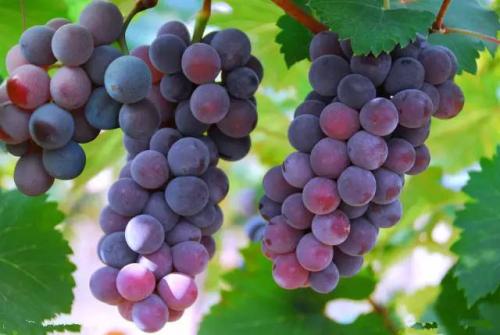
Grapes also contain mono-glucosides and di-glucosides of various anthocyanins. The grape skin contains cyanidin, peonidin, delphinidin, petunidin, malvidin, malvidin-3-β-glucoside. When making red wine with the skins on, these skin components enter the wine and play a major role in nutrition and health benefits.
Scholar Ed Sherman reviewed the antioxidant and anti-aging active components of grape seed extract and listed several research results, for example, oligomeric proanthocyanidins (OPC), which account for 80 % to 85 % of the active components of grape seeds, are a mixture of anthocyanin precursors belonging to bioflavonoids. Research in recent years has proven that it has a very strong effect of scavenging oxygen free radicals, can prevent more than 80 kinds of diseases caused by oxygen free radicals, and has good health and anti-aging benefits.
Brouillard et al., conducted in-depth research on red wine, which has been proven beneficial to human health, and found that grapes are rich in polyphenols, which together with wine can reduce the incidence of heart disease caused by many fatty foods, because polyphenols are related to the scavenging of free radicals.
Grape seeds, on the other hand, contain organic acids such as catechuic acid, epicatechuic acid, caffeic acid, and ferulic acid, all of which are strong antioxidants and can work with OPC to exert a stronger antioxidant effect.
In 1997, the University of Wisconsin in the United States found that drinking 3 cups of purple grape juice daily can reduce platelet aggregation by 40 % , similar to aspirin's thrombolytic, anticoagulant, and fibrinolytic effects. It has a certain effect on preventing cardiovascular and cerebrovascular diseases, mainly through the flavonoids contained in grapes. Grape skins are even richer in flavonoids, so when eating grapes, it is best not to peel them.
Research by the University of Illinois in the United States shows that grapes contain a substance called resveratrol (Resvoratrol), which can prevent canceration of cells. The glucose, organic acids, amino acids, and vitamins in grapes are all very rich and can nourish and stimulate the brain nerves, providing benefits for neurasthenia and excessive fatigue.
However, grapes are slightly cold in nature, so do not eat too many in cold weather or after being chilled; those with weak spleen and stomach or diabetes are best not to eat them or to eat only a little.