-
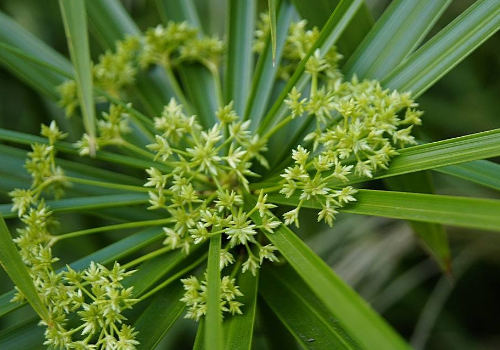
How to Grow Umbrella Plant and Its Benefits and Effects
Umbrella plant not only beautifies courtyards but also purifies water quality. How do you grow umbrella plant? Benefits and effects: How to grow umbrella plant: 1. Choose short plants (about 15-20 cm tall), with 5-7 stems per clump of muddy seedlings, wash the soil off the roots of the umbrella plant with clean water, and place it in a water basin.
-

Harvesting, Processing Methods and Medicinal Effects of Polygonatum
Harvesting and processing: Polygonatum grown from transplanted rhizomes is harvested after 1 to 2 years, while plants grown from seed are harvested after 3 to 4 years. In late autumn or early spring, dig out the rhizomes, wash off the soil, remove the fibrous roots and diseased scars, steam for 10 to 20 minutes (until thoroughly steamed), take them out and dry them in the sun, kneading them while drying; after 7 to 10 days of sun-drying they will be dry. Medicinal effects: Polygonatum is sweet in flavor and neutral in nature. It enters the spleen, lung and kidney meridians. It has the effects of tonifying the spleen and moistening the lungs, nourishing yin and promoting fluid production, tonifying the middle and replenishing qi, and strengthening the tendons and bones. It treats consumptive damage with alternating cold and heat, pulmonary tuberculosis with coughing of blood, pulmonary tuberculosis with dry cough and no phlegm, diabetes, hypertension, and post-illness bodily
-
What are the medicinal effects of Japanese cherry blossom?
[Medicinal name]: Japanese cherry blossom [Source]: The bark of the dicotyledonous medicinal plant Japanese cherry blossom, of the Rosaceae family. [Efficacy]: Diffuses the lung and relieves cough. [Indications]: Used for cough and fever. [Nature, flavor and meridian tropism]: Pungent, neutral. Lung meridian. [Usage and dosage]: Oral administration: decocted in water, 3-9 grams. [Distribution of animal and plant resources]: Native to Japan, now cultivated throughout our country. [Latin name]: Japanese cherry blossom PrunusyedoensisMatsum. [Textual research]:
-
What other effects does feed have on egg quality?
Egg weight is affected to a certain extent by the protein level of the diet. Increasing the protein level of the diet, especially the level of animal protein, helps to increase egg weight. Some trace elements are related to the internal quality of eggs. Adding iron, copper, zinc and selenium to the diet can improve the internal quality of eggs. If the feed is contaminated by pesticides or toxic heavy metals, it will also affect egg quality.
-
What are the medicinal values of China pink? An analysis of its effects and functions
China pink (Dianthus chinensis) has a low, compact growth habit, with stems resembling bamboo and lush green foliage. Its natural flowering period is from May to September, blooming from late spring all the way to mid-autumn, and when potted in a greenhouse it can flower in all four seasons. The flowers are borne at the tips of the branches, either singly or in pairs, and sometimes in paniculate cymes. The flower diameter is not large, only 2 to 3 cm, but the blooms are abundant, opening one after another, giving a long ornamental period. Flower colors include white, pink, red, rose pink, scarlet, purple, light purple, yellow, blue and more, colorful and endlessly varied. In gardens it can be used in flower beds, flower borders, raised flower platforms or as potted plants, and can also be used in rock gardens and at the edges of lawns
-
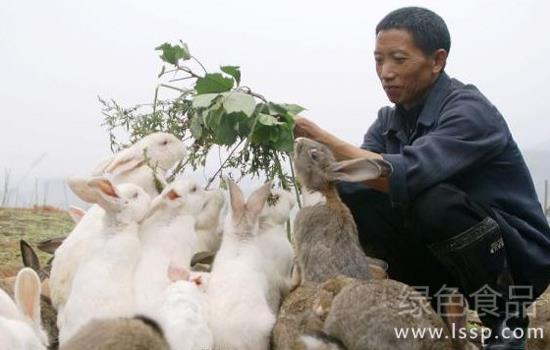
Using Herbs Instead of Drugs to Prevent Disease in Rabbits: Nutritious and Free of Side Effects
Nutritious and Free of Side Effects: Using Herbs Instead of Drugs to Prevent Disease in Rabbits
-
What are the main aspects of the effects of airflow on pigs?
The movement of air molecules is called airflow, and airflow that moves horizontally is called wind. Atmospheric airflow is formed when uneven temperature distribution on the Earth's surface creates pressure differences, and air molecules flow from low-temperature high-pressure areas to high-temperature low-pressure areas. In meteorology, wind is commonly described by wind speed and wind direction. Wind speed is the distance the wind moves per unit time (m/s); wind direction is the direction from which the wind blows, expressed in 8 or 16 directions, and based on the probability of wind appearing in each direction, a wind direction frequency diagram (wind rose diagram) is drawn. Wind direction frequency diagram
-
Four Effects on Rice After Exposure to High Temperatures
Rice has different temperature requirements at each growth and development stage, and there is an optimal temperature for each. If the upper or lower critical temperature limit is exceeded, abnormal phenomena, namely physiological disorders, will appear in the growth and development of rice. Therefore, attention should be paid to the effects of high temperatures on rice. 1. Effects of high temperatures on each growth stage of rice. 1. Heading and flowering stage. Generally, rice prefers a temperature of 25-30°C during the heading and flowering stage. When the temperature is below 25°C or above 30°C, large numbers of empty and shriveled grains will appear in rice. At the same time, high temperatures also
-
Effects of Different Sowing Dates on the Growth and Yield of Soybean
1 Tested varieties (1) Early edamame type: Dalizhuang, Zaosheng Bainiao, Ningshu 60. (2) Summer soybean type: Yudou 16, Huaidou No. 4, Nannong 242, Nannong 86-4, Nannong 88-31, Nannong 96CT-1. (3) Specialty bean type: Danbo Black, Japan 118, Haimen Green, Haixi 13, Black Skin Green Kernel, Lubaozhu. (4) Sprouting bean type: 98-29, 98-30, S-03. Among the above 18 varieties (lines), Zaosheng Bainiao and Ningshu 60 were introduced from the Jiangsu Academy of Agricultural Sciences,
-
What pathogenic effects does feed contamination have on fish?
Because some feed products currently contain bacteria at levels far exceeding the standard, mass fish deaths occur from time to time after fish eat contaminated feed. Based on the disease symptoms in fish, it can be roughly divided into two types: acute type (explosive) and chronic type. 1. Acute type (explosive type): After fish eat contaminated feed, disease onset occurs in as much as 3 to 5 days, or as little as 1 to 2 days, with symptoms appearing; severely affected fish have already died, and the number of dead fish shows a gradually increasing trend, but feeding is not affected, and most fish can eat normally. This kind of
条件筛选