What is the butterfly pea? How to grow it and the benefits and effects of butterfly pea flowers
We generally know green beans and common beans, but have you ever heard of the butterfly pea? Do you know how to grow butterfly pea? Would you like to learn about it? Then take a look at the introduction below.
The butterfly pea is native to tropical South America, and because its flower shape closely resembles a butterfly, it is called the butterfly pea. It was once introduced as a green manure plant, and has now become naturalized in central and southern Taiwan, China, where it is often found on sunlit rock walls or among shrubs in the wild.
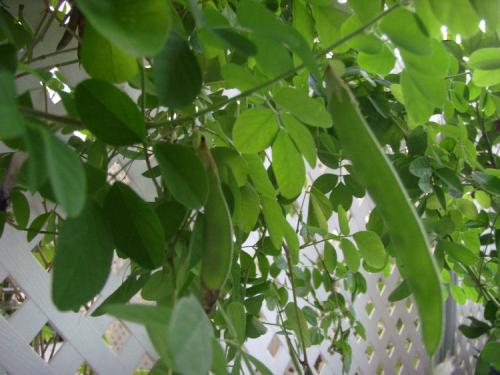
The butterfly pea belongs to the genus Clitoria in the Fabaceae family and is a perennial woody climbing plant; when winter temperatures are too low, it loses its leaves and goes dormant. The flower diameter is about 4-5 cm, and the flower color is blue-purple, with occasional white variants found. Although each flower only blooms for one day, flowers open and fade almost every day, so there is always something to admire. After flowering, it produces seed pods, which mature and split open on their own in about a month, containing 8-10 seeds. The leaves are alternate and odd-pinnately compound, made up of 3-9 oval leaflets.
The butterfly pea prefers high temperatures and plenty of sunlight, and is not very demanding about soil, though well-drained sandy loam is still best. It is generally propagated by sowing seeds. Because the seed coat is thick, you can soak the seeds in water for a day before planting; they sprout in about 3-5 days. The butterfly pea has a taproot and dislikes transplanting, so it is best to sow it directly in place without transplanting later.
⟦NL> Young seedlings are upright and grow somewhat slowly; only after producing 8-10 true leaves do they begin to become vining, and the growth rate then speeds up. At this point you can pinch off the growing tips to encourage branching, and set up a support for them to climb. When sown in a full-sun environment, they can bloom about 65 days later.
Butterfly pea seedlings must be given a fertilizer with a higher nitrogen ratio, such as Hyponex No. 5, to promote growth (reference:
The butterfly pea is easy to cultivate and can bloom within a short time, and both the plant and the flowers have great ornamental value. The blue-purple butterfly-shaped flowers are not only lively and lovely, but also bring a touch of coolness to the hot summer days. However, note that the mature seeds are toxic, so do not eat them by mistake.
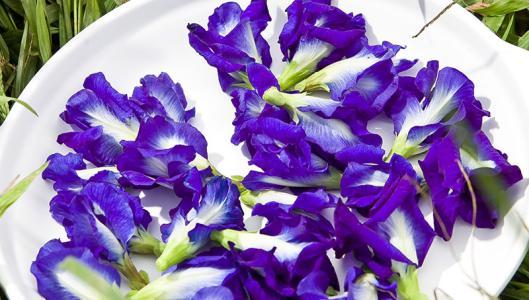
The benefits and effects of butterfly pea flowers:
Butterfly pea flower, also called blue butterfly, is a natural blue pigment. The vivid blue color it produces when steeped comes from the "anthocyanins" that butterfly pea flowers are rich in, 10 times more than in ordinary plants. The abundant vitamin A, C and E in butterfly pea flowers can fight aging and improve immunity, and can also lower blood pressure and blood lipids, promote digestion, and cool and detoxify. It helps and promotes skin elasticity and collagen, and also has natural health benefits such as nourishing the brain, boosting brain vitality, preventing stomach pain, and anti-depression, anti-stress, calming, anti-convulsant, and mood-relieving effects.
As good as butterfly pea flower is, do not overindulge. It promotes blood circulation, so women should not drink it during their period, and it is not suitable for pregnant women either; for people who have just had surgery, it is not helpful for wound healing.