-
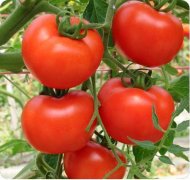
How many types of tomato fruit cracking are there? Remedies for fruit cracking in large and small tomatoes
Tomato fruit cracking: how to remedy it? Do you want to know? If so, then let's take a look together! The phenomenon of tomato fruit cracking can be divided into four types: radial cracking, concentric cracking, compound radial and concentric cracking, and irregular side cracking. A. Choose varieties
-
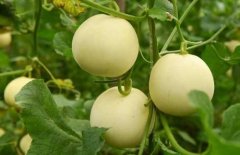
What Are the Growing Regions of Muskmelons? A Full Guide to Variety Classification and Selection Tips
Muskmelons can be roughly divided into three types: the netted muskmelon, which of course has a netted rind, with flesh that can be green, white or orange; the Hami melon, oval in shape, improved from the original Hami melon of Xinjiang, elongated oval in appearance with orange flesh, and its biggest difference from the muskmelon
-

A Detailed Explanation of the Material Properties and Grade Classification of American Douglas Fir
Douglas fir is a relatively common construction timber, enjoying high recognition around the world, especially in North America. Because Douglas fir is very hard and has strong wear resistance, it is particularly suitable for use in supports, bridge components, wooden houses, commercial buildings and other places.
-
A Detailed Guide to Sapling Planting Methods and Key Technical Points
Summary Saplings are divided into seedling saplings, grafted saplings, transplanted saplings, etc., and different types have different growth habits. Propagation of saplings: grafting, cuttings, and root cuttings can be used for propagation. Planting methods for saplings: first dig the planting holes well, leaving appropriate growing space, generally around 30 cm, and after planting, follow the principle of "three burials, two treads, one lift of the sapling." Summer planting precautions: be sure to water in time, drain waterlogged areas, fertilize, and control pests and diseases, etc.
-
Vegetable Planting Times by Type: Heat-Loving, Cold-Loving and Cold-Hardy Classification
Summary Vegetables that can be planted year-round: scallions, bean sprouts, garlic, bok choy, etc. Can be planted in January: lettuce, rapeseed greens, etc. Can be planted in February: cilantro, lettuce, etc. Can be planted in March: spinach, radish, etc. Can be planted in April: napa cabbage, cowpea, etc. Can be planted in May: pumpkin, bitter melon, etc. Can be planted in June:
-
The mandarin fish farming cycle is divided into 3 stages: fry rearing, fingerling rearing and grow-out farming
Abstract The mandarin fish farming cycle is mainly divided into the fry rearing stage, the fingerling rearing stage and the grow-out farming stage. Fry rearing stage: artificial induced spawning and artificial incubation are carried out. Fingerling rearing stage: after the mandarin fish fry hatch out of the membrane, a sieve net should be used to screen out the egg membrane, dead eggs and other debris, and then
-
How to Grow Tea? A Detailed Guide to Tea Plant Cultivation Methods and Techniques
As for tea, in our China tea is divided into six major tea categories, namely green tea, black tea, oolong tea, white tea, yellow tea and dark tea. So how do you grow tea? 1. How to grow tea. 1. Land clearing. For tea gardens on gentle slopes below 15 degrees, the land can be directly cleared. The turning depth is 50 cm. For slopes above 15 degrees, build terraced steps along contour lines at equal height, and the terrace surface width should be greater than 1.5 m, then turn the soil. For cultivated land, after deep plowing and leveling, rows can be marked out for planting; for virgin wasteland, carry out primary and secondary clearing in two stages. The primary clearing depth reaches 50 cm; after deep plowing, there is no need to break up the soil clods, to help retain water. When turning the soil, be careful not to turn the sod into the lower layers, so that it can be cleared out of the garden during secondary clearing. Once primary clearing is complete, secondary clearing can be carried out, with a depth of 25-30 cm. Secondary clearing requires breaking up the soil clods and removing all roots of brush and grass. Never turn densely matted sod blocks into the lower layer, to avoid weeds rotting and forming holes that affect the tea seedlings' root uptake of water and nutrients.
-
Where is the origin of the Orin apple? Introduction to the main producing areas
Apples are divided into many varieties, and the ones we usually eat are generally the more common apples on the market. I wonder if you have ever heard of the Orin apple, and whether you know where the Orin apple comes from? Let's take a look! 1. Origin of the Orin apple Orin apple
-
Which fruits easily cause internal heat? These fruits should be eaten less
Fruits themselves are divided into hot-nature fruits, neutral-nature fruits, and cool-nature fruits. What we call fruits that cause internal heat are hot-nature fruits. Because hot-nature fruits are high in calories and high in sugar, they have a warm and hot effect on the human body. So which fruits easily cause internal heat when eaten?
-
What vegetables are shade-loving? These varieties can be grown even with insufficient light
Vegetables are divided into two categories: shade-loving and sun-loving. Most vegetables like to grow in positions with plenty of sunlight, but some green vegetables are shade-tolerant varieties. Below, the editor brings you five common shade-loving vegetables. 1. Lettuce This species originates from the Mediterranean coast, and
条件筛选