-
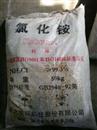
Symptoms of Chlorine Deficiency in Crops and Remedies
What are the benefits of the chlorine element for crops? What happens when crops are deficient in chlorine? The following is a brief introduction from Gengzhongbang Planting Network for readers' reference. I. Benefits of the chlorine element. Chlorine is one of the nutrient elements essential for the growth and development of higher plants. The physiological roles of chlorine can generally be summarized as follows: 1. Participates...
-
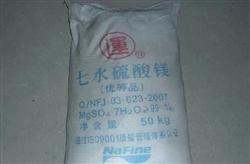
What are the effects of agricultural magnesium sulfate on crops?
What are the effects of agricultural magnesium sulfate? What are the application methods for agricultural magnesium sulfate? We ask knowledgeable readers to help explain. Magnesium sulfate is also called sulfur bitter, bitter salt, Epsom salt and other names, and generally refers to two types: magnesium sulfate heptahydrate and magnesium sulfate monohydrate. Magnesium sulfate can be used in industry, agriculture, food, feed, medicine, fertilizer, etc...
-
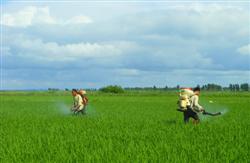
What should be noted when applying foliar fertilizer to crops?
What should be noted when applying foliar fertilizer to crops? Please advise. Note the following ten points when applying foliar fertilizer to crops: 1. Foliar fertilization has the advantages of a small dosage, strong targeting, rapid absorption, obvious effects and low cost, and is especially effective for crops with few roots. The author now summarizes the ten key points of crop foliar fertilization from practical application...
-
What are the precautions for foliar feeding of crops?
What should be noted when doing foliar feeding of crops? Please give an introduction. There are many types of fertilizers used for foliar feeding of crops, but some are suitable for foliar spraying and some are not. For example, urea, potassium dihydrogen phosphate, borax, ammonium molybdate, zinc sulfate, etc. can all be sprayed on the leaves. Some fertilizers containing chloride ions, volatile fertilizers and poorly...
-
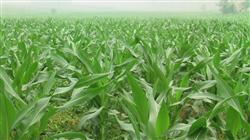
What is the best time to apply topdressing to crops?
When is the effect of topdressing on crops good? Please give an introduction. The following introduces some of the best topdressing periods for crops: The best topdressing period for corn is under the principle of balanced fertilization. From after jointing to the large trumpet stage, corn is at its peak period of nutrient uptake, so the first topdressing can generally be applied around jointing. Apply 10 kg of urea per mu...
-
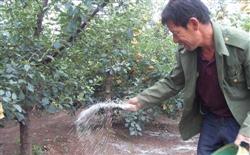
What are the nitrogen fertilizer application methods for fruit crops?
How should nitrogen fertilizer be applied to fruit crops? An introduction is given that the sweetness of fruit is determined by the amount of sugar in its cells, and the accumulation of sugar is closely related to nitrogen fertilizer. Therefore, it is said that the sweetness of fruit is related to nitrogen fertilizer. Within 28 days from the end of flowering of the fruit tree to after the end of flowering, the cells of the young fruit are in a state of division, and the cells are filled...
-
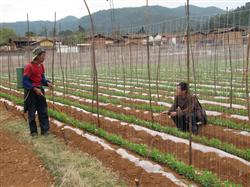
What are the precautions for foliar fertilization of crops?
What should be noted in foliar fertilization of crops? Please give some guidance. Compared with soil fertilization, foliar fertilization techniques have advantages such as rapid conversion, high fertilizer utilization rate, and promoting root absorption of nutrients. Foliar fertilizers can be broadly divided into major element fertilizers, micronutrient fertilizers, organic fertilizers, microbial fertilizers, or photosynthesis enhancers or pesticide foliar fertilizers, and so on.
-
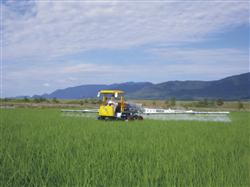
How should foliar fertilizers be applied correctly to various crops?
How should foliar fertilizers be applied to various crops? Please provide a categorized introduction to the methods. The following foliar fertilizer application methods can refer to the following technical methods: 1. Melons and fruits. This includes various melons, tomatoes, eggplants, chili peppers, green beans, etc. Nitrogen, phosphorus, and potassium mixed fertilizers or multi-element compound fertilizers should be used, such as monopotassium phosphate (0.3-0.5%...
-
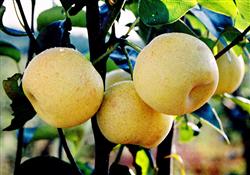
Which crops are suitable for potassium sulfate and potassium chloride application?
Which crops are suitable for potassium sulfate or potassium chloride application? Please give an introduction. Crop chloride tolerance refers to a crop's ability to endure chloride applied to the roots without suffering toxicity; the lower the concentration at which toxicity begins, the poorer the chloride tolerance. Among common crops, those with strong chloride tolerance include sugar beet, spinach, foxtail millet, kenaf, radish, chrysanthemum, rice, sorghum...
-
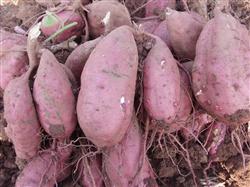
A Detailed Guide to Potassium Fertilizer Application Methods for Underground Tuber Crops
How should potassium fertilizer be applied to underground tuber crops? Why should it be applied this way? Underground tuber crops such as potato, peanut, taro, sweet potato, yam, Jerusalem artichoke, carrot and others all have a potassium-loving nature and a relatively high demand for potassium, so in cultivation even more attention should be paid to applying potassium fertilizer to achieve high yields. For every 1000 kg of potato produced...
条件筛选