What should be noted when applying foliar fertilizer to crops?
What should be noted when applying foliar fertilizer to crops? Please advise. Note the following ten points when applying foliar fertilizer to crops: 1. Foliar fertilization has the advantages of a small dosage, strong targeting, rapid absorption, obvious effects and low cost, and is especially effective for crops with few roots. The author now summarizes the ten key points of crop foliar fertilization from practical application...
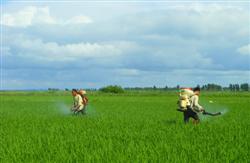
What should be noted when applying foliar fertilizer to crops? Please advise
Note the following ten points when applying foliar fertilizer to crops:
1. Foliar fertilization has the advantages of a small dosage, strong targeting, rapid absorption, obvious effects and low cost, and is especially effective for crops with few roots. The author now introduces the ten key points of crop foliar fertilization summarized from practical application as follows:
2. Spraying should be targeted. That is, select the corresponding fertilizer according to the nutrients the plant needs at each growth stage, and supply them in a targeted way. For example, during the new bud growth stage, nitrogen fertilizer is mainly needed, and it only works when combined with potassium fertilizer; when the new shoots mature, potassium fertilizer should be added to ensure the plant grows sturdily; during the flower bud stage, phosphorus fertilizer should be added.
3. The fertilizer variety should be suitable. The foliar fertilizer varieties commonly used in production include urea, potassium dihydrogen sulfate, potassium sulfate, etc. These fertilizers have the characteristics of stable performance and causing no damage to leaves. In addition, research shows that the permeability of fertilizer on the leaf surface directly affects the effect of foliar topdressing. At present, urea is recognized at home and abroad as the most ideal for foliar topdressing.
4. Foliar fertilizers should be mixed properly. Although commercial foliar fertilizers have relatively complete nutrients, you should not always use the same variety; they should be mixed and used alternately to make up for each other's shortcomings and make the nutrition more comprehensive. When doing foliar topdressing, reasonably mixing two or more foliar fertilizers will make the yield-increasing effect more significant and can save spraying time and labor.
5. The spraying concentration should be appropriate. For foliar topdressing, the spraying concentration must be well controlled, and the concentration used must strictly follow the relevant instructions. It is strictly forbidden to increase the concentration at will, otherwise it will be counterproductive, cause fertilizer damage and result in unnecessary losses. This is especially true for trace element fertilizers; the critical range for crops from deficiency to excess is very narrow, so it must be controlled even more strictly.
6. The spraying time should be suitable. Foliar topdressing is best done in the evening in windless weather. Spraying fertilizer on mornings with dew will reduce the solution concentration and affect the fertilization effect. Foliar topdressing also cannot be done on rainy days or before rain, because the nutrients are easily leached away by rainwater and cannot play their proper role.
7. The spraying method should be particular. Because fertilizer must be absorbed into the plant through the leaf stomata, and the stomata are mainly on the underside of the leaves, spraying should mainly target the underside of the leaves, with the nozzle facing upward and the mist droplets fine. At the same time, the spraying amount should not be too large; it is best if the leaves do not drip, to prevent the fertilizer liquid from accumulating at the leaf tips and causing fertilizer damage and tip burn.
8. The number of sprayings should be reasonable. The concentration of crop foliar topdressing is generally relatively low, and the amount absorbed each time is very small. Therefore, the number of foliar topdressing applications should generally not be less than 2-3 times.
9. Spraying should be uniform and meticulous. Foliar topdressing requires fine droplets and uniform spraying, with special attention to spraying the upper leaves that are growing vigorously and the underside of the leaves. This is because new leaves absorb nutrients faster and more strongly than old leaves, and the underside of leaves absorbs faster and more strongly than the upper side.
10. A wetting agent should be added to the fertilizer liquid. Crop leaves all have a cuticle layer of varying thickness, and solution penetration is relatively difficult. For this reason, an appropriate amount of pesticide synergist or wetting agent (such as neutral soap or a better-quality detergent) can be added to the foliar fertilizer solution to reduce the surface tension of the solution, increase the adhesion of the agent and improve the effect of foliar topdressing.
Click to get more foliar fertilizer application methods
Click to get more fertilizer application methods