What are the effects of agricultural magnesium sulfate on crops?
What are the effects of agricultural magnesium sulfate? What are the application methods for agricultural magnesium sulfate? We ask knowledgeable readers to help explain. Magnesium sulfate is also called sulfur bitter, bitter salt, Epsom salt and other names, and generally refers to two types: magnesium sulfate heptahydrate and magnesium sulfate monohydrate. Magnesium sulfate can be used in industry, agriculture, food, feed, medicine, fertilizer, etc...
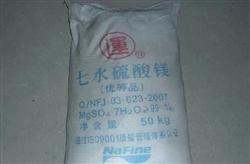 What are the effects of agricultural magnesium sulfate? What are the application methods for agricultural magnesium sulfate? We ask knowledgeable readers to help explain
Magnesium sulfate is also called sulfur bitter, bitter salt, Epsom salt and other names, and generally refers to two types: magnesium sulfate heptahydrate and magnesium sulfate monohydrate. Magnesium sulfate can be used in industry, agriculture, food, feed, medicine, fertilizer and other fields. Therefore, Zhongdi Net has specially compiled the effects and application methods of magnesium sulfate in agriculture.
Effects of agricultural magnesium sulfate:
Magnesium sulfate contains the two major nutrient elements that crops must have, sulfur and magnesium. Magnesium sulfate can not only increase crop yield, but also improve the taste of crop fruits.
Because magnesium is a component of chlorophyll and pigments, and is the only metal element in the chlorophyll molecule, magnesium can promote photosynthesis and promote the formation of carbohydrates, proteins and fats. Magnesium is an activator of hundreds of enzymes and also participates in the composition of some enzymes, promoting metabolism in crops. Magnesium can improve crop disease resistance and prevent the invasion of pathogens.
Magnesium can also promote the formation of vitamin A and vitamin C in crops, thereby improving the quality of fruits, vegetables and other crops. Sulfur is essential for the synthesis of amino acids, proteins, cellulose and enzymes in crops.
At the same time, applying magnesium sulfate can also promote the absorption of silicon and phosphorus by crops.
Application methods of agricultural magnesium sulfate:
1. Magnesium sulfate used as base fertilizer:
Before plowing, mix magnesium sulfate with other fertilizers or organic fertilizer and broadcast it in the soil.
2. Magnesium sulfate used as topdressing:
When using magnesium sulfate for topdressing, it needs to be applied early, and can be applied in furrows or watered on. Generally, 10~13 kg of magnesium sulfate is suitable per mu of land, and generally 250~500 grams of magnesium sulfate can be applied per fruit tree.
After applying sufficient magnesium fertilizer, it can be applied again after several crop cycles; it is not necessary to apply it every season.
3. Magnesium sulfate used for foliar spraying:
To correct the symptoms of magnesium deficiency in crops, magnesium sulfate can be used for foliar topdressing, but the effect of foliar spraying is not lasting. To achieve the effect, spraying should be carried out several times in succession.
Foliar spraying of magnesium sulfate can be carried out in the early and middle stages of crop growth; the spraying concentration of magnesium sulfate also differs for different crop growth periods. Generally, the foliar spraying concentration of magnesium sulfate is: fruit trees 0.5%~1.0%, vegetables 0.2%~0.5%, rice, cotton, corn 0.3%~0.8%. The general application rate of magnesium fertilizer solution per mu is about 50~150 kg.
Magnesium fertilizer application suggestion: the effect of applying magnesium fertilizer together with farmyard manure and organic fertilizer is often better than applying magnesium fertilizer alone.
What is calcium magnesium phosphate fertilizer?
What should be noted when spraying urea as a foliar fertilizer?