-
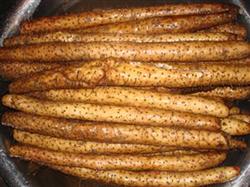
What are the nutritional properties of Chinese yam? A comprehensive guide in one article
Chinese yam, also known as huai shan, huai yam, huai Chinese yam, shuyu, Buddha's palm potato and so on, belongs to the Dioscoreaceae family and is a perennial vegetable. Chinese yam contains a large amount of protein, various vitamins, beneficial trace elements and carbohydrates. In addition, it also contains relatively many medicinal and health-promoting components, such as mucopolysaccharides, allantoin, dioscin, choline, salt...
-
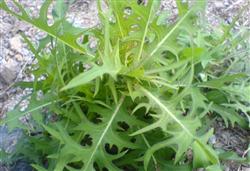
Detailed Explanation of Cultivation Techniques and Comprehensive Utilization Methods of Wild Lettuce
Wild lettuce, also known as mountain lettuce, bitter chicory, and duck feed, is a herbaceous plant of the Asteraceae family, growing by roadsides, in wilderness, and on hillsides. Its seedlings and tender stems and leaves are suitable for eating, and it is a wild vegetable with development value. 1 Botanical characteristics and biological traits: A biennial herbaceous plant, with white milky sap, 80-150 cm tall. Stem erect,...
-
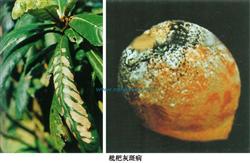
Comprehensive Control Methods and Key Technical Points for Loquat Gray Leaf Spot
Loquat gray leaf spot, also known as "ring spot." It is the most important disease of loquat. It attacks branches, leaves, flowers, and fruit. There are two types: acute and chronic: in the chronic type, leaf spots are initially light brown circular spots; later they join into irregular large spots, with small black dots scattered on them. On young shoots, the disease starts as small water-soaked brown...
-
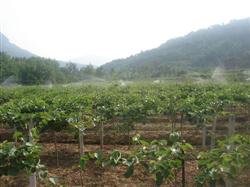
A Comprehensive Analysis of Key Kiwifruit Cultivation Techniques
Kiwifruit belongs to the genus Actinidia in the family Actinidiaceae. It is a deciduous climbing vine fruit tree, rich in various vitamins and nutrients, known as the "king of fruits," and holds high economic and cultivation value. It is suitable for growing in mild climates with abundant rainfall, fertile soil, and lush vegetation, in deep, well-drained, moderately moist black humus soil or sandy loam with a pH of 5.5-7 (slightly acidic soil)...
-
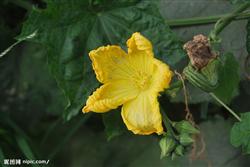
How to Prevent and Control Luffa Flower Rot? A Comprehensive Multi-Measure Prevention and Control Guide
Luffa flower rot is closely related to nutrient deficiency in the plant. Boron deficiency causes the stigma of luffa to turn black, and many vegetable growers mistake it for an infectious disease and treat it as such. Once the floral organs are damaged, there is no way to remedy it, so prevention must be done in advance. Before luffa flowering, spray with a 500-fold dilution of borax or a 1500-fold dilution of "Zhixin" boron fertilizer to prevent blackening of the stigma caused by boron deficiency....
-
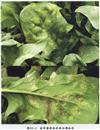
Comprehensive Management and Control Methods for Spinach Downy Mildew
Comprehensive management of spinach downy mildew means integrated management of spinach downy mildew. 1. Fertilizer and water management. Spinach prefers fertile, moist, cool conditions and dislikes drought and waterlogging; it is a fast-growing vegetable. Therefore, during the growing period, sufficient fertilizer and water must be supplied in a timely manner. From sowing to full emergence, the soil must be kept moist to ensure full emergence. At the 3-leaf stage, cultivate and weed, ...
-
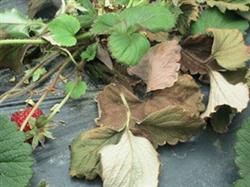
The Harm of Strawberry Verticillium Wilt and Its Comprehensive Control Methods
Strawberry Verticillium wilt is a soil-borne disease. It has been an important factor affecting and troubling the expansion of strawberry production in recent years. Because strawberry is a perennial plant, continuous cropping in the same field for many years causes a large accumulation of pathogens in the soil, and combined with factors such as declining varietal disease resistance and poor field management, it leads to strawberry...
-
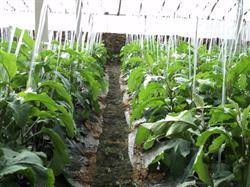
Comprehensive Fertilization Techniques for Eggplant: Key Points Explained
Eggplant is an annual herbaceous plant, and a perennial shrub in the tropics. Eggplant has a well-developed root system; the roots of a mature plant reach more than 1.5 m deep, with a lateral diameter exceeding 1 m, while eggplants grown under protected cultivation have roots mainly distributed in the 0-30 cm plow layer. Eggplant roots have poor regeneration capacity and lignify early, so they are not suitable for repeated transplanting...
-
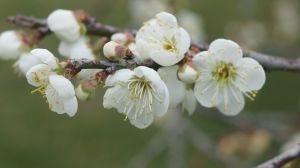
What is the symbolic meaning of the plum blossom? A comprehensive interpretation of its symbolism
The plum blossom symbolizes the spiritual qualities of unyielding perseverance, firmness and tenacity, constant self-improvement, and the courage to lead the way. It can stand proudly in the snow, unafraid of severe cold, and it also represents unyielding, strong, beautiful and virtuous people. Among the people, it also symbolizes heralding the arrival of spring and bringing good news. Its flower language is blooming to welcome spring, not seeking glory or profit, braving frost and fighting snow, strength, elegance, and loyalty.
-
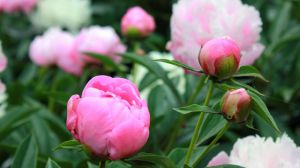
What kind of plant is the peony? A comprehensive guide to the peony
Root: The peony is a perennial herbaceous plant, and its root consists of a root crown, tuberous roots, and fibrous roots. The root crown bears buds, the tuberous roots are fleshy, and the fibrous roots are the organs that absorb water and nutrients. Leaves: Its leaves are bipinnately trifoliolate compound leaves, and the leaflets are elliptical or lanceolate. Flowers: They usually grow singly at the top of the stem or in the leaf axils, and the flowers are white.
条件筛选