Comprehensive Fertilization Techniques for Eggplant: Key Points Explained
Eggplant is an annual herbaceous plant, and a perennial shrub in the tropics. Eggplant has a well-developed root system; the roots of a mature plant reach more than 1.5 m deep, with a lateral diameter exceeding 1 m, while eggplants grown under protected cultivation have roots mainly distributed in the 0-30 cm plow layer. Eggplant roots have poor regeneration capacity and lignify early, so they are not suitable for repeated transplanting...
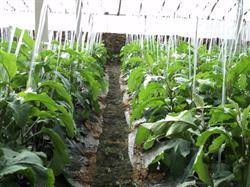
Eggplant is an annual herbaceous plant, and a perennial shrub in the tropics. Eggplant has a well-developed root system; the roots of a mature plant reach more than 1.5 m deep, with a lateral diameter exceeding 1 m, while eggplants grown under protected cultivation have roots mainly distributed in the 0-30 cm plow layer. Eggplant roots have poor regeneration capacity and lignify early, so they are not suitable for repeated transplanting. Eggplant has strict temperature requirements: growth is slow below 17degC, physiological metabolism is disturbed below 10degC, and flowers drop below 15degC. The suitable temperature for flower bud differentiation is 2OdegC-25degC during the day and 15degC-20degC at night. When the temperature is on the low side, flower bud differentiation is delayed, but there are more long-styled flowers; conversely, under higher temperature conditions, flower bud differentiation occurs earlier, but the proportion of medium-styled and short-styled flowers increases, especially with more short-styled flowers under high night temperatures. The suitable temperature for growth is 22degC-3OdegC; 25degC-28degC during the day and 16degC-20degC at night are favorable for eggplant development.
I. Fertilizer Requirements of Eggplant
Eggplant is a fertilizer-loving crop, and soil conditions and fertilization levels have a relatively large effect on the fruit-setting rate of eggplant. When nutritional conditions are good, fewer flowers drop; poor nutrition will increase the number of short-styled flowers and cause poor flower organ development, making fruit setting difficult. In addition, nutritional status also affects the position of flowering. When nutrition is sufficient, the branch at the flowering site can unfold 4-5 leaves; when nutrition is poor, few leaves unfold and flower drop increases. The uptake of nitrogen, phosphorus, and potassium by eggplant increases with the extension of the growth period. During the seedling stage, the uptake of the three elements nitrogen, phosphorus, and potassium is only 0.05%, 0.07%, and 0.09% of the total. At the early flowering stage, uptake gradually increases, and from the full fruiting stage to the late fruiting stage, nutrient uptake accounts for more than 90% of the whole period, with the full fruiting stage accounting for about 2/3. The nutrient requirements differ among growth stages. Fertilizer at the early growth stage mainly promotes vegetative growth of the plant; as the growth period progresses, the amount of nutrients transported to flowers and fruits increases. At the full flowering stage, the uptake of nitrogen and potassium increases significantly. If nitrogen is insufficient during this period, flower development is poor, short-styled flowers increase, and yield decreases. Producing 1000 kg of eggplant requires 3.2 kg of pure nitrogen, 0.94 kg of phosphorus pentoxide, and 4.5 kg of potassium oxide. For a yield of 4000-5000 kg of eggplant per mu, 12.8-16 kg of pure nitrogen, 3.8-4.7 kg of phosphorus pentoxide, and 18-22.5 kg of potassium oxide are required.
II. Fertilization Techniques for Eggplant
l. Seedling fertilizer. Eggplant has relatively high requirements for the quality of the nutrient soil during the seedling stage. Only on high-quality nutrient soil can strong seedlings with short internodes, thick stems, and well-developed roots be cultivated. Generally, for an 11 sq m seedling bed, apply 200 kg of decomposed and sieved organic fertilizer, 5 kg of calcium superphosphate, and 1.5 kg of potassium sulfate, and mix the bed soil evenly with the organic fertilizer and chemical fertilizers. If nutrient soil is used for seedling raising, an equal amount of organic fertilizer made by mixing 4/5 decomposed horse manure and 1/5 decomposed dried human excrement can be added to garden soil; the preparation method for tomato seedling nutrient soil can also be used as a reference. If low temperature occurs or the soil supply of fertilizer is insufficient, a 0.3%-0.5% urea aqueous solution can be sprayed. To effectively control damping-off, medicated soil can be spread. The medicated soil is made by mixing 8-10 g of 50% carbendazim or thiophanate with 12 kg of nutrient soil. The medicated soil can be spread on the bed surface all at once before the seedlings emerge, or 2/3 can be spread on the bed surface before sowing and 1/3 can be spread on the seeds at sowing. Sometimes the medicated soil inhibits seedling root growth; once inhibition appears, watering heavily and repeatedly can alleviate it.
2. Base fertilizer. Eggplant is easily infected by Verticillium wilt, so protected cultivation of eggplant should avoid continuous cropping. If the interval between crops is relatively short, the protected facility must be disinfected. Based on the internal space of the protected facility, mix 4.0 g of sulfur, 0.1 g of 80% dichlorvos, and 8.0 g of sawdust per cubic meter evenly and ignite it, then ventilate after sealing for 24 hours. After disinfection, apply 5000-6O00 kg of decomposed organic fertilizer per mu, plus 25-35 kg of calcium superphosphate and 15-20 kg of potassium sulfate, spread them evenly on the soil surface, and harrow them evenly into the plow-layer soil together with plowing.
3. Topdressing. Before planting eggplant, apply 5000 kg of organic fertilizer and 25-35 kg of phosphate fertilizer per mu. When the "door eggplant" reaches the "eye-opening stage" (when the ovary expands after flower fertilization and the flower calyx is exposed), the fruit begins to grow rapidly; at this time, carry out the first topdressing. Apply 4-5 kg of pure nitrogen per mu (9-11 kg of urea or 20-25 kg of ammonium sulfate). When the "pair eggplant" fruit expands, carry out the second topdressing. When the "four-sided bucket" begins to develop, this is the peak period of eggplant fertilizer requirement, so carry out the third topdressing. The first three topdressings are the same in amount; subsequent topdressing amounts can be halved, and potassium fertilizer may also be omitted.