-
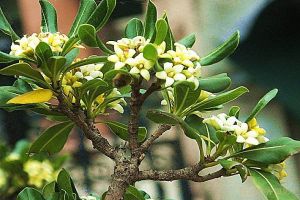
How to Propagate Pittosporum? A Detailed Guide to Common Pittosporum Propagation Methods
Pittosporum comes in many varieties, and it has an extremely strong adaptability to climate and many benefits of its own. Besides being ornamental, it can also absorb sulfur dioxide, and on top of that it can stop bleeding and disperse blood stasis, so it can be said to combine multiple functions in one, which is why people now tend to plant it in their gardens. Generally speaking, pittosporum is extremely easy to propagate. So if you have the idea of growing it, you can also start raising it from its youth. Below we will explain exactly what the specific methods look like.
-
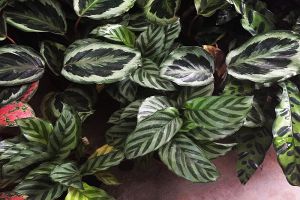
What are the common varieties of prayer plants? A detailed guide
They are herbaceous green plants with an endless variety of shapes and numerous cultivars. Their leaves generally have bright, dazzling, beautifully patterned surfaces, and they are mostly placed indoors for viewing, making them a highly ornamental group of plants. Let us take a look at the many different kinds of them together.
-
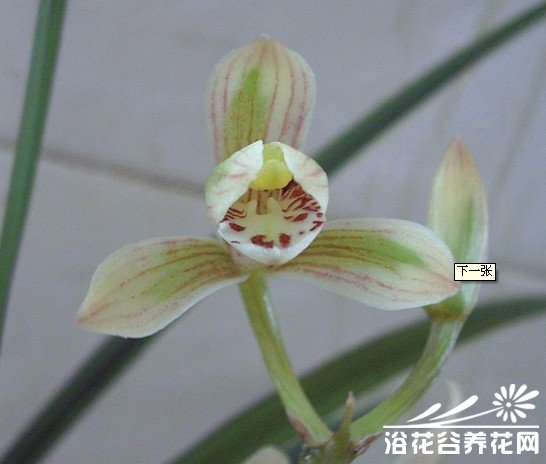
Illustrated guide to the common care methods for Four Seasons Orchid, Jianlan (Cymbidium ensifolium), and Shilan
1. Light control and cooling: Jianlan grows best at an annual average temperature between 15-23°C. Summer temperatures are hot, so use a 70-80% plastic shade net to cool things down. 2. Promoting cooling under high temperatures: for the high temperatures caused by overly strong light, add more layers and density of shading to encourage cooling; in summer and autumn, when light is strong, the air is stuffy and hot, and temperatures are high...
-

What are the common pest and disease control methods for Dendrobium orchids?
1. Diseases: (1) Soft rot: also known as bacterial brown spot, it mostly infects from the rhizome, but can also occur on leaves. It starts as small water-soaked dark green spots, which gradually expand into brown, softened, rotting lesions. A secretion oozes from the rotting area and is accompanied by a foul odor. The pathogen can spread through watering. High temperature and high humidity favor the development of the disease,...
-
How to mix orchid potting medium? Sharing several common recipes
Potting medium is the material foundation on which orchids with fleshy roots depend for survival. Grasping the characteristics of orchids and preparing a potting medium suitable for orchid growth is a key element of successful orchid growing. In orchid-growing areas, orchid enthusiasts can easily buy orchid potting medium at orchid markets: Emei Xiantu soil from Sichuan, Tangji orchid stone from Taiwan, China and Guangzhou, and Japanese Ishiyaki stone...
-
What are the common reasons an orchid does not bloom
For beginners growing orchids, they look forward eagerly to their orchid blooming, but some growers' orchids stubbornly refuse to bloom, and they do not know why their orchid will not bloom. Here we will briefly analyze the reasons an orchid does not bloom from several aspects....
-
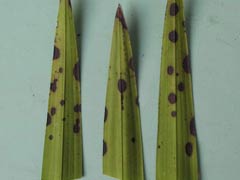
Orchid Disease Pictures: A Complete Guide to Quickly Identify Common Disease Symptoms
Orchids are one of the favorite plants for flower enthusiasts to grow, and also one of the most disease-prone. Sometimes enthusiasts cannot judge what disease their orchid has. Below are ten orchid disease pictures to help enthusiasts confirm the problem, along with control methods (at the end of the pictures)....
-

How to grow orchids? Avoid these common mistakes
Understanding the growth habits of various orchids and achieving "know the orchid to grow the orchid" is the basic skill for growing orchids well. A small number of orchid growers, especially beginners, due to a lack of knowledge about the growth patterns and habits of orchids, have some unrealistic and unscientific practices in watering, fertilizing, planting, and using pesticides for orchid care...
-
What are the other names for orchids? A quick guide to common aliases
I. Aliases for orchids based on their fragrant characteristics: 1. Guoxiang (national fragrance): This is the highest honor for an orchid. Huang Tingjian, in "Shu Youfang Ting": "When a scholar's talent and virtue surpass the whole country, he is called a national scholar; when a woman's beauty surpasses the whole country, she is called a national beauty; when an orchid's fragrance surpasses the whole country, it is called national fragrance." 2. Guxiang (ancient fragrance): Using "ancient" to describe fragrance means not only that the scent lingers long, but also that its quality is pure and its character simple and elegant. In the seven-character ancient-style poem "Langui Qu" by Sadula of the Yuan Dynasty: "The secluded orchid blows ancient fragrance day after day; the beauty does not come, and the stream flows long." The orchid waits for the beauty, and only the beauty is worthy of enjoying these waves of secluded orchid ancient fragrance.
-
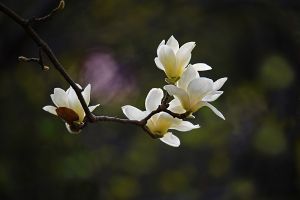
How to propagate Magnolia denudata? A detailed guide to common propagation methods
This is a type of magnolia that bears white flowers. It is a deciduous tree, generally 2 to 5 m tall, and can even reach 15 m at its tallest. It is a very important spring-flowering ornamental variety in the north, and is widely planted in the provinces of the Yellow River basin. So, how is it propagated?
条件筛选