-
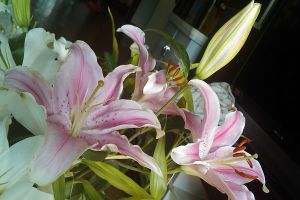
A Detailed Guide to Common Pests and Diseases of Oriental Lilies and Their Control Methods
It originated in the Himalayan region, and later it was grown quite widely in China. Because of its appearance, it is a very popular variety. However, if it suffers from pests and diseases, it will not look so beautiful. So, what pests and diseases does it have? How exactly do you prevent and control them?
-
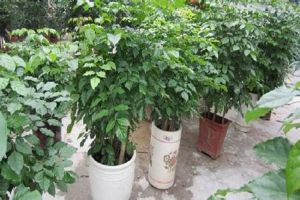
Does the Radermachera sinica bloom? Answering common questions about Radermachera sinica flowering
Many people are willing to grow plants like the money tree and Radermachera sinica at home, because they are not only attractive but also carry good meanings. And the greatest sense of achievement in growing them is seeing the plants you planted with your own hands bloom, but because this is relatively rare, many people have begun to wonder: can plants like Radermachera sinica actually produce flowers?
-
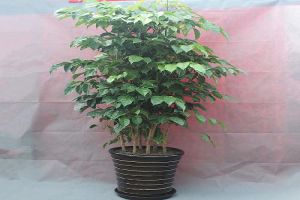
Common Pests and Diseases of the Radermachera hainanensis and Their Control Methods
It is also called the Hainan bean tree (Radermachera hainanensis). Its blooms are very large, very fragrant, and very showy, golden yellow in color, looking absolutely beautiful. Its ornamental value is extremely high, and it is planted in many gardens. If it encounters pest or disease damage during its growth and development, how should it be dealt with?
-
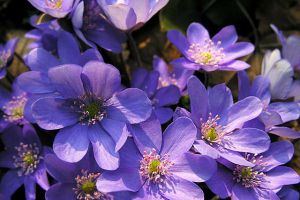
How to propagate stock (Matthiola incana)? A detailed guide to common propagation methods
Stock, also known as garden stock, is a biennial or perennial herbaceous plant that can grow up to 60 cm tall, and it is one of the most famous flowers in Europe. Whether planted in a courtyard or grown in a pot indoors, it is a beautiful sight. Today, the editor will introduce its propagation methods. It is mostly propagated by sowing, and the details are explained below.
-

What are the common orchid viruses and their transmission routes?
I. Common orchid viruses 1. Cymbidium mosaic virus, abbreviated CyMV (1) Symptoms: Orchid plants infected with Cymbidium mosaic virus frequently tend to develop necrosis symptoms, such as black necrotic spots, necrotic stripes, etc. In addition to necrosis on the leaves and stems, infected plants also develop necrosis on the flowers, which is a symptom unique to Cymbidium mosaic virus. Orchid varieties that are easily susceptible include Cymbidium sinense, Cattleya, Oncidium, Cymbidium hookerianum, Vanda, and Phalaenopsis. Necrotic spots sometimes appear only on the lower surface of the leaves and not on the upper surface; this phenomenon occurs in Oncidium, Dendrobium, Vanda, and Phalaenopsis, and is therefore often mistaken by growers for a fungal infection. Some Cymbidium plants infected with Cymbidium mosaic virus, such as Cymbidium hookerianum, Cymbidium sinense, Oncidium, and Phalaenopsis, also develop yellow-green mottled mosaic or yellow chlorotic streak symptoms. In addition, some orchid species show no recognizable symptoms after infection.
-
How to identify orchids? Learn to recognize common orchid varieties
In some larger flower markets, you can often see various beautiful orchids for sale. How do you identify these orchid species? Here are several commonly cultivated orchids introduced below, for flower enthusiasts to refer to when making purchases. Cymbidium goeringii: roots fleshy, white; leaves narrowly linear, about 20 cm to 25 cm long, with fine sharp serrations along the edges...
-
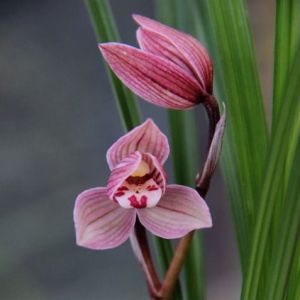
Common misconceptions about sphagnum moss and green moss, explained clearly in one go
Dianyang Honghe: Cymbidium lianpan (Lianpet orchid), lotus petal type, new variety. Broad-leaf red-flower lotus petal type of Cymbidium lianpan. Characteristics: plant height about 30-60 cm, leaf width about 0.3-0.9 cm, relatively deep grooves, firm leaf texture, slanting upright, each scape bears 1-4 flowers, flowers light red or pink, round lip, elegant color, pleasant delicate fragrance.
-
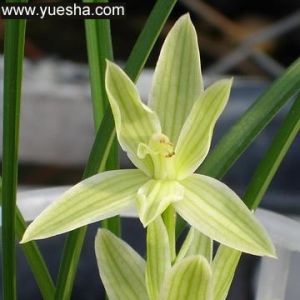
Orchid Identification Tips: Learn to Easily Recognize Common Orchid Varieties
Biyu Qisu Suliu Banlian Orchid
-
Appreciating Orchid Leaf Forms: Common Leaf Shape Characteristics and Key Ornamental Points
1. Upright leaves: The veins are firm, the leaf texture is relatively thick, and the leaves stand upright. Upright-leaf orchids often have narrow, moist leaf surfaces, such as 'Wang Zi' and 'Huanqiu Hedding'. 2. Semi-upright leaves: After the leaves emerge from the pseudobulb, they grow diagonally upward. Such as 'Long Zi'. 3. Semi-arching leaves: The leaf form is semi-arching, and most orchids have semi-arching leaves. 4. Arching leaves: The leaves...
-
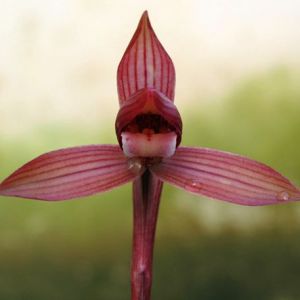
How to Appreciate Orchid Flower Forms? A Detailed Guide to the Characteristics of Common Orchid Flower Forms
This flower originates from southern Yunnan and was collected from the wild in 2008. The flower color is cherry red, the lip is water-red, the whole flower is brightly colored, the bloom is bold and generous, and the fragrance is rich. It is a rare treasure among Cymbidium goeringii (spring orchids). Among the red plain-color Cymbidium goeringii, it ranks among the very best.
条件筛选