What are the common varieties of prayer plants? A detailed guide
I. Morphological characteristics
The basic shape is spindle-shaped, with slender leaves. They generally prefer warm, humid growing conditions, but should not be exposed directly to the sun. As for soil requirements, it is best to grow them in breathable, well-drained humus soil.
II. Common varieties
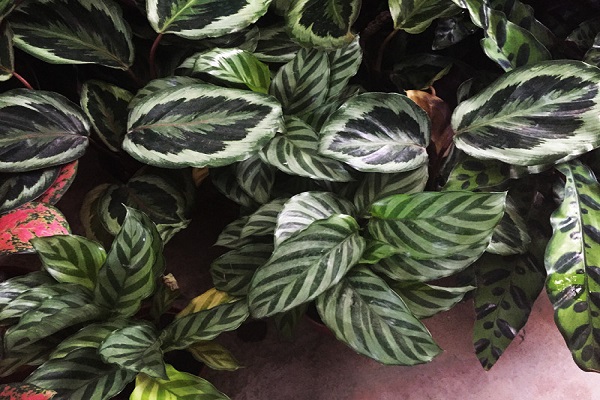
1. Variegated arrowroot (Maranta arundinacea var.). It has slender leaves with a light green surface, as if inlaid with feather-like stripes, or as if another layer of small leaves has grown on top of the leaves, layer upon layer, exceptionally beautiful.
2. White-spotted prayer plant. Its rhizome is slender and tall, about 50 to 60 cm, and its leaves are large and thin, with large white spots on the surface; from a distance, one might think white leaves are floating in the wind.
3. Double-line prayer plant (Calathea ornata). Also called red-line arrowroot, as the name suggests, its leaf surface has many thin, long red lines, with patterns of alternating white and red stripes, very beautiful; the leaves are oval and light green on the surface, exceedingly lovely.
4. Spotted-leaf prayer plant (Calathea picturata). Also known as spotted-leaf arrowroot, its oval leaves are large and thin, with a velvety leaf surface that feels especially good to the touch, and striking purplish-red markings; it can be used directly as cut-flower material.
5. Velvet prayer plant (Calathea zebrina). Its leaves are broad, dark green on the surface, similar to zebra stripes, and placing it indoors or in an office is very pleasing to the eye.
6. Rainbow prayer plant (Calathea roseopicta). Its leaves have light green stripes as a background pattern, with dark green stripes arranged along the veins, and red and green stripes appearing in alternation, just like the arrangement of a rainbow, so it is called rainbow arrowroot.
III. Uses
In everyday life, placing it indoors not only beautifies the room but also has the effect of purifying the air.