What are the common reasons an orchid does not bloom
For beginners growing orchids, they look forward eagerly to their orchid blooming, but some growers' orchids stubbornly refuse to bloom, and they do not know why their orchid will not bloom. Here we will briefly analyze the reasons an orchid does not bloom from several aspects.
There are several common reasons an orchid does not bloom, such as light that is too weak and too little, which is the reason most orchids do not bloom; sunlight is the main source of nutrition for orchids. In summer, buds form but the orchid does not bloom because of muggy weather and poor ventilation. Not blooming in autumn and winter is caused by long periods of dryness, which leads to dehydration of the plant and the flower buds stopping differentiation. Sometimes everything is normal, but after the flower stalk emerges, differentiation suddenly stops; that is because the blooming season is wrong, and if light, temperature and humidity are all wrong, the flower buds will also stop differentiating.
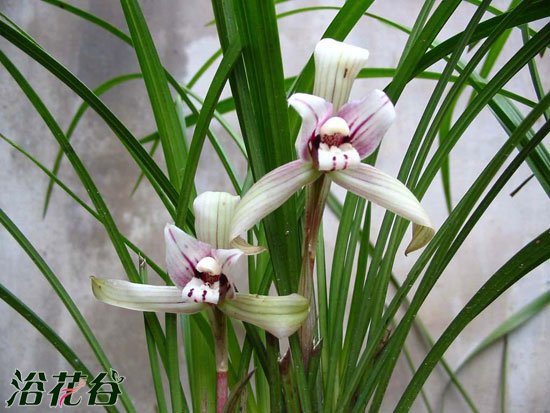
To encourage an orchid to bloom, pay attention to the following aspects:
First, light. Light is the main factor that promotes the orchid plant to develop flower buds. Generally, an orchid needs 2 to 3 hours of light. Leaves that are soft and moist with a moderate green color indicate normal light; leaves that are dark green and soft indicate a need to increase light; leaves that are pale yellow indicate a need to reduce light.
Second, temperature. To promote blooming in an orchid, the difference between day and night temperatures should be about 10°C, that is, it grows best and blooms more under conditions of 18°C~21°C during the day and 7°C~10°C at night. If the night temperature is high, the orchid leaves will become soft and the flower buds will drop. If the temperature is too low, it will cause blind buds, and spots will also grow on the leaves. If the orchid suffers low-temperature damage while blooming, brown spots will appear on the flowers.
Third, watering. The amount of watering is also a main condition for an orchid to bloom, and moisture must be well controlled. Too much moisture will make the orchid plant grow leggy and make it hard for it to form flower buds.
As long as you strengthen routine care and management, let the plant grow larger, stronger and more numerous, and pay special attention to appropriately increasing light and adding phosphorus and potassium fertilizer before and after flower bud differentiation, it is certain to have hope of blooming.